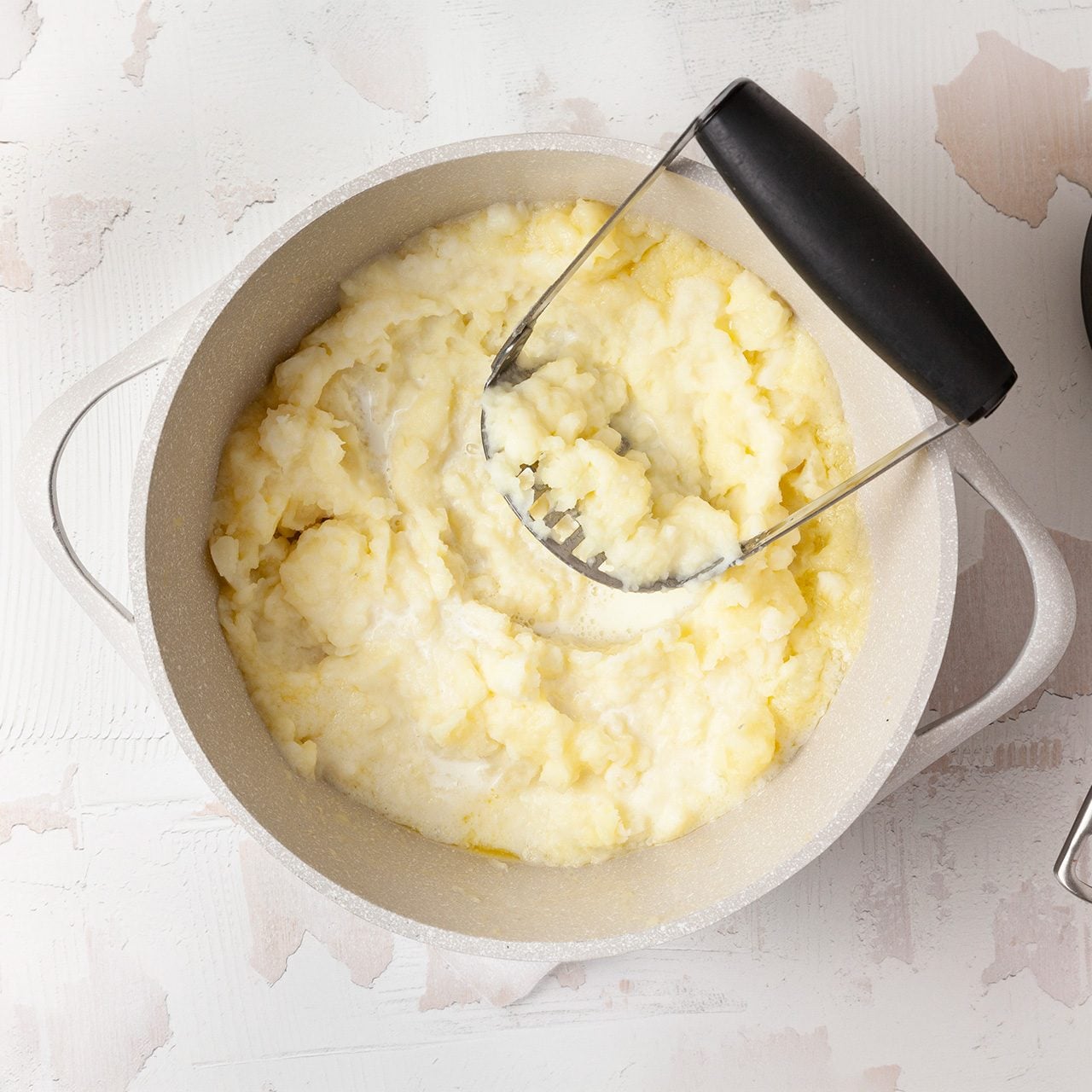
We've all been there: you bring a bowl of mashed potatoes to the table, eager to serve what you thought would be creamy and fluffy, only to discover a gluey, gummy mess staring back at you. The culprit isn't a mystery, and it's not your fault—well, not entirely. As it turns out, overworked potatoes are the biggest reason for this kitchen disaster, and the tool you're using matters far more than you might think.
Here's the science: potatoes are naturally starchy, and a little bit of starch is actually good—it thickens mashed potatoes and contributes to a creamy texture, much like how aquafaba can be whipped into a rich vegan mayonnaise. But there's a limit. As you mash chunks of potatoes, the spud's cell walls collapse, freeing the starch within those cells. The more you mash, the more cells break down, and the thicker, starchier, and gummier the potatoes become. Food processors and immersion blenders are the worst offenders—their incredibly fast, sharp blades cut through potato cells so rapidly that silken mash becomes gluey in a flash. If you're using these electric tools for mashed potatoes, stop immediately.
Instead, arm yourself with the right equipment and technique. Choose a starchy or all-purpose potato like a russet or Yukon Gold, which are relatively low in moisture and give you more wiggle room as you mash. Use a handheld tool—a potato masher, food mill, or ricer—that gives you control over speed and power. A potato masher with a crisscross grid pattern works best because there's less open space, making each mash more productive. And here's a finicky-sounding step that actually works: warm your butter and milk before adding them to the potatoes. This prevents warm potato starches from seizing against cold ingredients and becoming dense.
Temperature and ingredients matter too. When incorporating your butter and milk, switch to a spatula and stir gently to retain a fluffy texture. And whatever you do, avoid waxy potatoes like red or fingerling varieties for mashed potato recipes—they keep their shape when cooked, making them better suited for potato salads and soups.
If you've already committed the sin of overworking your potatoes, redemption is possible. Adding more fat or liquid can improve the mouthfeel, and stirring in other ingredients can alter the overall texture. But if your potatoes are truly a gluey mess, don't despair—repurpose them into leftover mashed potato recipes instead. The lesson here is simple: treat your potatoes with respect, use the right tools, and you'll never serve gluey mashed potatoes again.