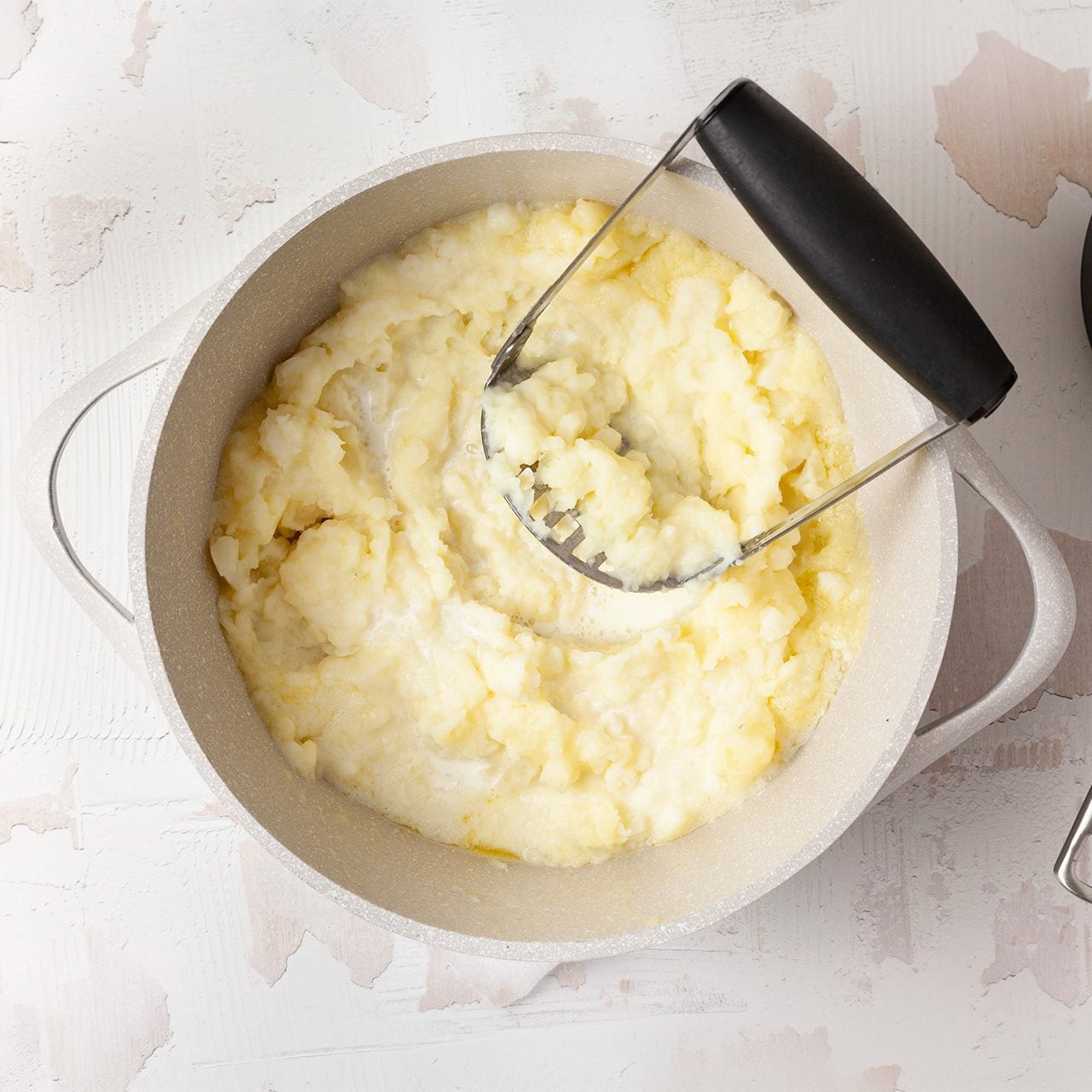
Overworked potatoes are the main reason mashed potatoes turn gluey. As you mash, the potato's cell walls collapse and release starch. The more you mash, the more cells break down, thickening the mixture into a gummy texture. Electric tools like food processors and immersion blenders speed this problem significantly because their sharp blades cut through cells too rapidly.
To prevent gluey mashed potatoes, choose a starchy or all-purpose potato such as russet or Yukon Gold. These potatoes are lower in moisture than waxy varieties like red or fingerling potatoes, which hold their shape and are better suited for potato salads and soups.
Use the right tool. A potato masher, food mill, or ricer gives you more control than electric equipment. A masher with a crisscross grid pattern works better than a wavy design because there is less open space, making each mash more productive.
Temperature matters. Warm your butter and milk before adding them to the potatoes. This prevents warm potato starches from seizing against cold ingredients and becoming dense. Use a spatula to stir them in gently, which keeps the texture fluffy.
If your mashed potatoes are already gluey, adding more fat or liquid can improve the mouthfeel, and stirring in other ingredients can alter the overall texture. You cannot totally remove excess starch without starting over. If the potatoes are truly a gluey mess, repurpose them into leftover mashed potato recipes.