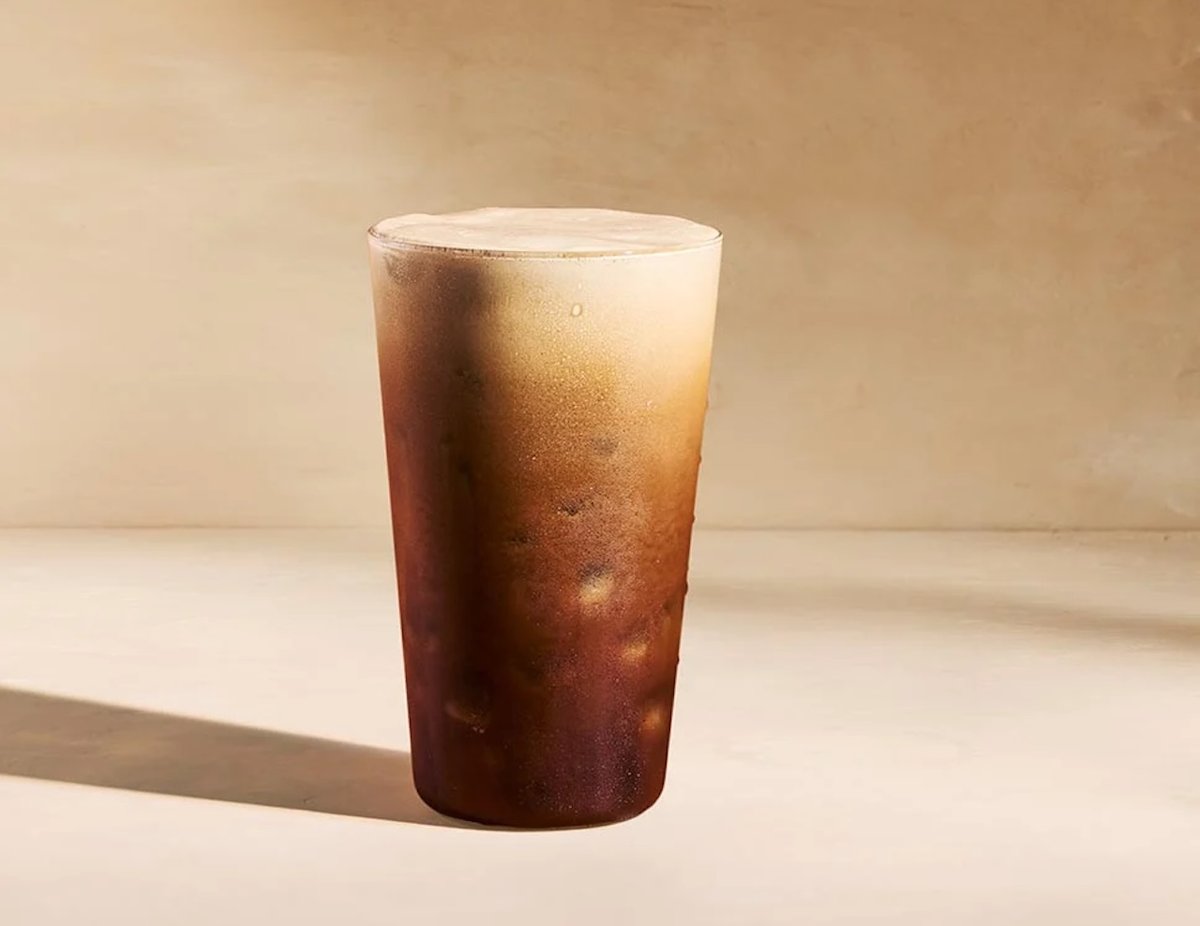
Starbucks is introducing the Aerocano on National Coffee Day, a redesigned take on its classic Iced Americano that trades straightforward simplicity for theatrical presentation and textural contrast.
The drink arrives air-whipped, creating a cascading visual effect and adding aeration throughout the beverage. This technique transforms what has long been coffee's plainest offering. The Iced Americano, built from espresso shots and cold water, has remained virtually unchanged for years. The Aerocano signals Starbucks' push to reinvigorate tired staples through technique rather than recipe overhaul.
Air-whipping coffee represents a small but growing trend in specialty coffee shops. The method introduces nitrogen or air into espresso or crema, producing a lighter mouthfeel and visible texture. Baristas working at third-wave coffee roasters have experimented with similar techniques. Starbucks brings this craft-coffee method into 16,000 US locations, democratizing a tactic once confined to high-end specialty shops.
The cascading effect Starbucks describes likely refers to the way aerated espresso flows differently than standard espresso. Lighter, airier shots move through ice and water with visible separation, creating Instagram-friendly layers. Visual appeal matters enormously to coffee chains now. Drinks like Dalgona coffee demonstrated that consumers will buy beverages as much for their appearance as their taste.
The launch timing on National Coffee Day (September 29) carries strategic weight. It positions the Aerocano as a hero product deserving special attention rather than a quiet menu addition. National holidays dedicated to specific ingredients or foods have become standard marketing tools across fast-casual and QSR chains. Starbucks uses these moments to draw traffic and generate social media buzz from customers eager to try limited offerings.
The Aerocano raises questions about whether visual innovation can sustain interest in a mature category. Coffee chains have battled commoditization for years. Menu multiplication, seasonal drinks, and premium offerings help margins. Yet consumers also value reliability and consistency. Adding texture and visual flair to a core item risks alienating customers who simply want their trusted Iced Americano unchanged.
Starbucks' decision to modernize rather than replace the Iced Americano suggests confidence in the new format's staying power. The drink will likely become permanent if early sales prove strong. The company has successfully embedded other texture-forward drinks into its core menu. Cold brew with nitrogen infusions, various foam tops, and layered drinks have all found lasting audiences.
The Aerocano also reflects broader coffee industry trends toward premiumization. As commodity coffee prices fluctuate and competition intensifies, chains profit more by selling experience and technique than volume. A whipped Iced Americano commands a slightly higher price than its flat predecessor. Customers pay for novelty, visual appeal, and the sense they're getting something more refined than yesterday's coffee.
National chains can't survive on product stagnation. Starbucks introduced the Aerocano because static menus lose relevance. Whether the technique genuinely improves the drink's taste matters less than whether it generates trial and repeat visits. If the Aerocano becomes a sticky addition to Starbucks' lineup, expect other chains to follow with their own aerated riffs on classic espresso drinks.