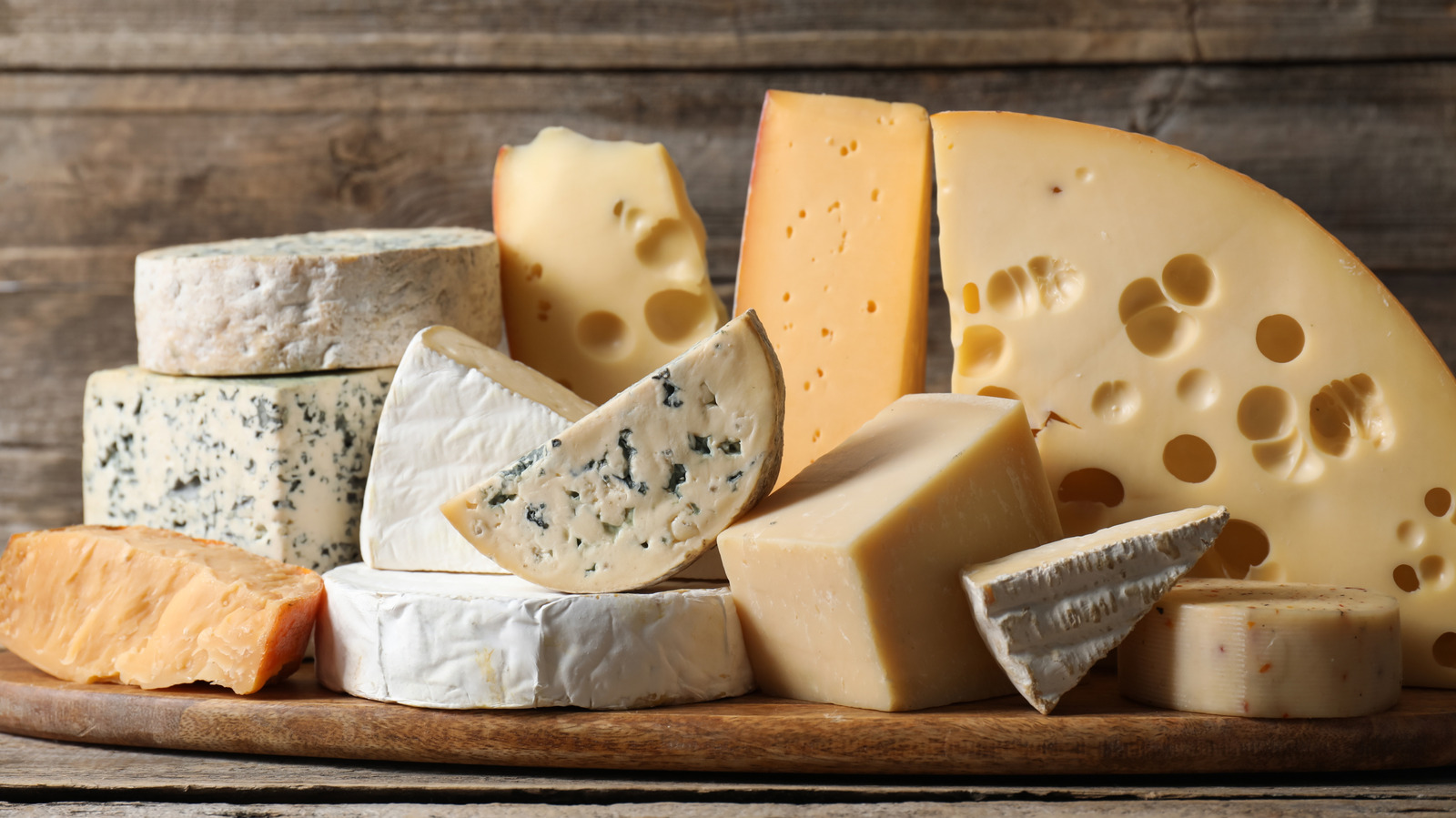
Jarlsberg, a Norwegian cheese with large round holes, serves as a lower-calorie substitute for French Gruyère in recipes like French onion soup. Both cheeses share a nutty flavor and melt well, but Jarlsberg contains around 100 calories per ounce compared with up to 120 calories for Gruyère.
The cheeses develop their nutty profiles differently. Jarlsberg's flavor comes from a proprietary bacterial culture called Propionibacterium shermanii, a subset of Propionibacterium freudenreichii. During fermentation, this culture consumes lactic acid to produce propionic acid and carbon dioxide. The acid contributes to the nutty taste, while carbon dioxide creates the cheese's distinctive holes. Gruyère develops its flavor through high-altitude Alpine milk, its bacterial cultures, and a longer aging process.
Jarlsberg's milder flavor compared to sharper Gruyère makes it a good fit for grilled cheese sandwiches without overpowering other ingredients. The cheese also works well as a pizza topping paired with mushrooms, caramelized onions, and fresh thyme. For a Scandinavian twist, combine Jarlsberg with fresh dill, pickles, and cold-smoked salmon. The cheese pairs well with chardonnay, sweet rieslings, and low-tannin reds like pinot noir when served on a charcuterie board with grapes, crackers, and cold cuts.