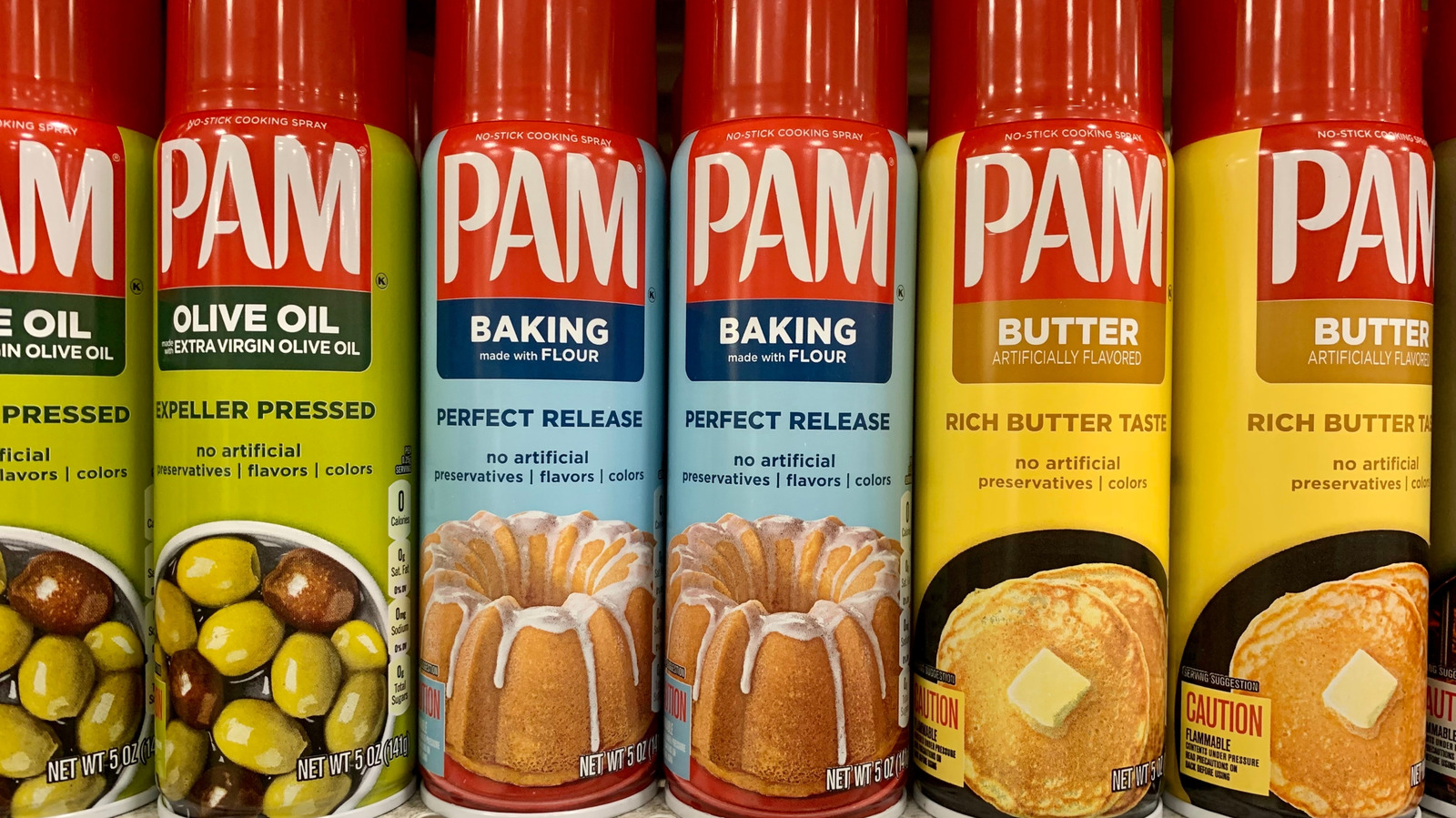
Cooking spray leaves residue on nonstick cookware that builds up over time and reduces the pan's effectiveness, according to the report. Some sprays contain lecithin, an emulsifier that can create a sticky buildup difficult to remove even with regular washing. Cookware manufacturers advise against aerosol sprays on nonstick surfaces. Alternatives include brushing oil onto pans with a paper towel or using a refillable spray bottle with plain cooking oil.
The nutrition label on cooking spray masks actual calorie content. PAM Original Cooking Spray lists zero calories per serving, but one serving equals just 0.25 grams, roughly one-eighteenth of a teaspoon or a quarter-second spray. FDA regulations allow products with fewer than five calories per serving to round down to zero on labels. Since cooking spray is primarily oil, which contains 120 calories per tablespoon, longer sprays add calories that the label won't reflect.
Aerosol cooking sprays contain flammable propellants that create a mist, which can ignite if it contacts an open flame or heat source. PAM Original warns against spraying near an oven, onto heated cookware, or near an open flame, particularly on gas stoves where the mist can reach a lit burner. The report notes the pressurized can itself poses a risk if exposed to excessive heat. Safe application involves spraying onto a cool pan away from the burner before moving it to the stove.
For baking, regular cooking spray works for general tasks like greasing muffin tins, but baking spray with added flour performs better in detailed molds like Bundt pans, where crevices make cake release difficult. The lecithin residue from cooking spray can also bake onto nonstick bakeware and reduce its performance over time.