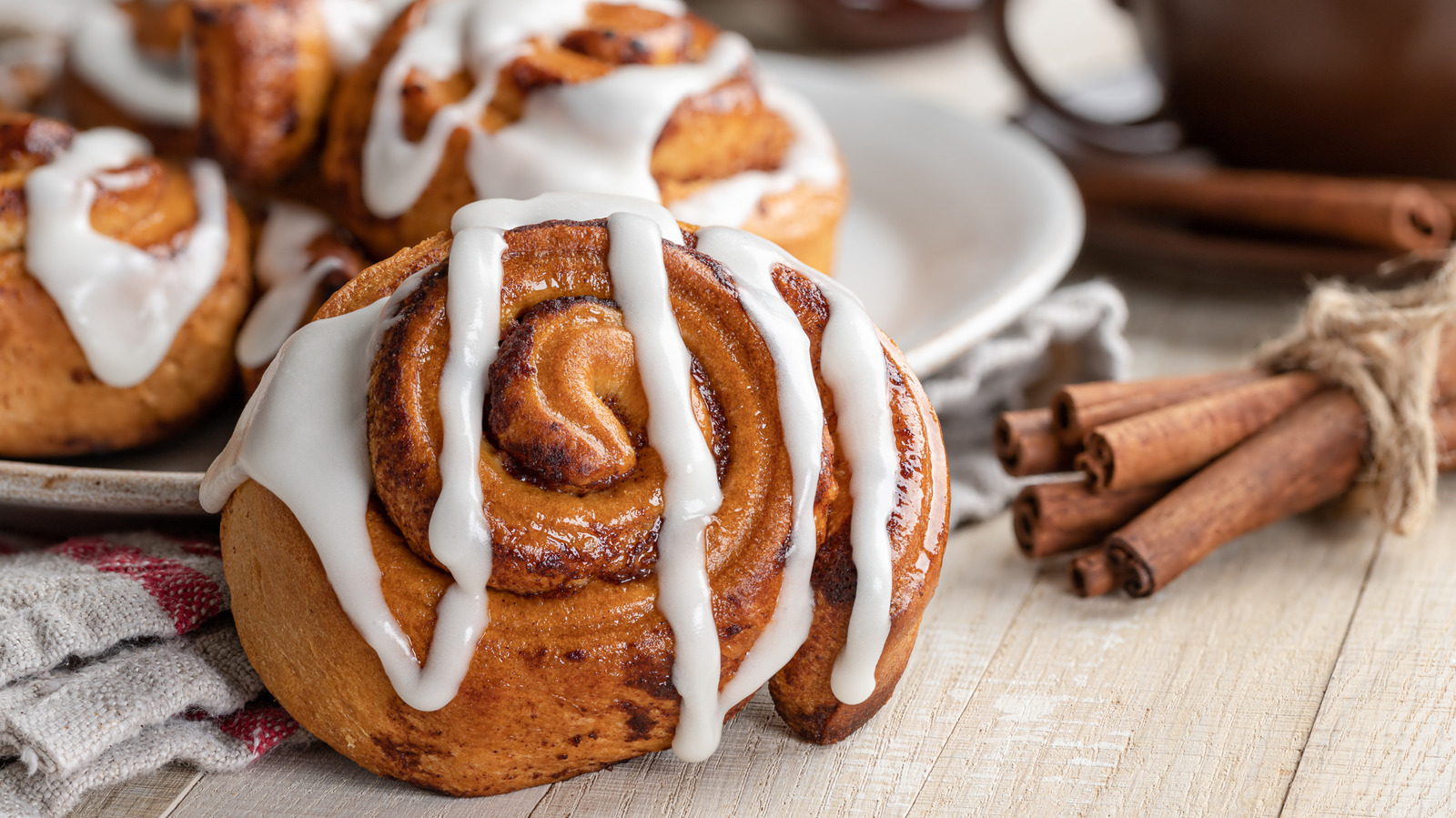
Cinnamon rolls and cinnamon buns start with the same yeasted sweet dough filled with butter, cinnamon, and sugar, but their shapes and toppings set them apart.
Cinnamon rolls are rolled into a log, sliced, and placed in a baking dish. Cinnamon buns can be twisted, knotted, or braided after filling. Both proof again before baking.
The toppings differ most noticeably. Some cinnamon buns bake over a layer of brown sugar, butter, and chopped nuts like pecans, then get turned out onto a plate so the syrupy topping covers them. Cinnamon rolls typically receive a thick cream cheese frosting or vanilla glaze after baking.
Both pastries have roots in European baking, notably Swedish kanelbullar and German traditions. Swedish cinnamon buns are often topped with pearl sugar rather than cream cheese frosting, which is primarily a North American addition.
Gourmet versions of cinnamon rolls now use spices like apple pie or pumpkin pie blends, or incorporate trends like Dubai chocolate cinnamon rolls. Some replicate carrot cake or red velvet cake flavors. Cinnamon buns occasionally feature maple syrup added to the butter, brown sugar, and nut topping, or incorporate cardamom and currants or raisins into the filling.
Regional preference drives whether people call these pastries rolls or buns, though the shaping and topping differences are real.