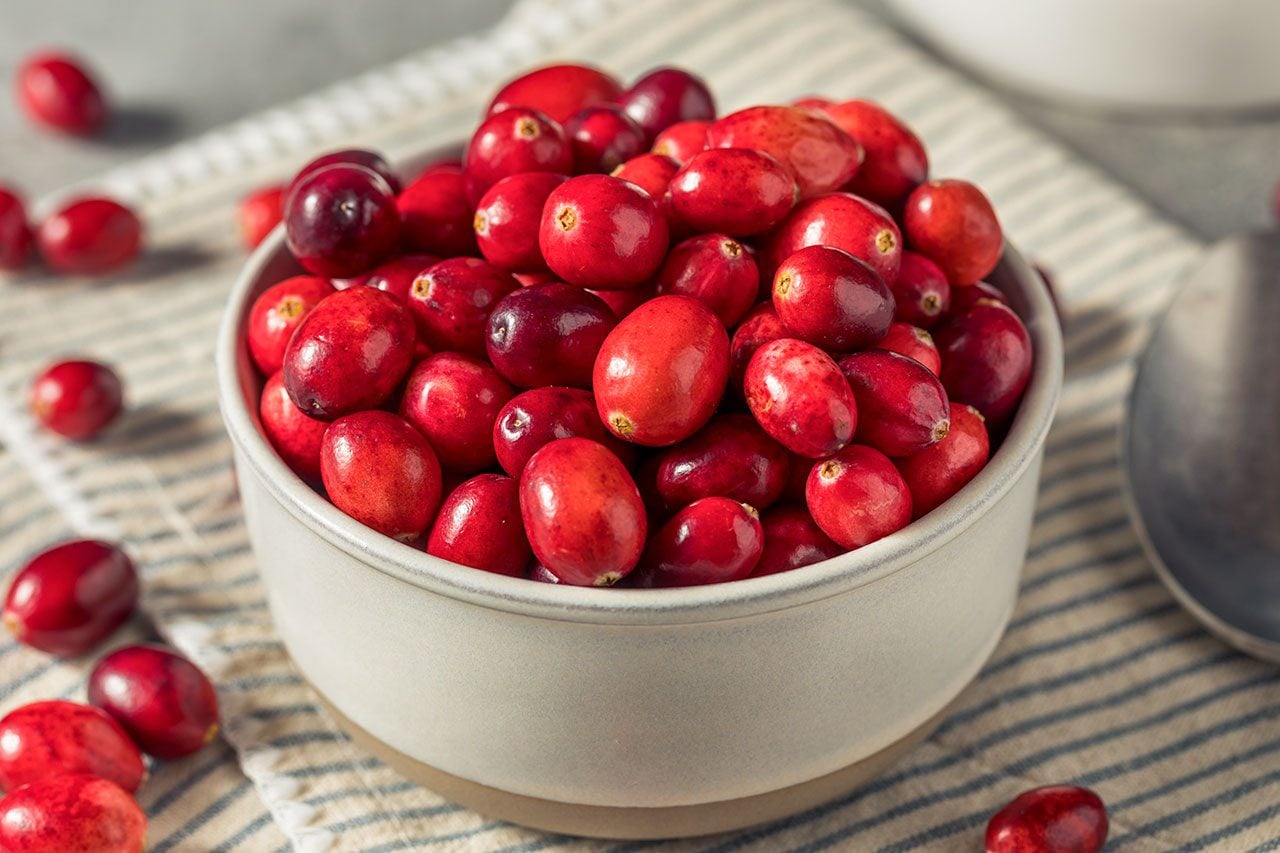
Raw cranberries are safe to eat. Simply rinse them under cool running water and discard any that are soft, shriveled or spoiled.
Raw cranberries are firm and sharply tart, with a bitterness and astringency that leaves a dry, puckering feeling in your mouth. One cup of raw cranberries provides about 4 grams of fiber and 13 milligrams of vitamin C, along with naturally occurring antioxidants. They're also naturally low in sugar.
The tartness makes them challenging to eat plain. Their absence from the average person's fruit salad is understandable. Cranberries work best when their sharpness balances something rich or sweet. In baked goods like cranberry orange bread, muffins, cakes and scones, the berries become little pockets of sharp fruit that cut through butter and sugar. In cranberry sauce, simmering softens the berries until they burst, and sweetening lets you appreciate their flavor without quite so much puckering.
For those who prefer them uncooked, chopping finely makes their intensity easier to distribute. A fresh relish with orange and sugar preserves their crisp texture, while cranberry salsa takes them in a savory direction. They can also blend into a smoothie with sweeter fruit.
Cranberries freeze beautifully for baking after the holidays.