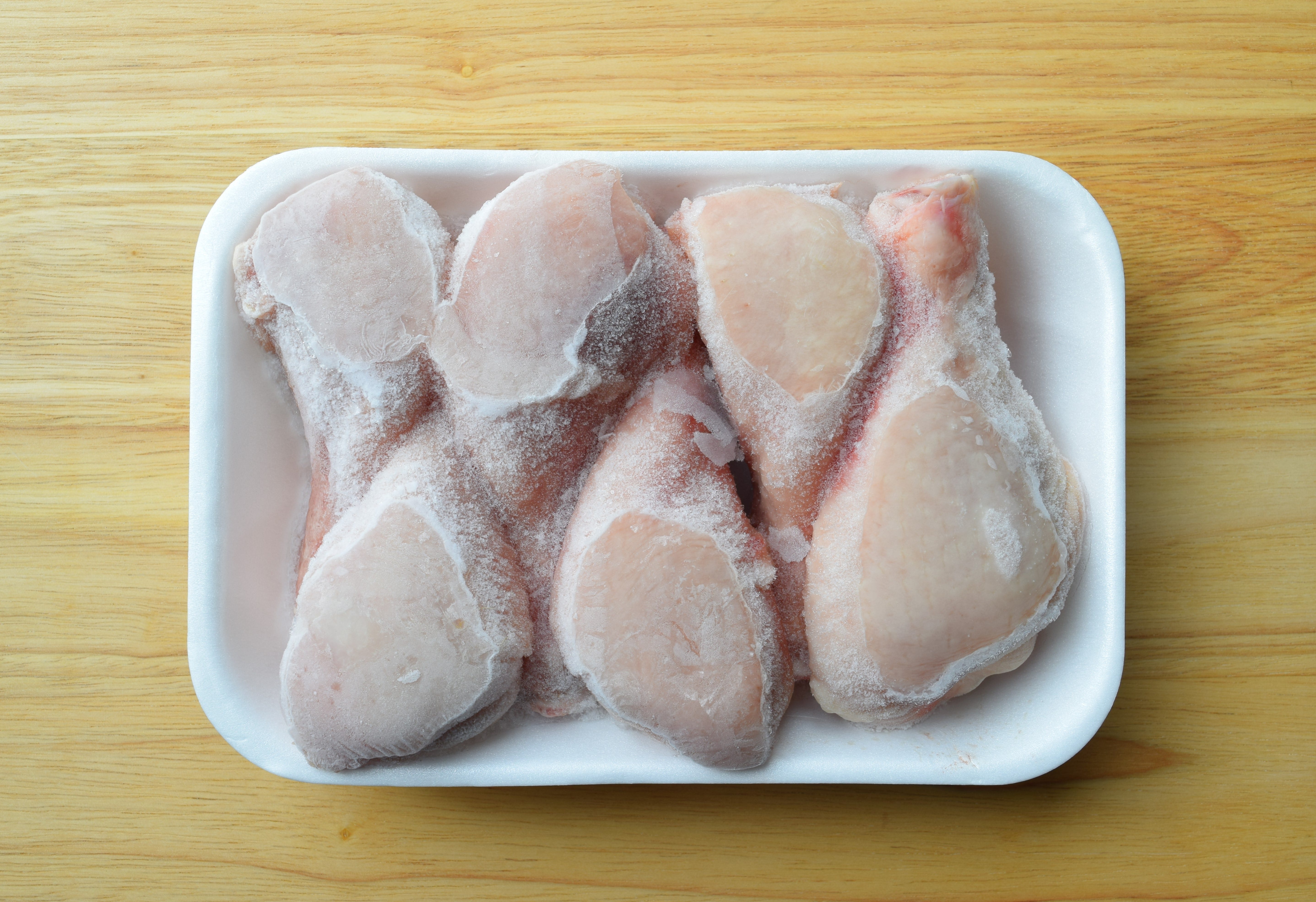
Ellen Steinberg, a food safety specialist with a PhD in nutrition and dietetics, outlines three USDA-approved methods to safely defrost chicken while avoiding Salmonella contamination.
Roughly 4% of chicken packages at American grocery stores carry Salmonella, according to FoodSafety.gov. The bacteria multiplies rapidly between 40°F and 140°F, the temperature danger zone. Leaving chicken on the counter risks foodborne illness.
The safest method is refrigerator thawing. Steinberg says it's the only USDA-approved approach that allows you to refreeze raw chicken without cooking it first. Place the chicken on the bottom shelf in a leak-proof container to prevent drips from contaminating other foods. Store it toward the back of the refrigerator, where temperature remains more consistent than near the door. Once thawed, cook or refreeze it within one to two days.
For faster thawing, submerge chicken in cool, running water at 70°F or lower in leak-proof packaging. Change the water every 30 minutes. Smaller packages may thaw in an hour or less. Cook immediately after thawing.
A microwave defrost setting works but has drawbacks. Steinberg says you must cook the chicken immediately afterward with no flexibility in timing. Microwaves heat unevenly, potentially cooking the outer edges while the center remains frozen, which can worsen the texture and taste.
Regardless of method, contain raw chicken on a plate or baking sheet. Wash hands thoroughly and clean anything that touches raw chicken with hot, soapy water. Steinberg recommends using a separate colored cutting board exclusively for raw meat.