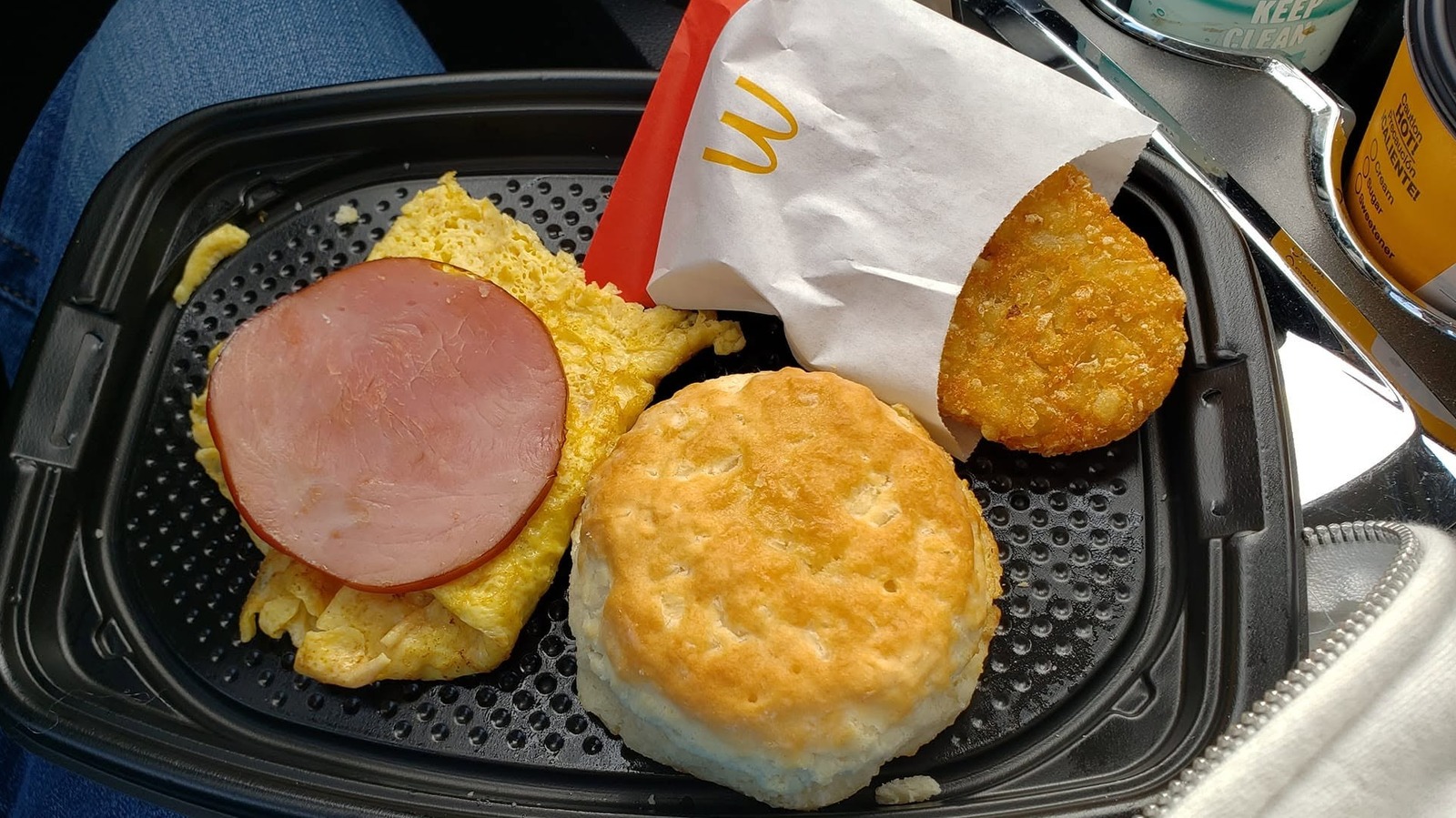
The McDonald's Egg McMuffin has earned its reputation as a seemingly simple sandwich with surprising depth. Part of that appeal comes from what the report describes as "a symphony of rich, savory flavors and includes enough variety of textures to keep your mouth interested until the very end." But there's nothing traditional about how McDonald's achieves those flavors in one of its most essential components: the Canadian bacon. Rather than employing time-honored brining techniques that have defined cured pork products for centuries, McDonald's partners inject flavor directly into the meat using hundreds of needles in a fully mechanized process.
This industrial approach to flavor delivery is emblematic of modern fast-food production, and frankly, it works. According to Food Tech Today, the brine—made mostly of salt, sugar, sodium nitrate, and food coloring—is injected into trimmed pork loins as they travel down the production line at the manufacturing plant. McDonald's hasn't publicly released which partner produces its Canadian bacon, though it's speculated to be Lopez Foods, a long-time beef supplier for the chain. The needle injection is necessary for both flavor and texture, ensuring the meat stays tender and juicy throughout the subsequent processing.
What happens after injection is equally fascinating. The injected pork is packed into sleeves and steamed for around five hours until fully cooked, allowing the brine to permeate throughout the meat. Machines then slice the tubes of pork into exact discs before vacuum-sealed packaging. Notably, the Canadian bacon arrives at McDonald's locations merely refrigerated rather than frozen, unlike the sausage patties that accompany it on other breakfast sandwiches.
The final preparation is deliberately precise. Employees place slices on clamshell grills without the lid covering them, cooking for eight seconds on each side. Unlike McDonald's burgers, which famously don't get flipped, Canadian bacon requires manual turning—a small human intervention in an otherwise mechanized system. This exact timing allows the slices to warm through while avoiding the over-crisping that could lead to burning and waste.
The McDonald's Canadian bacon story reveals how industrial food production can honor traditional flavors through unconventional means. The needle injection, the extended steam cooking, and the careful eight-second sear all serve the same goal: delivering consistent, quality taste to millions of customers daily. It may not be slow-brined, but the McDonald's approach deserves recognition for achieving real flavor complexity through engineering rather than time.