When Tania Apolinar and Giovanni Cervantes decided to pivot from their meat-focused roots at Taqueria Ramirez, they made a bold choice: they partnered with chef Carlos Barrera to open a seafood-focused wine bar in the West Village. El Camarón Peludo, which opened this year, represents something the food world needs more of—a restaurant that treats Mexican coastal cuisine with the same reverence typically reserved for fine dining in other traditions. This isn't about gimmicks or fusion confusion. It's about honoring where the food comes from and executing it with precision.
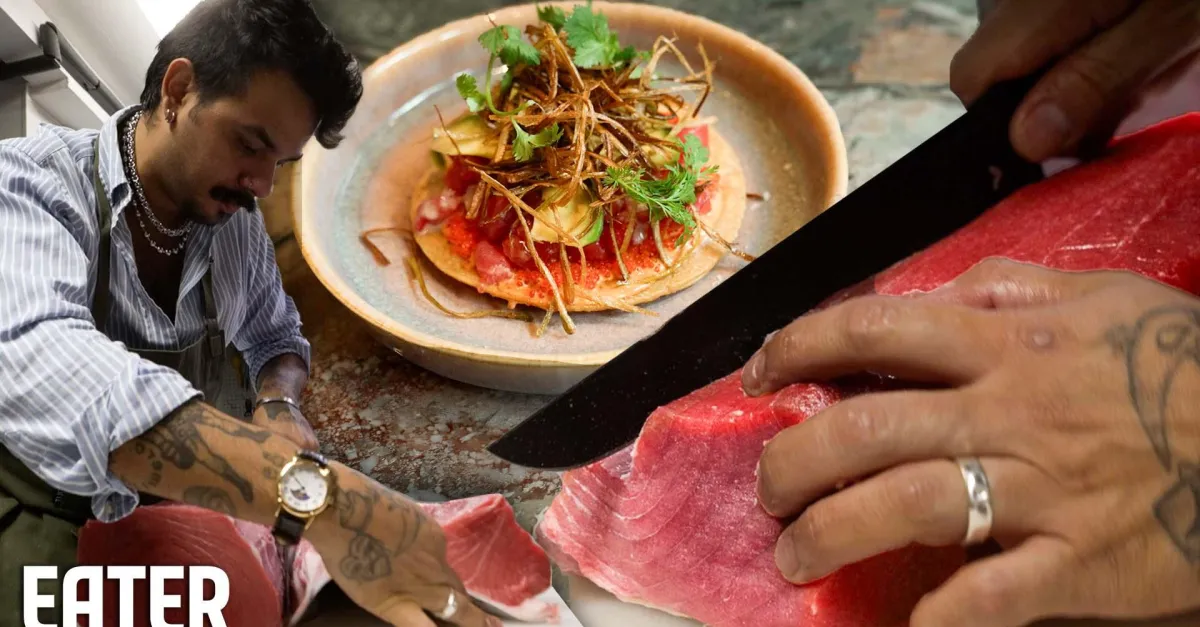
The kitchen's daily prep reveals how seriously this team takes their craft. Fresh shrimp arrives from Sinaloa, Mexico, Ecuador, and beyond, each destined for three central shrimp dishes that demand meticulous preparation. Cervantes doesn't simply make salsa; he taste-tests each batch against last week's version to ensure consistency—a quality control measure that distinguishes thoughtful cooking from rote execution. Barrera's tuna tostada, layered with spicy mayo, fish eggs, habanero-lime oil, avocado, and crispy leeks, represents exactly the kind of refinement Mexican seafood rarely receives in mainstream dining.
What elevates El Camarón Peludo beyond novelty is its wine program. Cervantes' original vision to pair innovative seafood with bubbly evolved into a natural wine bar sourcing bottles from all over the world. This matters. Natural wines complement Mexican coastal cuisine in ways that challenge the tired assumption that authentic food must be casual, inexpensive, or stripped of ambition. The combination suggests that Mexican culinary traditions don't need permission from other cuisines to be taken seriously.
Apolinar's attention to the dining experience—recommending the long, winding bar as the prime vantage point, chilling seafood on ice in the window, preparing wine in chilled buckets—demonstrates that hospitality is woven into every decision. The camarones zarandeados, a Pacific coast Mexican dish traditionally grilled in a flat wire basket, deserves this level of care. So does the pescadilla and the raw bar's salsa negro, layered with habaneros, piquin chile, and squid ink.
The real test now is whether the food industry and diners will support restaurants that elevate Mexican cuisine without diluting it or leaning on otherness for credibility. El Camarón Peludo's existence isn't radical—it's merely what should be standard. The question is whether it remains an exception or becomes a model. For the sake of authentic representation in dining, it must be the latter.