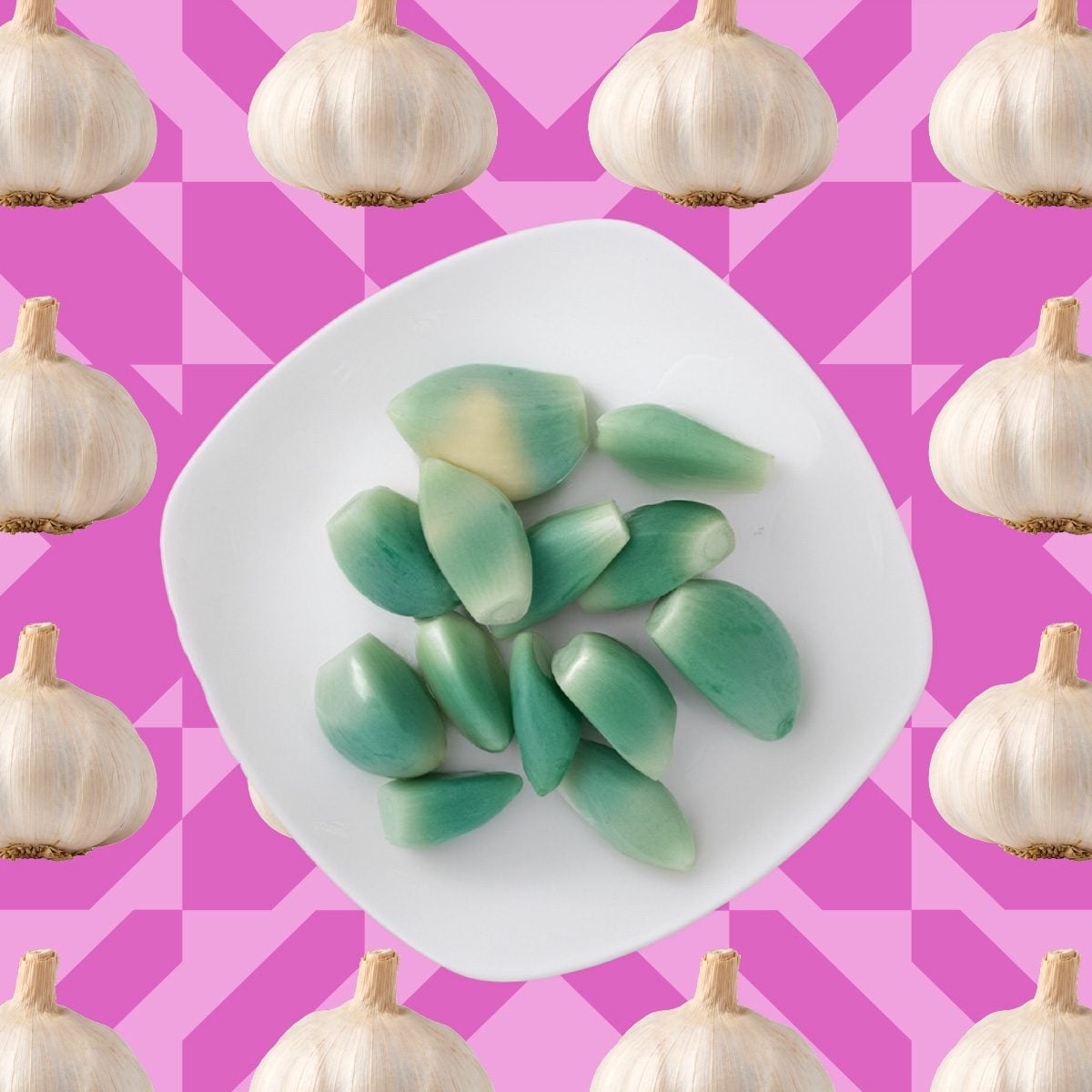
Garlic turns blue, green, or turquoise when sulfur compounds in the clove react with amino acids to produce pigments, according to food chemistry. The reaction requires an acid trigger, most commonly vinegar. Older garlic stored in cold conditions is more prone to color change than fresh garlic. Cooking the garlic first or avoiding prolonged contact with acidic ingredients can prevent discoloration.
Blue garlic is safe to eat if the garlic was fresh and properly handled. The color shift is not a sign of spoilage. In fact, laba garlic, a traditional northern Chinese preparation, intentionally soaks garlic cloves in vinegar to produce a vivid green color, typically eaten around the Lunar New Year. Researchers have studied methods to produce the brightest, most vivid green hue for this dish. The chemical reaction that can seem suspicious in a pickle jar reflects a centuries-old culinary practice.