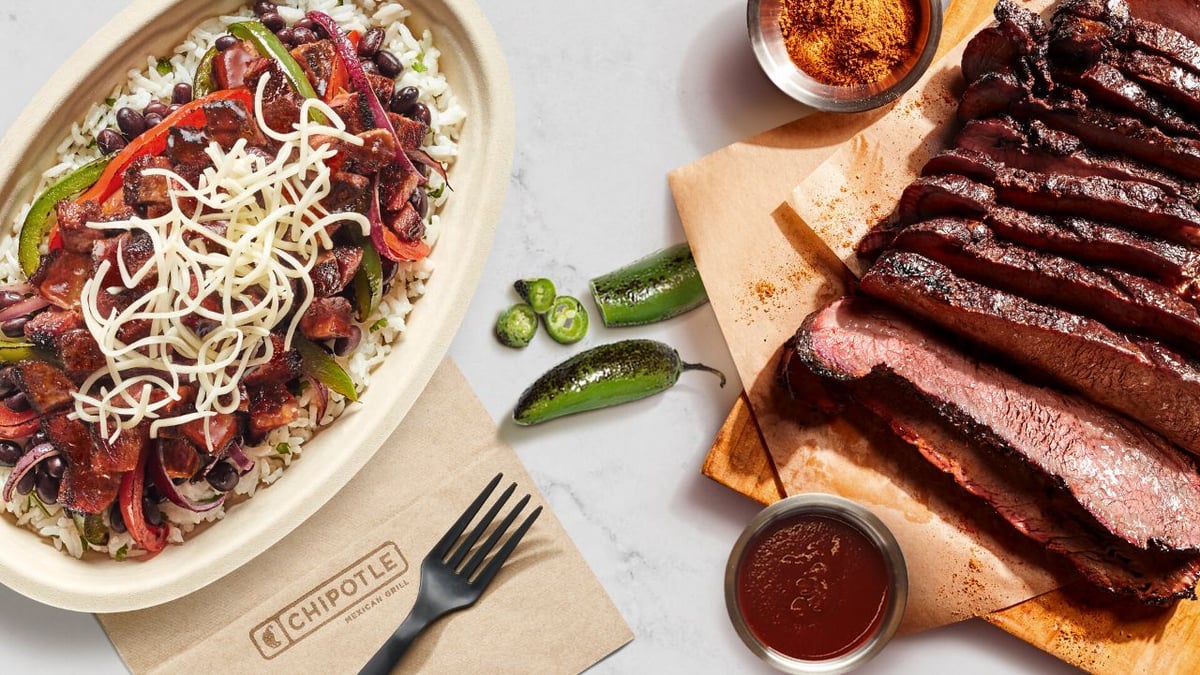
Chipotle Mexican Grill has reintroduced Smoked Brisket to its menu, marking the return of a protein that previously drove customer traffic during its last run in September 2024. The fast-casual chain cycled the item off menus after that initial limited offering, but demand signals and transaction data convinced executives to bring it back.
This move reflects how Chipotle uses limited-time offerings as both a customer acquisition tool and a test ground for permanent menu expansion. The brisket, slow-smoked and seasoned, sits alongside the chain's core proteins of chicken, steak, carnitas, and barbacoa. By rotating premium proteins with visible preparation methods, Chipotle taps into the broader industry trend of emphasizing ingredient quality and cooking technique at speed.
Limited-time menu items serve multiple purposes in quick-service restaurants. They create urgency that drives foot traffic on specific dates. They also provide operational data. How many customers choose the new protein? What combo do they pair it with? Do they visit more frequently when new items launch? Chipotle's decision to resurrect brisket two years later suggests the September 2024 trial performed well on these metrics.
The timing matters too. Chipotle competes directly with other fast-casual chains like Qdoba and regional players, plus indirect competition from delivery-dependent concepts and traditional barbecue restaurants. A premium, differentiated protein helps Chipotle justify its price point and stand out in a crowded lane. Smoked brisket signals craftsmanship that a basic carnitas offering does not.
For supply chain purposes, bringing back a previously tested item is simpler than launching something entirely new. Chipotle likely already has established supplier relationships for brisket. The chain can forecast demand based on historical performance. The kitchen crew knows how to prepare it. This reduces risk compared to introducing unfamiliar proteins or cooking methods.
The brisket return also aligns with consumer interest in barbecue and slow-cooked proteins. Over the past five years, barbecue has expanded beyond regional joints into mainstream quick-service and ghost kitchen concepts. Customers increasingly expect restaurants to offer smoked and braised options. Chipotle's brisket capitalizes on this appetite while fitting the assembly-line model that defines its business.
From a business standpoint, Chipotle's menu strategy has evolved beyond the days when it offered only a handful of proteins. The company now experiments with new items every few months, testing everything from carne asada to sofritas. This agility keeps the menu fresh and generates social media buzz. Customers feel incentivized to return frequently to try what is new.
The brisket's comeback underscores how data-driven menu development works in chain restaurants today. Items are not kept or removed based on chef intuition alone. Transaction counts, ingredient costs, labor efficiency, and customer feedback all influence decisions. A protein that drove transactions in 2024 becomes a logical candidate for return, especially if supply and preparation can scale efficiently.