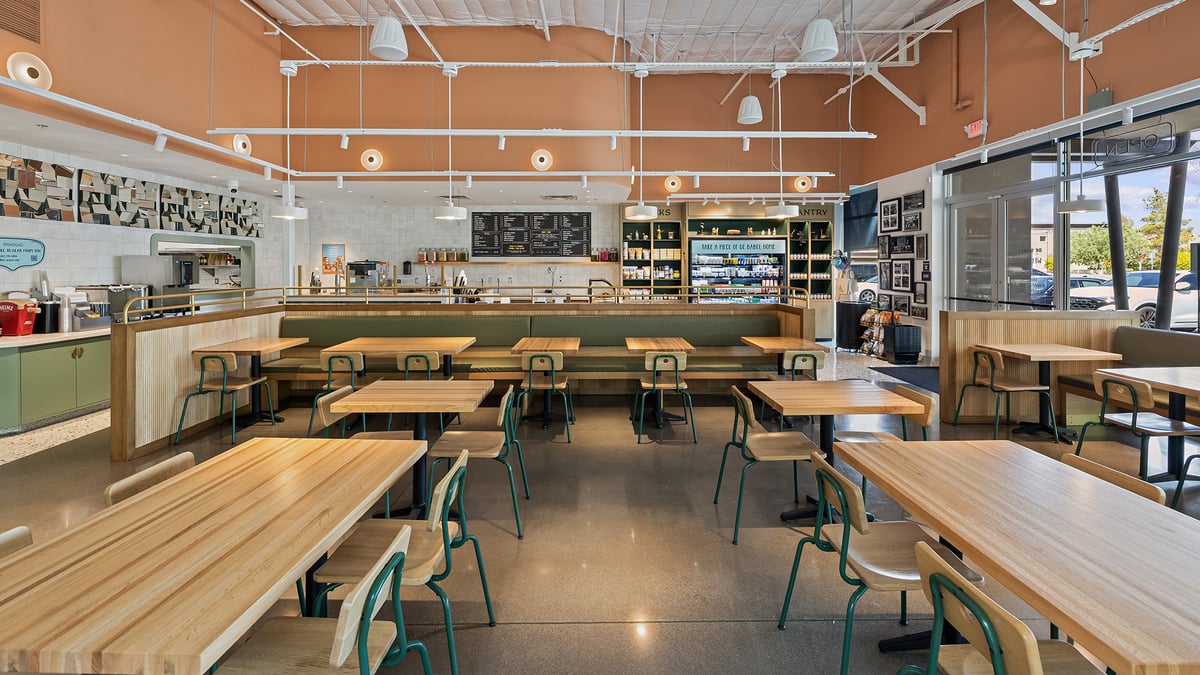
De Babel, the Middle Eastern halal restaurant group, has launched its second location in Scottsdale while simultaneously opening a dedicated commissary kitchen to support both restaurants. The expansion signals the brand's confidence in the fast-casual segment and its commitment to scaling operations beyond its original footprint.
The new Scottsdale location marks a deliberate geographic play for De Babel. The Phoenix metro area, with its substantial Middle Eastern diaspora community and growing mainstream appetite for halal cuisine, offers fertile ground for expansion. Scottsdale specifically attracts diners seeking casual-to-mid-range ethnic dining with authentic credentials.
The commissary kitchen investment reveals sophisticated growth thinking. Rather than relying on in-house preparation at individual locations, De Babel can now prepare components centrally, ensuring consistency across both restaurants while reducing labor costs at the front lines. This model works particularly well for halal fast-casual concepts where speed and standardization matter. Prep work like marinating proteins, preparing sauces, and batch-cooking grains happens offsite, allowing individual locations to focus on assembly and service.
De Babel joins a wave of halal quick-service restaurants gaining serious traction in American cities. Brands like Halal Guys and Cote Cuisine have proven the category works beyond food-cart novelty. Diners now expect halal as a mainstream option rather than specialty cuisine. The certification itself, which requires adherence to Islamic dietary laws regarding animal slaughter and ingredient sourcing, appeals to Muslim consumers but also increasingly attracts non-Muslim diners who perceive halal food as higher-quality, more ethically sourced protein.
The Scottsdale timing aligns with broader restaurant consolidation trends. Multi-unit operators typically move toward commissary kitchens once they hit two to three locations. The infrastructure investment signals De Babel's management believes the brand can sustain growth beyond this second unit. Owners rarely build shared kitchens for single-location experiments.
For De Babel's supply chain, the commissary approach strengthens vendor relationships and purchasing power. Buying proteins and produce at scale for two restaurants delivers better margins than individual store ordering. Halal meat sourcing, which requires certified suppliers, becomes simpler to manage through a central kitchen purchasing function.
The move also reflects labor realities in hospitality. Rather than hiring multiple specialized prep cooks at each location, De Babel can employ experienced cooks at the commissary producing high-volume components, then hire faster service staff at retail locations. This reduces training complexity and turnover costs.
Scottsdale's expansion shows confidence that halal fast-casual has regional legs, not just concentrated ethnic-community appeal. As the Phoenix market continues growing and diversifying, halal restaurants occupy a distinct niche. They deliver speed, customization, and what consumers perceive as healthier protein options compared to burger-focused QSR competitors.
De Babel's commissary kitchen decision may preview its future playbook. Successful fast-casual concepts in this category rarely stop at two units. The infrastructure investment today positions the brand to accelerate expansion across Arizona and potentially beyond without rebuilding kitchen capacity each time it opens a new restaurant.