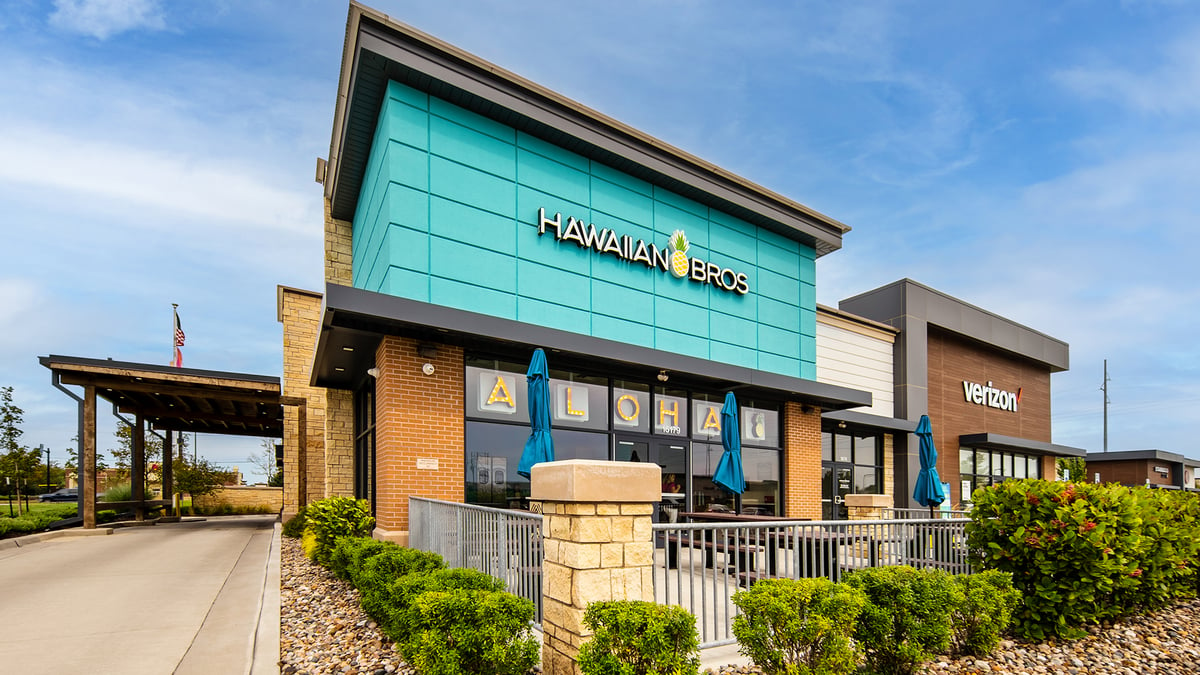
# Hawaiian Bros Charts Path to Higher Unit Economics With Aggressive Growth Strategy
Hawaiian Bros, the Kansas City-based acai bowl and smoothie chain, operates 83 units today. CEO Scott Ford plans to push average unit volume from $2.5 million to $3.5 million, a 40 percent increase that would vault the emerging franchise into more competitive territory with established fast-casual concepts.
The chain competes in the lucrative acai and smoothie segment where unit economics matter enormously. Chains like Vitality Bowls and Juice Generation operate at higher per-unit volumes, setting the benchmark. Hawaiian Bros must close that gap to attract franchisees and secure financing.
Ford's strategy centers on operational efficiency within existing locations rather than a purely expansion-focused playbook. The company is refining menu profitability, training systems, and labor management across its footprint. Acai bowl concepts live or die by food costs and labor precision. A bowl or smoothie costing $3 to $5 in ingredients must sustain high transaction counts and premium pricing.
Hawaiian Bros has built momentum in a franchise category that exploded post-2015, when wellness culture made smoothie bowls Instagram-famous and genuinely profitable. The concept requires minimal kitchen equipment, fast service windows, and strong real estate strategy. The chain's expansion to 83 units reflects real demand, but scaling profitably demands discipline.
The path from $2.5M to $3.5M AUV involves multiple levers. Menu engineering identifies highest-margin items. Standardized recipes reduce waste. Labor scheduling software cuts hours without sacrificing service speed. Many fast-casual chains discovered during post-pandemic recovery that their best growth came from improving existing operations, not opening new locations.
Real estate selection plays a role too. Hawaiian Bros likely analyzes traffic patterns, foot traffic conversion rates, and daypart performance at top-performing units. Replicating that site profile across new franchise locations compounds growth without cannibalizing existing stores.
Franchisee recruitment depends on these numbers. Investors scrutinize AUV when evaluating a franchise opportunity. A $3.5M average unit volume at reasonable food costs and labor percentages signals a business model that works. It also justifies higher franchise fees and support pricing that funds corporate infrastructure.
The acai bowl segment has matured beyond novelty status. Chains now compete on consistency, speed, loyalty programs, and digital ordering integration. Hawaiian Bros likely invests in technology that captures data on customer preferences, speeds ordering, and builds repeat business. Off-premise sales through third-party delivery platforms add revenue but compress margins unless pricing adjusts.
Ford's target reflects industry reality. Fast-casual concepts typically aim for AUV between $1.8M and $3M depending on daypart focus and geography. A growth-stage chain pushing toward $3.5M positions itself for attractive franchisee returns and sustainable corporate expansion.
The strategy matters beyond Hawaiian Bros alone. It signals how emerging chains must operate in a crowded market. Growth-stage franchises can't simply multiply units. They must obsess over unit economics, franchisee profitability, and operational excellence. The chains that hit these targets attract capital, talent, and franchisees willing to invest their own money.