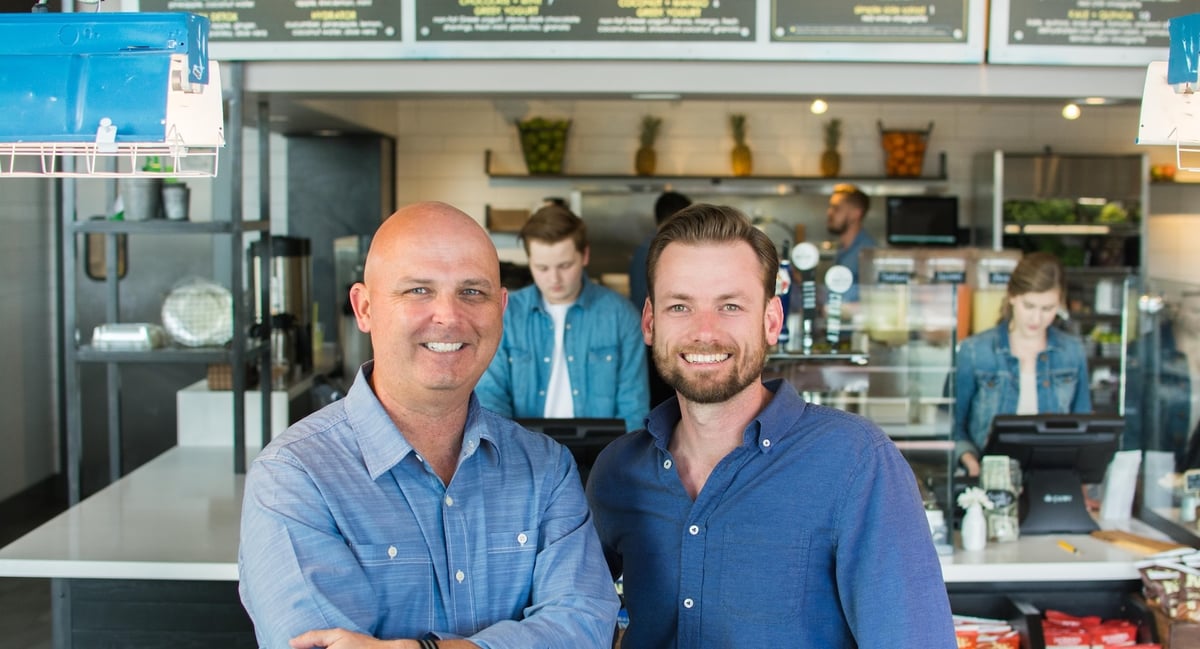
# ChopShop Names Kyle Frederick as New CEO
Kyle Frederick stepped into the chief executive role at ChopShop, the fast-casual salad chain, marking a leadership transition that keeps departing CEO Jason Morgan involved as an advisor.
Frederick previously served as chief operating officer, positioning him to navigate the restaurant's operational mechanics during a period of potential growth or restructuring. His promotion reflects confidence in his ability to steer the brand forward while maintaining continuity. Morgan's decision to transition into an advisory capacity rather than exit completely suggests the founder or ownership group wants institutional knowledge preserved during the handoff.
The move signals a deliberate succession plan within ChopShop's leadership ranks. Promotions from operations to the top job typically indicate the board believes Frederick possesses both the strategic vision and operational discipline needed to run a restaurant company. COOs manage kitchens, supply chains, staffing, and quality control across locations. They understand bottlenecks and inefficiencies that executives in other departments may miss. This background makes Frederick a logical choice for a CEO role in fast-casual dining, where execution consistency determines whether a brand succeeds or falters.
ChopShop operates in the crowded fast-casual salad space alongside national players like Sweetgreen and Cava, as well as regional chains. The category gained momentum over the past decade as consumers demanded faster service than sit-down restaurants offered while expecting fresher, customizable ingredients than traditional quick-service chains provided. Salad-focused concepts occupy a niche within this broader trend, appealing to health-conscious diners and office workers seeking lunch options with transparency around sourcing and preparation.
The fast-casual sector has weathered turbulence in recent years. Rising labor costs, ingredient inflation, and intense competition have compressed margins across the category. Chains either expand aggressively to achieve scale economies or retreat. Leadership changes often precede strategic pivots, whether that means new unit growth, menu innovation, technology adoption, or market consolidation.
Frederick's ascension occurs as restaurants nationwide grapple with staffing challenges and changing consumer behavior post-pandemic. Fast-casual operators particularly depend on speed and accuracy at the line, where salads are assembled to order. A COO-turned-CEO typically brings deep expertise in streamlining these workflows and training teams to execute consistently.
Morgan's advisory role preserves a bridge to the brand's history and founding vision. Many restaurant founders struggle with letting go entirely, and advisory positions offer compromise. Morgan can weigh in on strategic decisions without managing day-to-day operations. This structure works best when both parties respect boundaries.
The promotion also matters internally. Employees see that advancement is possible from operations leadership, which can boost retention of talented managers. The restaurant industry suffers from high turnover at all levels. Clear pathways to advancement at the executive suite encourage performers to stay rather than chase opportunities elsewhere.
ChopShop's leadership transition unfolds against the backdrop of an increasingly competitive salad-and-bowl market. Frederick inherits a business with established unit economics and a customer base, but also one facing the same pressures as peers. His first priorities likely include evaluating current profitability, identifying underperforming locations, and determining whether growth or stabilization makes sense for the brand's next chapter.