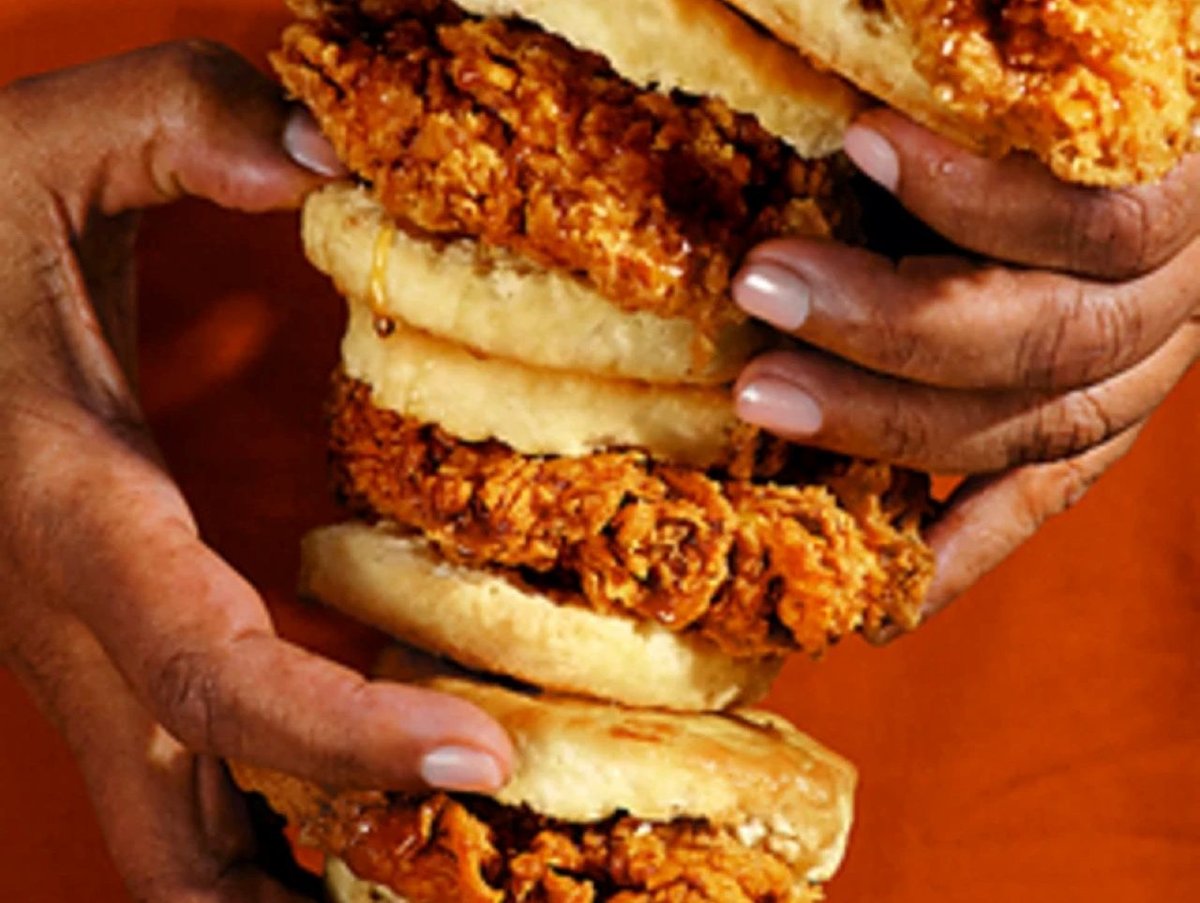
Popeyes Louisiana Kitchen has launched a new Honey Chicken Biscuit sandwich, priced at $5, featuring an oversized version of the chain's signature buttermilk biscuit paired with chicken and honey.
The move represents a calculated play in the competitive fast-casual chicken sandwich market, where Popeyes has built considerable momentum since its 2019 debut of the original chicken sandwich that sparked a cultural phenomenon and drove comparable sales surges across the chain. The honey-drizzled variant capitalizes on consumer appetite for flavor experimentation while maintaining price accessibility in an inflationary climate.
The sandwich's centerpiece is scale. Popeyes enlarged its buttermilk biscuit specifically for this offering, signaling the product isn't a simple menu shuffle but a deliberate platform expansion. The biscuit formulation carries weight in the chain's identity. Its buttermilk base delivers tanginess that contrasts with the honey sweetness, a flavor pairing increasingly popular across restaurant menus as chains seek to differentiate offerings through complementary tastes rather than heat levels alone.
At $5, Popeyes positions this sandwich within reach of budget-conscious consumers while maintaining margins in an environment where labor costs and commodity prices remain elevated. The price point sits squarely in QSR territory, undercutting fast-casual competitors while avoiding the value-menu perception that damages brand equity.
The timing reflects broader menu strategy across the industry. Chick-fil-A, Wingstop, and regional players have expanded honey applications in their poultry offerings, recognizing that honey resonates with health-conscious consumers seeking perceived naturalness while delivering indulgence through sweetness. Popeyes' addition follows industry patterns without copying directly, maintaining differentiation through its Cajun-Louisiana positioning.
This launch also addresses menu fatigue among existing customers. The original spicy and classic chicken sandwiches, while successful, have matured in the product lifecycle. New variants extend customer visit frequency by offering novelty without cannibalizing existing sales, a proven tactic across QSR chains. Honey variants attract customers who find the original sandwich's Cajun spicing intimidating, expanding addressable market.
The biscuit itself deserves attention as the competitive advantage. Many chains source generic biscuits or deploy frozen options, but Popeyes bakes buttermilk biscuits in-restaurant, a labor-intensive process that differentiates product quality and freshness. The oversized version requires process adjustment, representing operational complexity competitors cannot easily replicate.
Distribution and availability determine success. Popeyes operates over 3,400 locations globally with significant US penetration, enabling rapid rollout. The chain's franchise model means franchisees control execution quality, a variable that has historically created inconsistency in Popeyes' product consistency compared to corporate-run chains. The honey biscuit's success depends on training franchisees to deliver the enlarged biscuit quality consistently.
The $5 price suggests this is not a premium tier offering but rather a core menu permanent addition, indicating management confidence in demand sustainability. This contrasts with limited-time offers that build urgency but lack staying power.
Popeyes continues leveraging its chicken expertise and nostalgic brand positioning to capture QSR market share. The Honey Chicken Biscuit sandwich extends that narrative by adding sophistication to the menu while remaining accessible to price-sensitive consumers in an increasingly fractured chicken sandwich category.