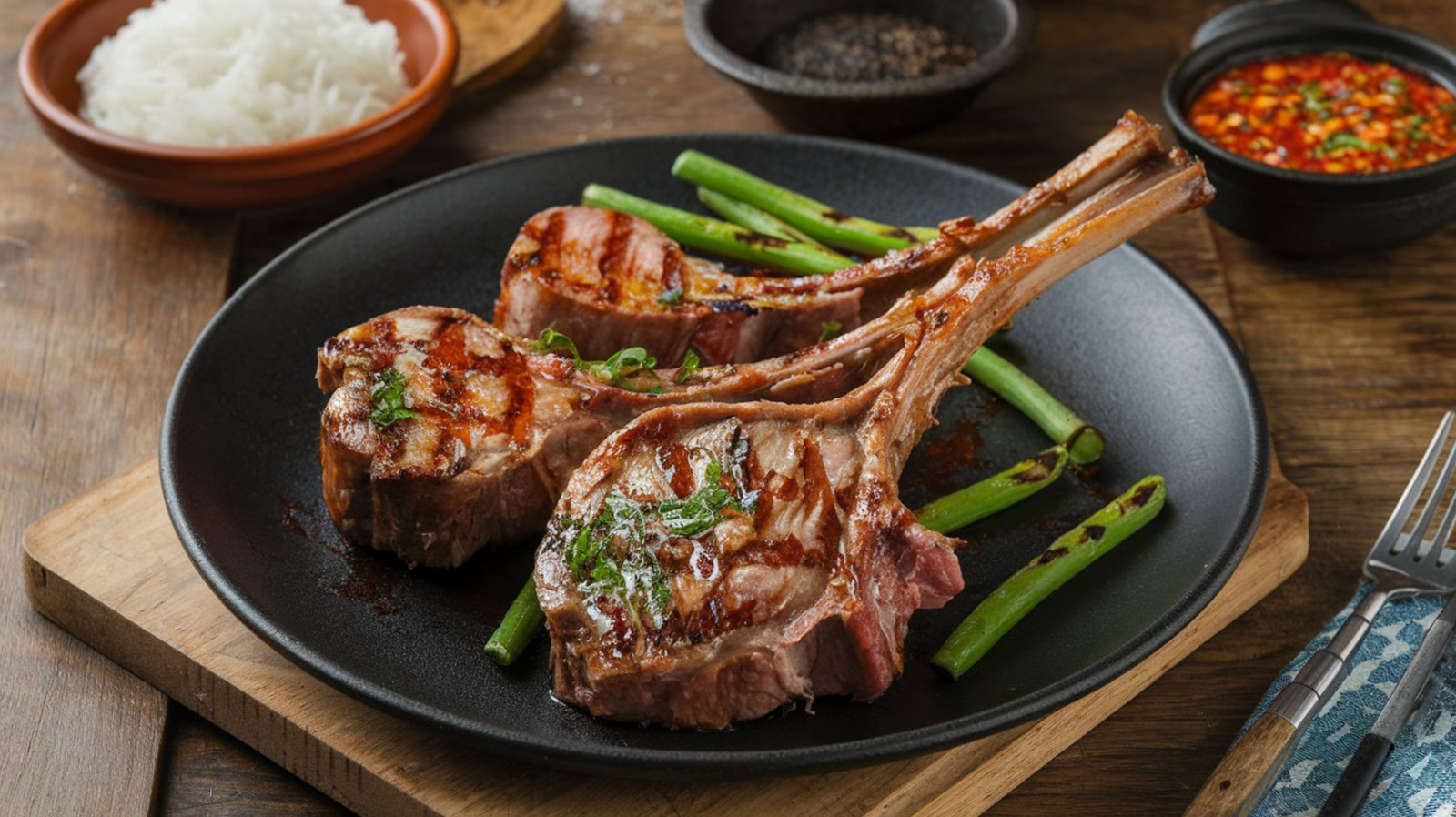
Lamb chops command high prices because a single lamb yields only eight to 10 desirable rib and loin chops, making them a limited commodity. Their natural tenderness also drives cost, since lamb is typically harvested before 12 months of age, when muscle fibers remain fine and tender.
Lamb shoulder offers an alternative. It comes from a harder-working muscle with more connective tissue, making it less tender and significantly cheaper. Yet the shoulder contains richer marbling and delivers a fuller, more robust flavor than the relatively lean chops. For cooks seeking that rich, slightly gamey taste of lamb, shoulder can rival or exceed chops in flavor.
Lamb chops suit quick-cooking techniques like pan-searing or grilling. They need no marinade, though a tandoori blend of yogurt, ginger-garlic paste, garam masala, cumin, turmeric, and Kashmiri chili powder can elevate them. Barefoot Contessa style, ask your butcher to french the chops, scraping meat and fat from the rib bone for visual impact.
Lamb shoulder requires low-and-slow cooking. Braising or slow-roasting breaks down collagen into gelatin, creating tender meat. Thin shoulder chops can be pan-seared or grilled, though braising remains the better option for thicker cuts that still contain substantial connective tissue.