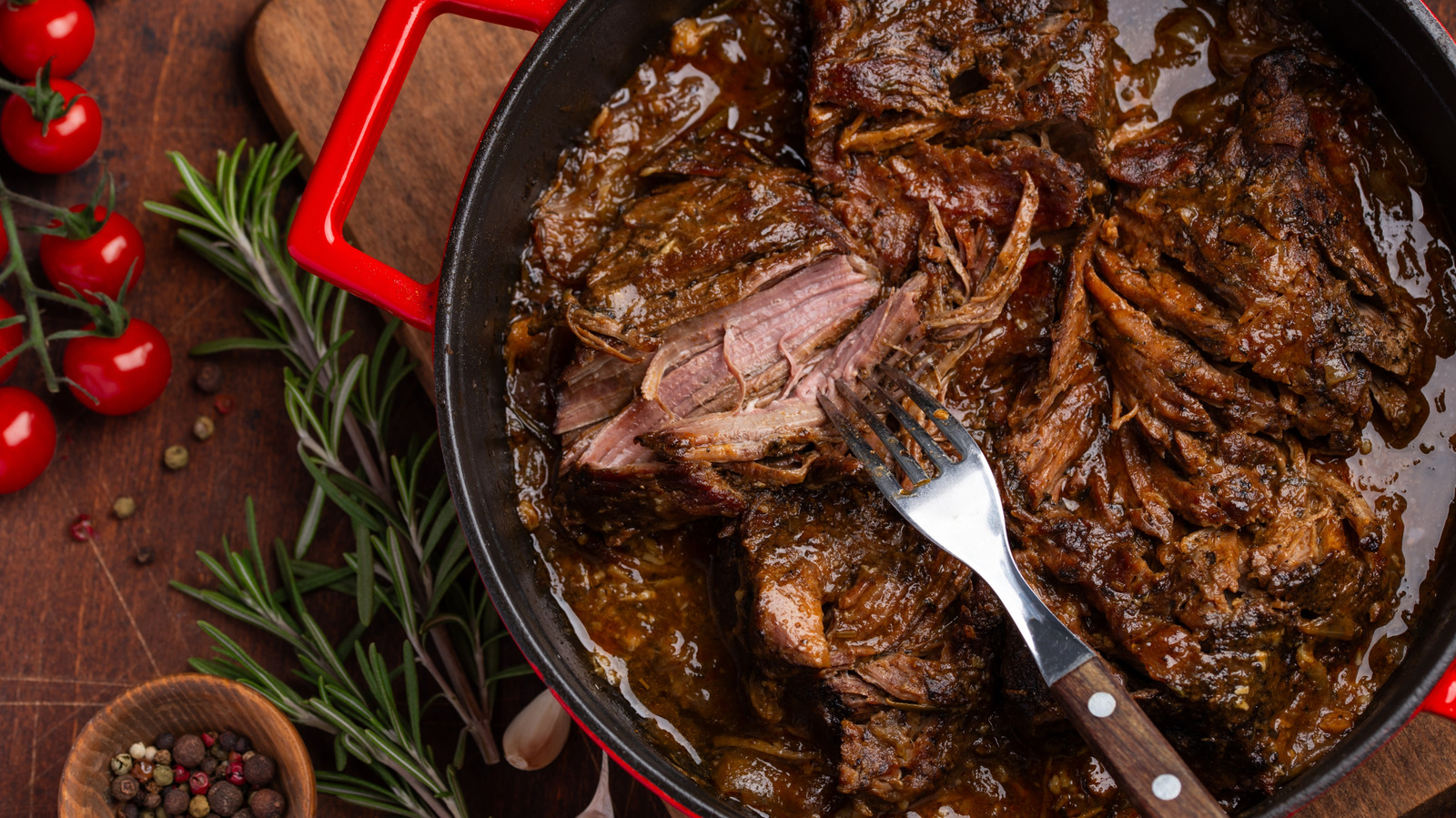
Adding too much liquid to a pot roast transforms braising into boiling, a mistake that produces drier meat and mushy vegetables.
Braising uses minimal liquid kept at a gentle simmer, with part of the meat breaking through the surface. This slow process softens connective tissue and collagen in tough cuts, creating a satiny gravy while the exposed meat develops caramelized color. Boiling, by contrast, fully submerges the meat in liquid at high intensity. The aggressive heat cooks the meat through but leaches internal moisture, drying it out. Submerged vegetables lose their toothsome texture and can disintegrate into soupy broth.
The meat and vegetables produce their own moisture as they cook down, so restraint matters at the start. A slow cooker braises meat beautifully at low temperature in a hands-off method. Moisture trapped under the lid condenses and falls back into the pot, making over-drying less likely. Braising in the oven or on the stovetop works too, provided the meat stays partially uncovered and the liquid maintains a slow simmer. Stovetop and oven methods require checking that broth doesn't dry out too quickly. A slow cooker offers a safer bet than a Dutch oven for this reason.
Other common mistakes include failing to brown the meat first or using the wrong cooking device.