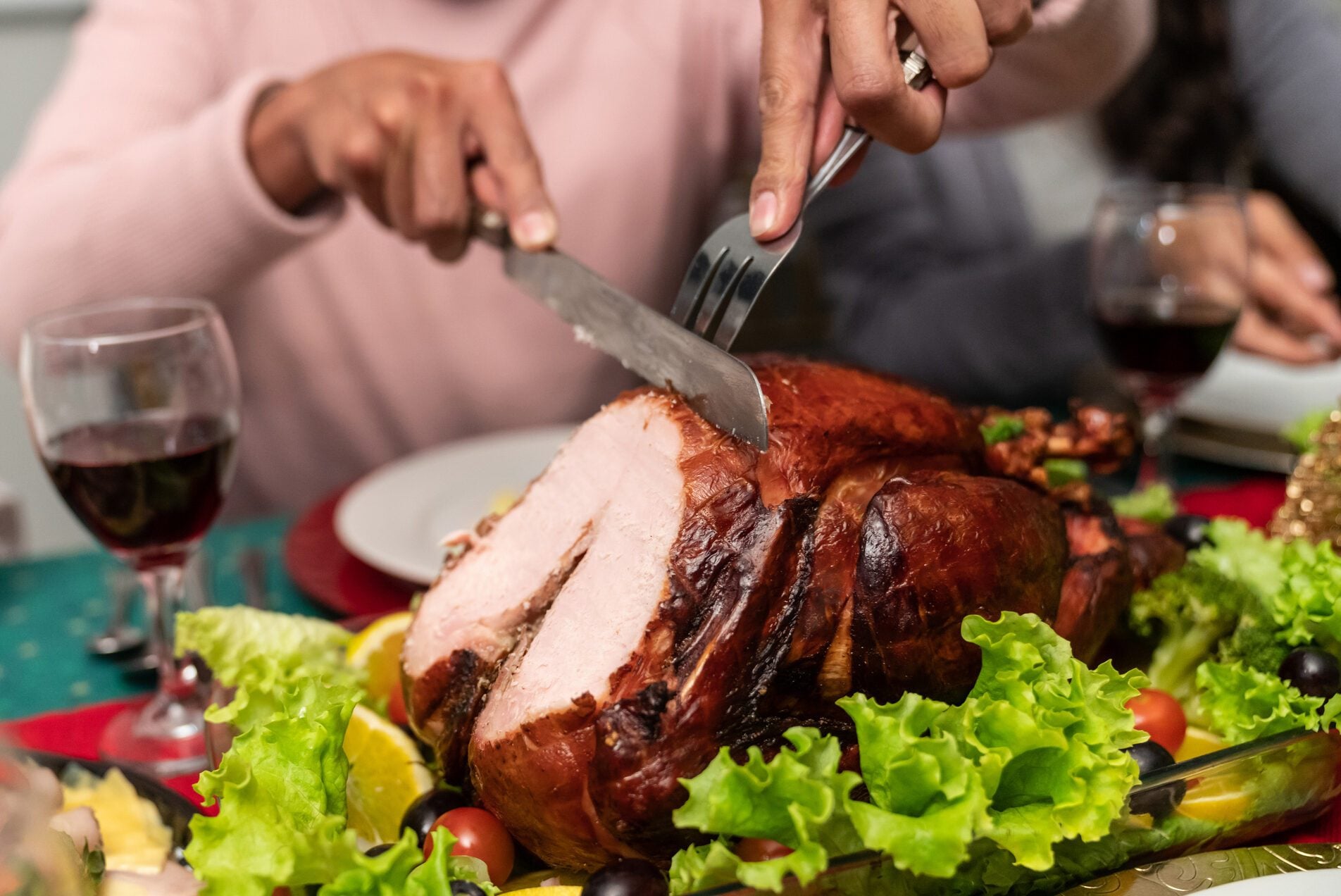
Pink turkey doesn't mean your bird is ruined. The color can appear even in fully cooked poultry for reasons unrelated to doneness.
Heidi Diestel of Diestel Family Ranch in Sonora, California, explains that turkey naturally contains pigments. "The legs and thighs have more of the natural pigments that give meat its darker color. Those pigments, along with changes that happen during cooking, can leave some pink even when the turkey is fully cooked."
The pigments are proteins called myoglobin and cytochrome c. Older animals have more of these proteins and therefore darker meat. Turkeys use their legs and thighs constantly for walking and running, so those muscles contain more pigment than breast meat. During cooking, myoglobin usually turns white, but cytochrome c resists heat and can maintain a pink color. Smoked turkey often stays pink from the reaction of meat to smoke.
A meat thermometer is the only reliable way to verify safety. Poultry is safe when it reaches at least 165°F internally. The Taste of Home Test Kitchen recommends cooking leg and thigh meat to 170°F for best texture. Stuffed turkeys require the stuffing itself to reach 165°F at the center. Insert the thermometer into thick, meaty areas without touching bone, which reads higher.
If different areas register different temperatures, continue cooking until all parts reach 165°F. Don't cut apart and return undercooked sections to the oven, as this risks spreading undercooked juices onto cooked portions.
According to the CDC, undercooked turkey can contain harmful bacteria including Salmonella, Clostridium perfringens, or Campylobacter. Thaw frozen turkeys in the refrigerator or cold water bath and keep prep surfaces clean and sanitized.