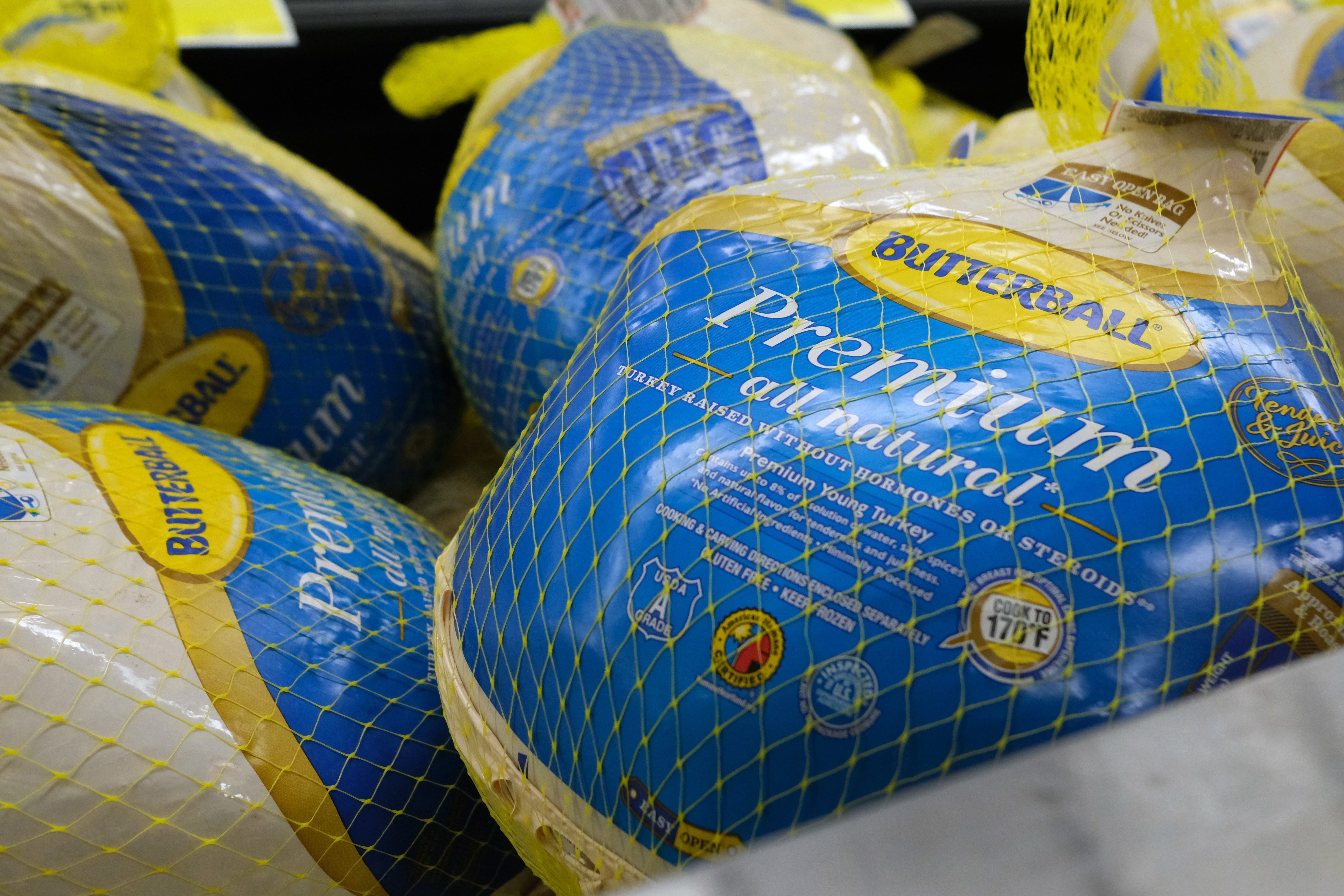
Frozen turkeys require careful thawing to prevent Salmonella and other harmful bacteria from spreading to your guests. The USDA and food safety experts recommend thawing in the refrigerator as the safest method. Never thaw on the counter, in the garage, or with warm water, as these expose the turkey to the temperature danger zone between 40°F and 140°F, where germs grow rapidly.
Butterball experts say to allocate one day for every four pounds of turkey. A 16-pound bird needs four days to thaw fully. Once thawed, the turkey stays safe in the fridge for up to four days.
Store the thawing turkey on a baking sheet or roasting pan on the lowest shelf of your refrigerator to prevent leaks from contaminating other ingredients. Even shrink-wrapped birds can leak. If raw turkey juice contacts foods that won't be cooked, like salad greens, discard them. For foods that will be cooked, thorough cooking kills harmful bacteria, but clean any surfaces the juices touched with hot, soapy water.
Cross-contamination through poor hygiene spreads Salmonella in kitchens. Wash your hands with soap and water for at least 20 seconds, including under your fingernails, after handling raw turkey. Thoroughly clean all utensils and surfaces that touch raw turkey or its juices.