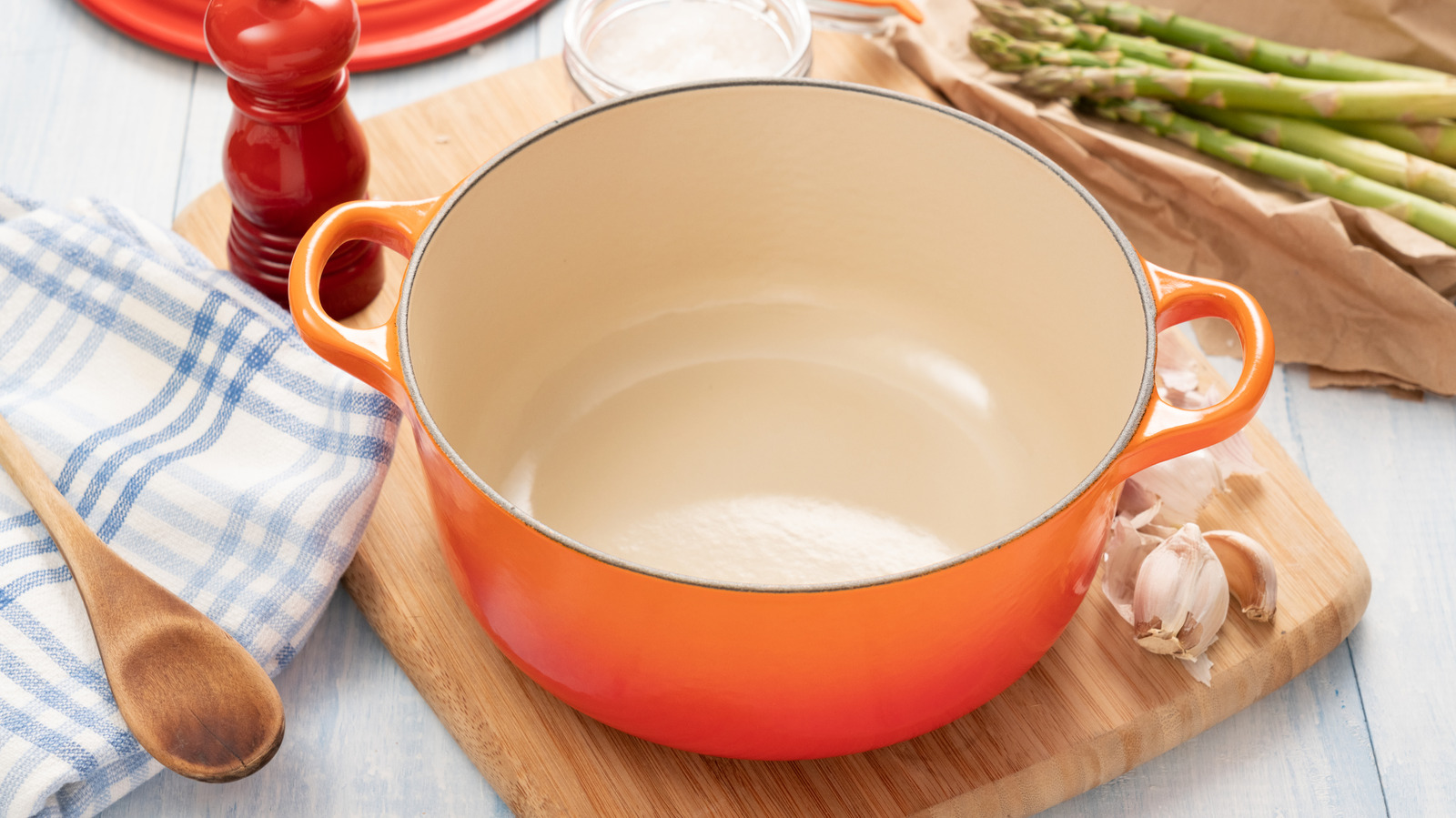
Avoid cooking flaky or fragile fish like tilapia, sole, or thin flounder fillets in a Dutch oven. The intense heat at the base of a Dutch oven causes tender fish to break apart more readily, unlike chunkier and oilier varieties such as salmon or sea bass, which can withstand higher temperatures due to their fat and muscle content.
The high sides of a Dutch oven also make it tricky to turn fish fillets over. Flaky fish varieties are often better poached, steamed, or baked en papillote since they do not need to be flipped halfway through cooking time. You can steam fragile varieties of fish in a Dutch oven by sitting it over a bed of vegetables and broth instead of frying them.
A regular frying pan or skillet works better for cooking delicate fish. Dredging delicate fish like flounder and sole in a dusting of flour creates a crust that protects the flakes from falling apart. Avoid moving the fish around as it cooks and flip it only once. Salt draws moisture out of tender fish, so push the salting stage toward the end of cooking to prevent drying it out. Alternatively, cook your entire meal en papillote by packaging fish and vegetables in parchment paper and oven baking them to capture all their natural juices.
When plating fragile fish, use a flexible spatula that can slide underneath its entire length to keep the fillet in one piece. Serving mild fish with a simple sauce like a beurre blanc made with butter, a splash of wine, and shallots allows its natural flavor to shine.