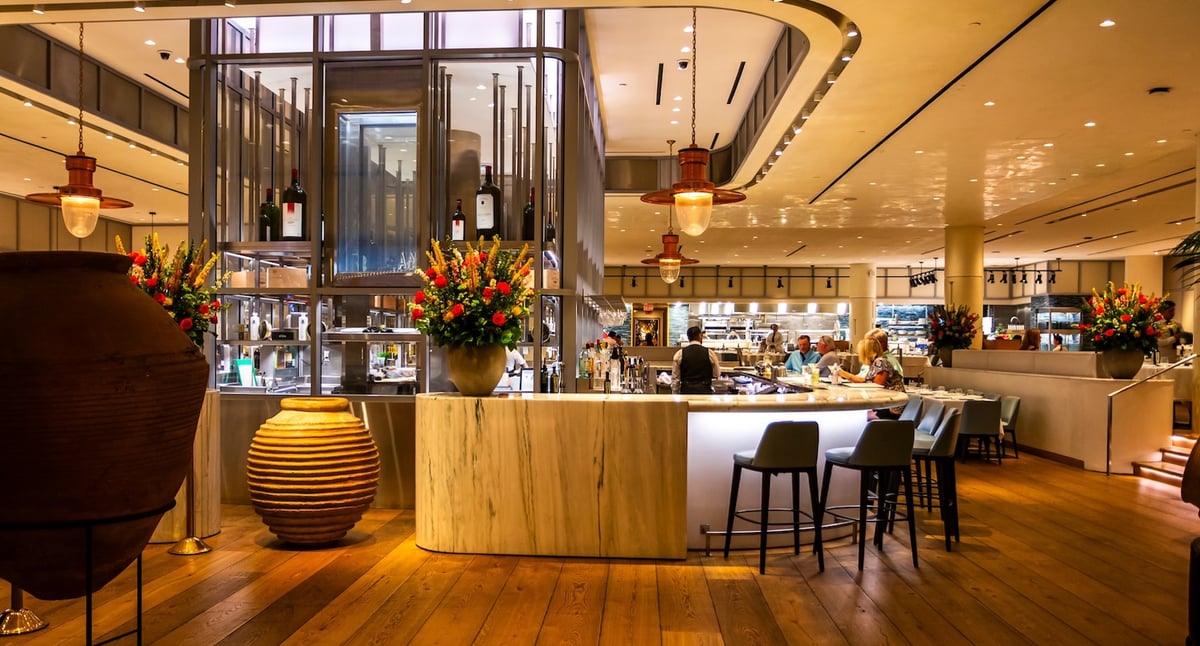
Costas Spiliadis, founder of Estiatorio Milos, is shopping for a strategic investor to fuel the luxury Greek restaurant group's international expansion. The family-owned business, which operates high-end locations across North America and Europe, has engaged advisors to identify potential partners who can inject capital while respecting the brand's heritage and operational philosophy.
Spiliadis built Milos into a powerhouse of Mediterranean dining through meticulous sourcing and an unwavering commitment to Greek seafood traditions. The flagship location in Montreal opened in 1986 and became a template for the brand's expansion to cities like New York, Boston, and Toronto. Each Estiatorio Milos location functions as a fine-dining showcase where diners can view raw fish displays before selection, mimicking the transparency and freshness expectations of Greek coastal tavernas, but with white-tablecloth service and price points reaching $150 per person.
The current expansion search reflects broader shifts in fine-dining restaurant finance. Family-owned restaurant empires increasingly recognize that organic growth has limits. Strategic capital from private equity firms, hospitality-focused investment groups, or corporate restaurant operators can accelerate development across new markets without diluting founder control. The restaurant industry has seen numerous similar transactions. Thomas Keller's The French Laundry operates independently, but many Michelin-starred groups have partnered with major hospitality companies for growth capital.
Milos operates approximately a dozen restaurants globally, with concentrations in Canada and the northeastern United States. The brand's positioning in the luxury segment insulates it from mass-market disruption, but expansion into secondary markets and international cities requires deep pockets and local relationships. A strategic partner would likely fund new locations in markets like London, Paris, or Asia where wealthy diners command high-end Greek cuisine.
The timing aligns with recovery in luxury dining post-pandemic. Ultra-premium restaurants have rebounded strongly as affluent consumers resume fine-dining habits. Greek cuisine, once relegated to casual Mediterranean fare, has ascended in prestige across major cities. Athens restaurants now command Michelin stars. New York's Llili, Antiqa, and Milos itself demonstrate sustained American appetite for elevated Greek cooking.
For potential investors, Milos offers an established operational playbook with strong brand recognition, trained staff, and proven profitability at existing locations. The chef-founder remains engaged with operations, reducing execution risk common in founder-led transitions. The business model prioritizes supplier relationships and ingredient quality over cost-cutting, protecting margins at premium pricing.
Spiliadis has not disclosed details about his expansion strategy, specific markets targeted, or expected valuation. The partnership structure remains open, though luxury restaurant groups typically seek minority stakes that preserve founder autonomy rather than full acquisitions.
This move suggests Milos intends to compete globally among ultra-premium Mediterranean restaurants, challenging established players like Nobu and Per Se for international luxury dining mindshare. Capital infusion will determine whether Spiliadis can scale his uncompromising approach to Greek seafood and service across continents without sacrificing the craftsmanship that built the brand's reputation.