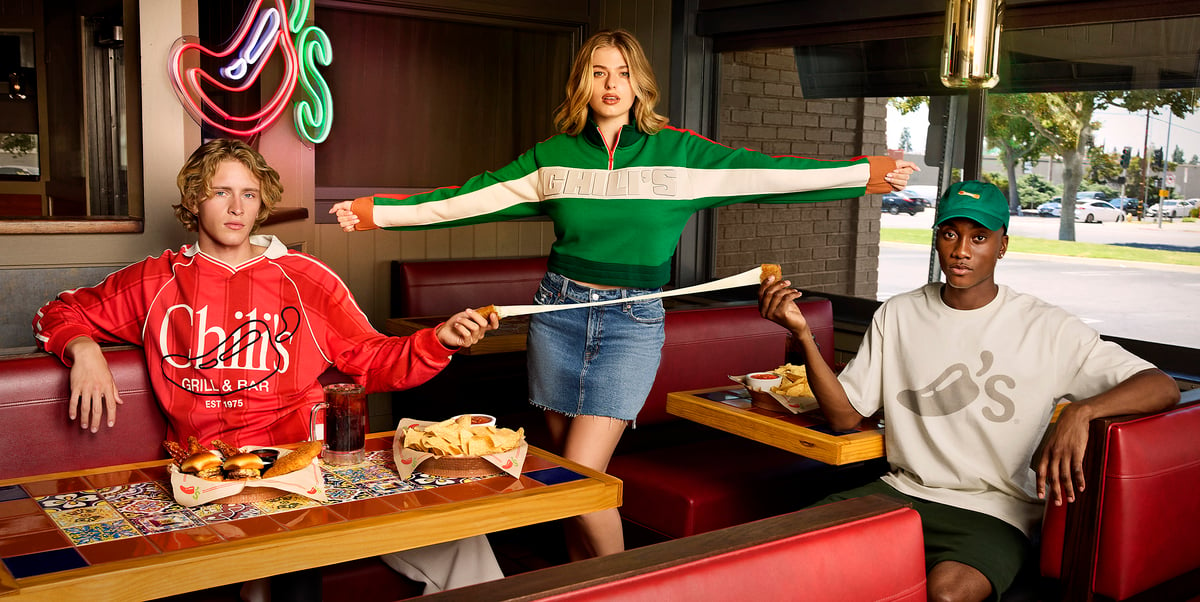
Chili's Bar & Grill, the 1,600-location casual dining chain owned by Brinker International, launched a merchandise line called the Suburban Collection this week. The apparel ranges from basic t-shirts and hoodies to more specialized pieces like a cheese pull-inspired quarter-zip pullover and sports jerseys.
The move reflects a broader strategy among restaurant chains to monetize brand loyalty beyond the dining experience itself. Chili's joins competitors like Cracker Barrel and Applebee's in offering branded clothing and accessories to customers. These retail extensions generate incremental revenue while reinforcing brand presence in everyday life.
The Suburban Collection taps into nostalgia. Chili's positioning in the casual dining market centers on the suburban American experience. The brand built its identity around accessible comfort food, sports-bar atmosphere, and family gatherings. The merchandise extends this identity into streetwear culture, a space where heritage brands increasingly compete for younger consumer attention.
The cheese pull quarter-zip represents a particularly shrewd design choice. Chili's famous Skillet Queso dip, served with warm tortilla chips, stands as one of its signature menu items. By translating this visual moment into wearable form, the company creates merchandise that doubles as insider signaling. Customers who recognize the reference wear their Chili's affinity as a badge.
Restaurant-branded merchandise historically served limited appeal. Chain merchandise often landed in clearance bins at gift shops. But contemporary streetwear culture has shifted perceptions. Vintage and novelty apparel carries cultural cachet. Supreme's collaborations with luxury houses proved that streetwear could command premium pricing. Meanwhile, vintage graphic tees from defunct restaurants and chains now sell for hundreds of dollars on resale platforms.
Chili's timing aligns with broader casual dining industry trends. Post-pandemic, chains faced pressure to engage younger demographics and drive foot traffic. Digital-native customers expect omnichannel brand experiences. Merchandise serves as both a revenue stream and a marketing tool that operates independently of restaurant visits.
The Suburban Collection likely reaches customers through Chili's website and potentially through third-party retailers. Pricing and exact product availability remain unclear from initial announcements, but the line positions Chili's as a brand willing to experiment with unconventional revenue channels.
This move also signals broader retail strategy. Restaurants increasingly treat their brands as lifestyle entities rather than solely functional dining destinations. The strategy works when executed with authenticity. Chili's core customer base values approachability and comfort. Streetwear that leans into suburban familiarity rather than ironic coolness aligns with brand DNA.
Whether the Suburban Collection converts casual diners into merchandise buyers remains to be seen. The line's success hinges on whether customers view Chili's apparel as desirable in its own right or merely as novelty items. The cheese pull quarter-zip suggests the chain understands its own brand mythology well enough to create products with genuine appeal.