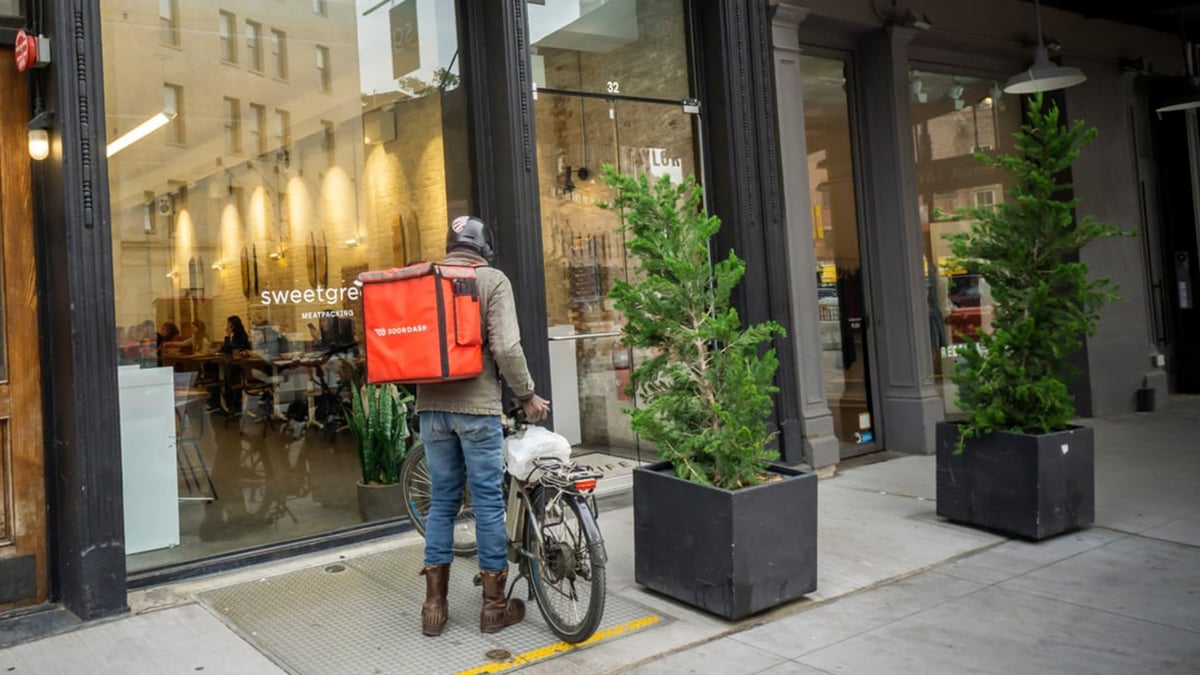
# DoorDash Expands Reach While Golden Corral and Wingstop Navigate Market Shifts
The restaurant delivery and dining landscape continues reshaping itself as major players adjust strategies to capture consumer dollars in a competitive marketplace. DoorDash extends its dominance in the delivery sector, Golden Corral confronts challenges in the casual dining segment, and Wingstop pursues growth through franchise expansion and operational refinement.
DoorDash's momentum reflects broader patterns in food delivery. The platform has consolidated market share through aggressive expansion beyond traditional restaurant partnerships. The company now operates in over 7,000 cities across North America, handling millions of orders weekly. For restaurants like Golden Corral and Wingstop, delivery partnerships represent critical revenue streams as consumer ordering habits remain tilted toward convenience and at-home consumption. Yet dependency on third-party platforms cuts into margins. Most delivery services take 15 to 30 percent commissions per order, squeezing already tight restaurant profit margins.
Golden Corral, the all-you-can-eat buffet chain with roughly 150 locations, faces headwinds specific to its format. Buffet dining, once a casual dining staple, lost appeal during the pandemic and hasn't fully recovered. Consumers shifted toward fast-casual concepts and delivery-friendly restaurants. Golden Corral's value proposition centers on in-person, high-volume consumption that defies efficient delivery. The chain now explores how to remain relevant when its core business model contradicts consumer preferences. Franchise partners report mixed results depending on location demographics and local competition.
Wingstop operates in a stronger position. The chicken wing specialist operates 1,500 plus franchises globally and benefits from products designed for delivery and takeout. Wings travel well. Sauces and seasonings define the brand more than dining atmosphere. Wingstop has capitalized on growth in the fast-casual wing category, where competitors like Hooters and traditional sports bars have lost ground. The chain's franchisees pursue unit economics improvement through technology investments, labor optimization, and menu innovation.
Each brand faces distinct pressures. DoorDash manages regulatory scrutiny around labor classifications, commission fees, and market concentration. Regulators in California, New York, and Europe have proposed caps on delivery fees and stricter gig worker classifications. Golden Corral confronts structural challenges in its buffet model. Wingstop navigates inflation in chicken commodity prices and labor costs while expanding international presence.
The restaurant industry's reliance on delivery platforms continues deepening. Restaurants now budget delivery as a permanent cost of operations rather than an ancillary channel. Commission rates shape menu pricing, portion sizes, and profitability calculations. Independent restaurants increasingly view delivery platforms as necessary evils. National chains negotiate volume discounts but still yield significant revenue percentages.
Consumer behavior data shows delivery orders climbing during weekday evenings and weekends, with wing-based restaurants and Asian cuisines leading order volume. Buffet-style establishments rank lower in delivery adoption. This divergence explains why Wingstop gains traction where Golden Corral struggles.
Looking forward, restaurants will continue optimizing for delivery economics. Some chains develop proprietary delivery apps to reduce platform dependency. Others negotiate exclusive partnerships for better terms. The winners will be brands whose food travels well, whose preparation scales efficiently, and whose unit economics withstand commission pressures.