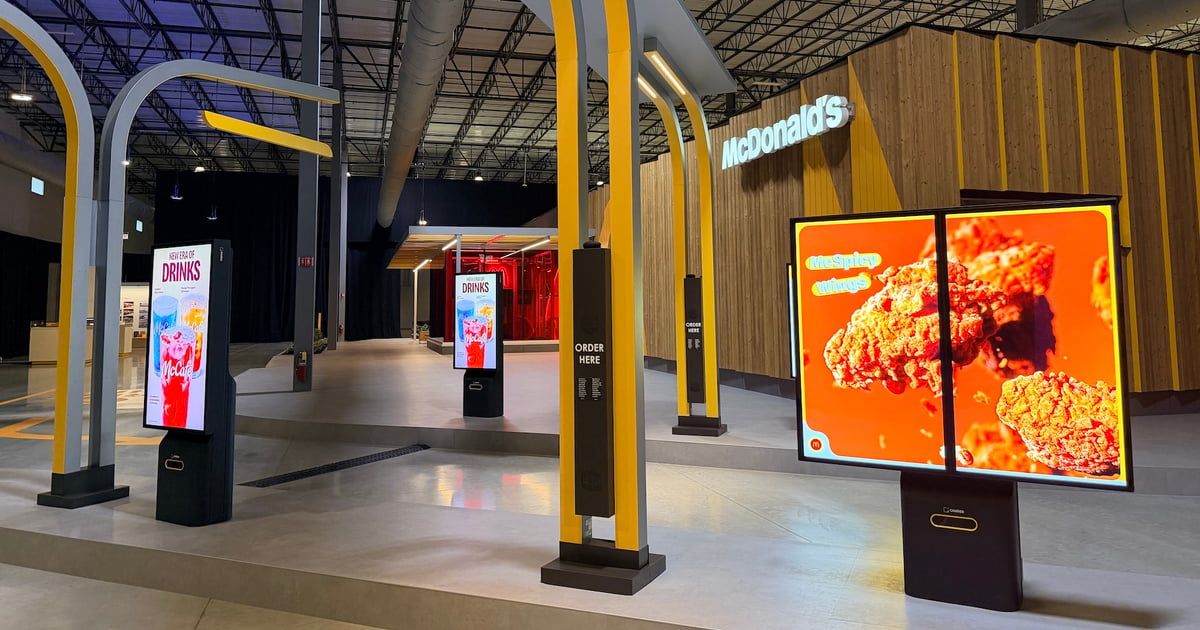
McDonald's is building a new revenue stream that mirrors strategies already deployed by Walmart and Amazon. The fast-food chain is testing a commerce media network that sells advertising space on its in-restaurant menu boards and digital screens to packaged goods manufacturers and other brands.
The initiative positions McDonald's to capture advertising dollars from companies eager to reach consumers at the moment of purchase. A customer standing in line studying menu boards becomes a captive audience for competing products. Brands like Coca-Cola, PepsiCo, and Nestlé would pay for prominent placement and visibility in thousands of McDonald's locations worldwide.
Industry analysts estimate this advertising business could generate $1 billion annually if scaled across McDonald's global footprint of nearly 40,000 restaurants. That revenue sits almost entirely above the cost line. McDonald's already owns the screens and real estate. Selling ad inventory requires minimal additional infrastructure investment.
The strategy reflects how traditional retail has monetized customer attention. Walmart launched its Walmart Connect advertising platform in 2018 and now generates billions in annual ad revenue. Amazon's advertising business exceeds $40 billion yearly. Instacart, Target, and other retailers followed suit. Quick-service restaurants have lagged behind in capturing this revenue opportunity.
McDonald's tested similar concepts years ago but lacked the technology infrastructure and advertiser relationships to execute at scale. Digital menu boards now blanket company-operated and franchised locations globally. The chain operates its own loyalty app, which provides first-party customer data and targeting capabilities. These assets create natural entry points for programmatic advertising.
Franchisees hold the key to rollout success. McDonald's operates roughly 95 percent franchised restaurants. The company must convince individual franchise owners that ad revenue sharing justifies screen real estate previously dedicated solely to promoting McDonald's menu items. Revenue splits typically follow 50-50 or 60-40 models in similar arrangements.
Competition matters here too. Starbucks, Chipotle, and other quick-service chains with extensive digital infrastructure could launch competing ad networks. First-mover advantage in building advertiser relationships and media buying capabilities creates defensible market position. McDonald's global scale and traffic volumes position it as an attractive partner for brands seeking mass reach.
The timing aligns with broader restaurant industry trends. Quick-service chains increasingly view technology and data as profit centers separate from food sales. Digital ordering, delivery platforms, and loyalty programs already generate ancillary revenue. An advertising network completes the ecosystem.
McDonald's declined to comment on specific financial projections but confirmed it explores new revenue opportunities. The company expects results from current testing within the next fiscal year. Successful rollout could reshape how restaurants think about their physical footprint and customer interactions.
This move reflects the maturing fast-food business. Same-store sales growth slows. Labor costs rise. Consumer traffic fluctuates with economic cycles. Restaurant chains now leverage their biggest asset: customer access. McDonald's has nearly 70 million daily customers globally. That attention has monetary value to brands competing for shelf space and mindshare.