# Fast Food Chains Face Perception Crisis as Consumers Question Value
Quick service restaurants are losing the battle for consumer perception, with major chains struggling to justify premium pricing in an increasingly skeptical market. Popeyes and Domino's stand at the center of this shift, each attempting to recapture attention through signature products while the broader QSR industry watches value sentiment erode.
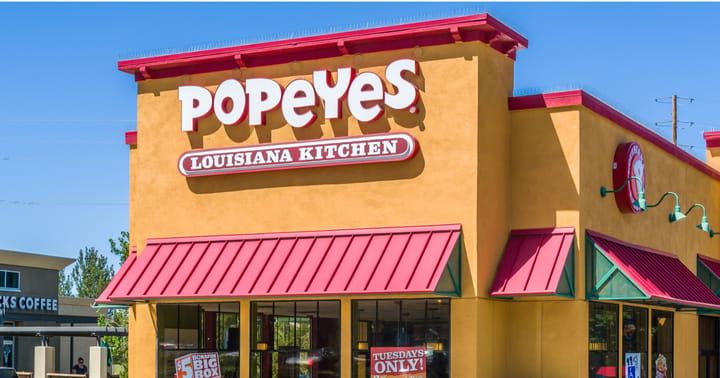
Popeyes faces mounting pressure to reverse declining consumer engagement. The Louisiana-born fried chicken chain built its brand identity on bold, spiced chicken sandwiches and regional authenticity. Yet in a crowded market where Chick-fil-A dominates sandwich sales and regional players offer competitive alternatives, Popeyes struggles to cut through noise. The chain's challenge extends beyond product quality. Consumers increasingly perceive fast food as overpriced relative to portion size and ingredients. Popeyes must convince diners that its distinctive flavor profile and heritage justify menu prices that have climbed steadily since pandemic recovery.
Domino's pursues a different strategy with a new pizza formulation designed to achieve cultural icon status comparable to McDonald's Big Mac. The pizza giant invests heavily in product innovation while competitors like Pizza Hut and regional chains fragment market share. A reimagined Domino's pizza enters a market where delivery speed has become table stakes and product differentiation matters more than convenience alone. The question hinges on execution. Can a new pizza formula generate the kind of lasting brand equity that the Big Mac achieved across decades? McDonald's burger succeeded partly through consistency and cultural saturation. Domino's new offering must deliver on both fronts.
The broader QSR value crisis affects everyone. Industry data reveals that consumers question whether they receive fair value for their dollar at major chains. Wage increases, ingredient costs, and supply chain pressures have pushed menu prices upward faster than wage growth. This math hits middle and lower-income consumers hardest. Regional and independent restaurants, along with ghost kitchens and emerging brands, capture share from traditional QSR players by offering better perceived value. Loyalty programs, limited-time offers, and value menus provide temporary relief but fail to address underlying skepticism.
Popeyes and Domino's serve as test cases for how legacy QSR brands respond. Popeyes banks on product authenticity and bold flavor profiles to justify premium positioning. Domino's bets on innovation and category leadership. Both acknowledge that nostalgia and convenience no longer guarantee consumer loyalty. The chains must deliver genuine value perception, not just promotional discounting.
The stakes extend beyond two brands. If consumers lose faith in QSR value proposition across the board, market share migrates elsewhere. Independent operators, fast casual concepts, and regional chains stand ready to capture defectors. The QSR industry built itself on predictability and accessibility. That foundation cracks when consumers feel they overpay for familiar products.
Popeyes needs a communication strategy that emphasizes ingredient quality and cultural significance. Domino's must prove its new pizza justifies consumer trial and repeat purchase. Both chains operate within a market that increasingly demands authenticity and value transparency. Winners in this environment differentiate on actual product merit, not marketing alone.