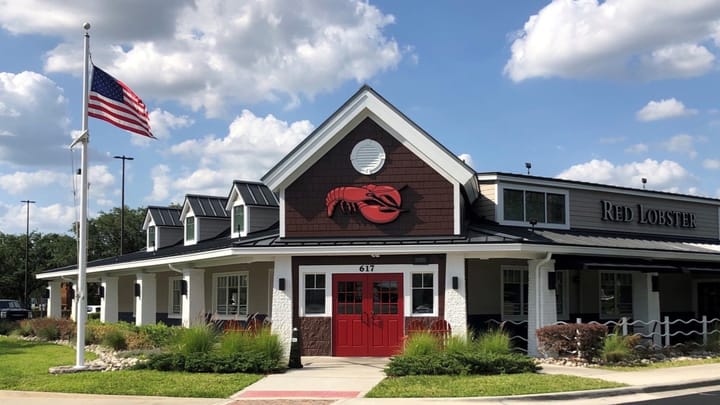
Red Lobster continues its aggressive contraction after emerging from Chapter 11 bankruptcy earlier this year, closing additional underperforming locations as part of what executives call a "right-sizing" strategy. The seafood chain, once a casual dining powerhouse with hundreds of locations, has shuttered dozens of restaurants throughout 2024 in a deliberate effort to trim its footprint and focus on profitable units.
The closures reflect a broader restructuring that began when Red Lobster filed for bankruptcy in May 2024, burdened by debt, rising labor costs, and slumping customer traffic. The chain's financial troubles had accumulated over years of declining same-store sales and increased competition from both upscale seafood restaurants and fast-casual chains. The bankruptcy filing represented a dramatic fall for a brand that once dominated the casual dining seafood category.
Red Lobster's bankruptcy was notably triggered in part by aggressive promotional spending, particularly its unlimited shrimp offer, which drove traffic but eroded profit margins. The chain burned through cash trying to compete with national chains while managing extensive real estate obligations across hundreds of leased locations. Management ultimately determined that not every restaurant in the portfolio remained viable under current market conditions.
The new ownership structure, which emerged from bankruptcy protection, has adopted a performance-based approach to store operations. Rather than maintaining a sprawling network of underperforming units, the company now prioritizes locations with stronger customer demand, better demographics, and proven profitability. This represents a fundamental shift from the expansion mindset that characterized the chain for decades.
The right-sizing effort includes evaluating lease terms, local market saturation, and individual unit economics. Closing restaurants also reduces overhead costs, simplifies supply chain management, and allows the company to concentrate marketing resources on remaining locations with stronger returns on investment. For a seafood chain with significant labor-intensive operations, reducing locations directly impacts payroll and operational complexity.
Customer-facing implications vary by region. Consumers in some markets now face longer driving distances to reach the nearest Red Lobster, while customers in densely populated areas may see minimal change. The chain still operates hundreds of locations nationwide, though exact current counts remain fluid as additional closures may occur during the turnaround process.
The broader casual dining sector has experienced significant consolidation following the pandemic recovery period. Multiple chains have reassessed their real estate portfolios, closed underperforming units, and shifted toward more selective expansion. Red Lobster's approach aligns with industry trends favoring quality over quantity.
Management has not ruled out future restaurant openings once the portfolio stabilizes and profitability improves. The strategy essentially trades volume for efficiency, betting that fewer, healthier locations generate stronger returns than a sprawling network of struggling restaurants. The company's ability to execute this turnaround will determine whether Red Lobster returns to competitive health or faces continued decline in a crowded casual dining marketplace.