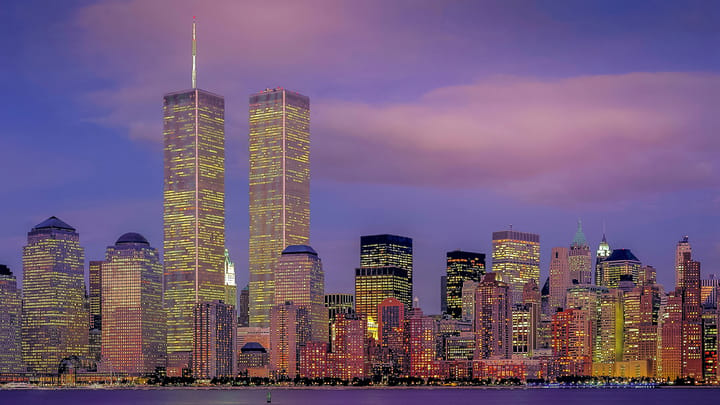
# An Elegy for Windows on the World
The Joseph Baum & Michael Whiteman Company redesigned and reopened Windows on the World in 1996, five years before the restaurant's destruction on September 11, 2001. The legendary dining establishment occupied the 106th and 107th floors of the North Tower of the World Trade Center, making it one of the most iconic restaurants in American culinary history.
Joseph Baum and Michael Whiteman represented the pinnacle of restaurant design and hospitality innovation. Baum had already established himself as a visionary by creating The Four Seasons in Manhattan in 1959, a groundbreaking restaurant that shaped modern fine dining. When Baum and Whiteman took on Windows on the World's redesign, they brought that same creative ambition to the project. The 1996 reopening represented a significant investment in updating the restaurant's kitchen, dining room aesthetics, and service standards.
The restaurant commanded 10,000 square feet across two floors with seating for 130 diners. Its primary distinction was not merely its food, but its vantage point. From those heights, diners experienced Manhattan's skyline in all directions. The windows that gave the restaurant its name framed the city like a living painting that changed with every season and time of day. That view represented something deeper than mere spectacle. It embodied New York's aspirational identity during the 1990s economic boom.
Windows on the World operated as a fine dining establishment with an international menu. Chef Michael Lomonaco led the kitchen during its final years, crafting dishes that honored both American ingredients and French classical technique. The wine program was extraordinary, featuring over 1,500 selections. The service operated at the highest level, reflecting standards that Baum had pioneered decades earlier.
The restaurant became a destination for special occasions, business celebrations, and moments New Yorkers wanted to remember. Marriage proposals happened at its tables. Corporate dinners shaped business deals. Tourists and locals alike considered dining at Windows on the World a rite of passage, a way to experience New York at its most rarefied.
The September 11 attacks destroyed Windows on the World entirely. The North Tower collapsed, taking the restaurant, its staff, and the 72 people dining there that morning. Among those killed were Lomonaco's sous chefs and kitchen staff who had arrived early to prepare for the day's service.
The redesign that Baum and Whiteman completed in 1996 represented their final major collaboration. Their vision of creating spaces where architecture, design, hospitality, and food converged reached its apex at Windows on the World. The restaurant stood as a physical manifestation of their shared belief that dining could be transformative. That belief perished with the building twenty years ago, leaving only memories and archival photographs of what was once possible.
The restaurant remains a symbol of New York's resilience before that resilience was tested. Its loss marks the moment when architecture, design, and hospitality became inseparable from tragedy in the American consciousness.