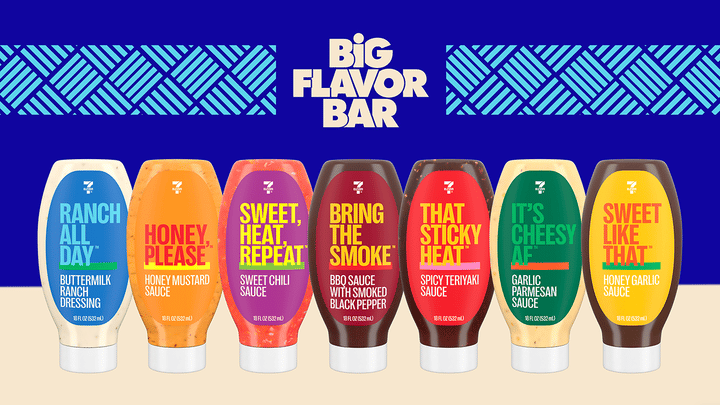
# 7-Eleven Launches BiG Flavor Bar: A Customization Play in the Convenience Store Wars
7-Eleven has opened a new battlefront in the convenience store competition by introducing the BiG Flavor Bar, a sauce and topping station that lets customers build their own flavor profiles on prepared foods. The rollout marks the retailer's push beyond grab-and-go staples into interactive food experiences that mirror trends in fast-casual dining.
The station features a curated lineup of original sauces developed by 7-Eleven's product team. Customers can layer these sauces and toppings onto items like hot dogs, nachos, and other prepared foods available at the store. The bar functions as both a product showcase and a differentiation tool in a market where convenience stores increasingly compete on food quality and customization, not just speed and location.
The strategy reflects how 7-Eleven sees its future. The chain operates nearly 9,000 locations across North America and has invested heavily in fresh food programs over the past five years. The BiG Flavor Bar extends that push by giving customers agency over what they eat, a principle that has driven traffic for chains like Chipotle and Sweetgreen. For 7-Eleven, the model works within the constraints of a convenience store environment. Customers don't need 15 minutes to customize their meal. They grab a prepared item, add sauce, and leave.
The original sauce lineup represents 7-Eleven's attempt to build proprietary flavor assets. Rather than relying on national brands or generic condiments, the retailer is creating products that customers can only find at 7-Eleven. This approach mimics how restaurants build loyalty through unique recipes and flavor combinations. If the sauces develop a following, they could become an upsell opportunity and a reason to choose 7-Eleven over competitors.
The BiG Flavor Bar also solves a practical problem. Convenience store customers have limited visibility into what they're getting. A flavor station lets them see and understand exactly what goes on their food. Transparency and control matter to modern consumers, especially in an era when food allergies and dietary preferences shape purchasing decisions.
7-Eleven competes in a crowded space. Wawa, Casey's, and regional chains have all upgraded their food programs. Gas stations now sell made-to-order food. Traditional fast food has moved into convenience channels. For 7-Eleven to defend its market position, it needs to offer experiences that feel fresh and intentional, not just functional.
The BiG Flavor Bar also represents a shift in how convenience retailers think about labor. Rather than asking workers to assemble custom orders from scratch, the station combines pre-made items with a topping bar. This model requires less training and reduces bottlenecks. Workers prepare base items during slower periods, and customers self-serve the sauces and toppings during rush hours.
The rollout timing matters. Consumers spend more time in convenience stores than they did before the pandemic. They browse, they eat, they treat the location as a quasi-lunch spot rather than just a pit stop. 7-Eleven's expansion of its food program capitalizes on that behavioral shift.
Whether the BiG Flavor Bar becomes a system-wide fixture depends on customer response and operational metrics. If customers engage with the station and sales lift, expect rapid expansion. If adoption stalls, 7-Eleven will learn what flavors and formats don't work in the convenience store context. Either way, the company has signaled that the era of commoditized convenience store food is ending.