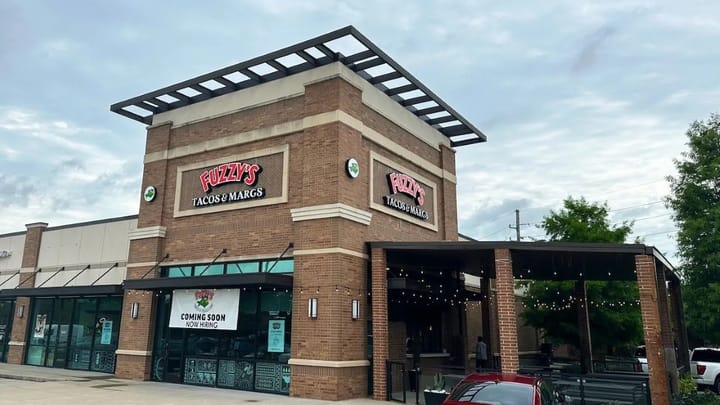
Fuzzy's Taco Shop, the casual dining chain born in Texas, has closed its Houston-area locations after a notably brief tenure in the market. The closures mark a retreat for the brand's full-service dining experiment, which launched in Houston just over a year ago.
The shutdown reflects broader challenges facing casual dining concepts as they navigate shifting consumer preferences and operational complexities. Fuzzy's Taco Shop, known for its laid-back Baja-California inspired atmosphere and customizable taco offerings, positioned its full-service format as an expansion beyond its core quick-service DNA. This strategic pivot attempted to capture diners seeking more upscale taco experiences with table service and expanded menus.
Houston presented what appeared to be promising territory for the Texas brand. The metro area boasts a large Latino population and established appetite for both traditional and innovative taco concepts. Yet the market proved unforgiving for Fuzzy's full-service model. The decision to close suggests operational challenges, insufficient demand for the elevated format, or cash flow pressures that made the locations unsustainable.
Full-service taco restaurants occupy a tricky middle ground in today's restaurant landscape. They lack the efficiency economics of quick-service chains while competing directly with established fine-dining Mexican concepts and emerging fast-casual players. The overhead associated with servers, larger dining spaces, and extended hours creates fixed costs that demand consistent traffic volumes. Fuzzy's Houston locations apparently failed to generate sufficient covers to justify these expenses.
This withdrawal also reflects the current financial stress gripping casual dining. Rising labor costs, inflation in food commodities, and consumer pullback in discretionary spending have squeezed restaurant margins across the sector. A brand testing a new format faces even steeper challenges. Fuzzy's Houston experiment needed to prove sustainable within months to justify continued investment, particularly as the parent company likely faced pressure to preserve capital.
The chain's retreat signals caution about geographic expansion and format innovation among established restaurant brands. Rather than pursuing aggressive growth into new markets with new concepts, successful chains increasingly focus on optimizing core operations and strengthening existing locations. Fuzzy's decision to shutter Houston operations rather than adjust the model suggests the full-service approach itself may not align with the brand's core competency or customer expectations.
For Houston diners, the closures eliminate one option in an increasingly crowded taco marketplace. The city continues supporting numerous taco concepts from high-volume quick-service operations to chef-driven taquerias. Fuzzy's departure creates a small void in the full-service taco segment but unlikely forces any dramatic shift in dining patterns.
This closure joins a growing list of restaurant casualties in 2024 and beyond as chains rationalize their portfolios. Brands that expanded aggressively during pandemic-era optimism now reassess which markets and formats actually generate profits. Fuzzy's Houston locations, despite launching with brand recognition and operational experience, could not overcome the structural challenges of casual dining in the current environment. The chain's core quick-service model remains intact elsewhere, but the Texas-born brand's experiment with full-service dining in its home state ended before achieving critical momentum.