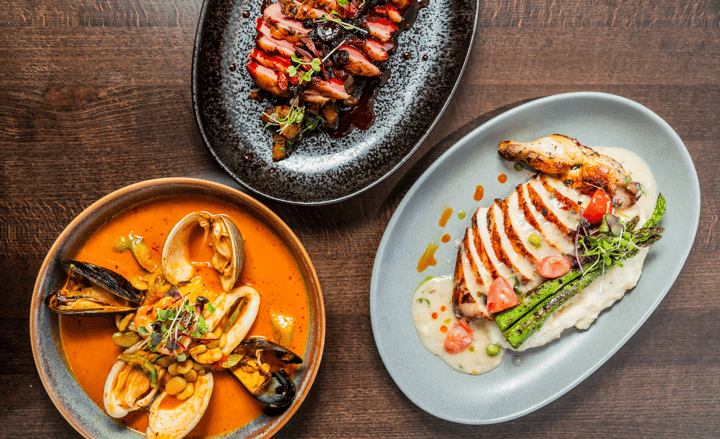
Christian Nuñez has tripled his restaurant footprint across New York City with three distinct iterations of Buena Vista Restaurant & Bar, each location reflecting his refined approach to Euro-Latin cuisine and hospitality.
The expansion represents a calculated shift for Nuñez, who moved beyond operating a single flagship into a multi-unit operator while maintaining individual character at every address. Rather than stamping identical menus and aesthetics across venues, Nuñez customized each Buena Vista to its neighborhood and clientele, a strategy that separates his approach from typical restaurant chains.
The menu foundation rests on a Euro-Latin platform, blending Mediterranean and Latin American techniques with New York City sophistication. This culinary framework allows Nuñez to work with seasonal ingredients while respecting both traditions. Spanish influences anchor dishes, complemented by Central and South American flavors that reflect New York's cultural fabric. The approach mirrors successful restaurants like Casa Mono and Picholine, which similarly bridge European and Latin cuisines without diluting either.
Equally central to the Buena Vista identity is the cocktail program. In a city saturated with craft cocktail bars, Nuñez created a distinctive list that supports rather than dominates the dining experience. The drinks integrate Latin American spirits like mezcal, cachaca, and rum alongside European vermouth and wines, positioning cocktails as extensions of the menu rather than standalone attractions.
Design differentiation proves essential to the three-location strategy. Rather than reproducing architectural elements or decor across venues, Nuñez worked with designers to craft unique spaces that respond to each location's context. One Buena Vista might emphasize warm, intimate dining while another prioritizes bar-centric energy or garden-style seating. This design flexibility attracts different customer segments and repeat visits from patrons seeking varied Buena Vista experiences.
The expansion speaks to Nuñez's operational maturity and understanding of New York's restaurant landscape. Growing from one to three locations requires refined systems for sourcing, training, and kitchen management. Maintaining distinct menus and design languages while achieving operational consistency demands sophisticated leadership. Nuñez navigated this challenge without resorting to standardization, suggesting he built scalable infrastructure behind customized experiences.
This model carries implications for New York's restaurant scene. As real estate costs and labor expenses squeeze margins, many operators consolidate menus and designs to reduce complexity and costs. Nuñez's inverse strategy shows that selective customization, when executed with discipline, can command premium pricing and customer loyalty across multiple locations. His restaurants likely attract diners willing to pay for thoughtful differentiation rather than convenient uniformity.
The three Buena Vista locations also position Nuñez within New York's growing class of chef-operators who build recognized concepts without pursuing sprawling chains. This middle path between single flagship and national expansion suits the city's neighborhood-focused dining culture and capital constraints. Success here establishes Nuñez as a serious restaurateur capable of managing multiple properties while preserving culinary vision and design integrity.