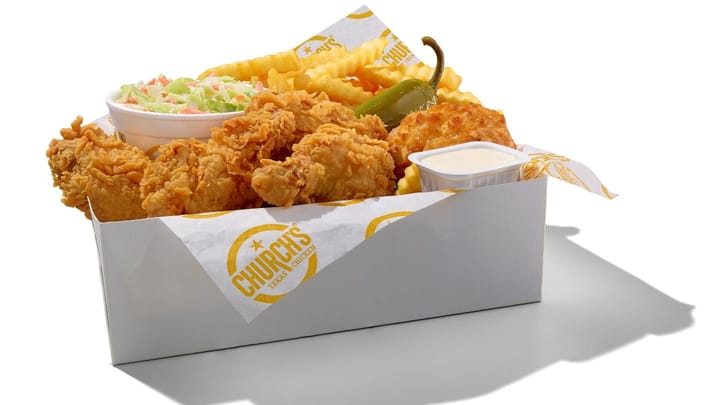
Church's Texas Chicken has rolled out Big Deal Boxes across its U.S. locations, a value-focused menu offering designed to capture budget-conscious diners amid persistent inflation pressures on quick-service restaurant traffic. The boxes bundle multiple pieces of fried chicken with sides and a drink, targeting the growing demand for affordable meal solutions that don't compromise on portion size.
This move positions Church's directly against competitors like Popeyes, KFC, and Chick-fil-A, all of which have expanded value offerings in recent months. The chicken category has become increasingly competitive, with chains fighting for share through aggressive bundling rather than raising individual item prices. Church's approach mirrors the industry-wide shift toward combo deals that anchor customer visits and drive average check increases through perceived value rather than sticker shock.
Beyond the Big Deal Boxes, Church's is testing chicken and waffles in select markets, a strategic diversification that taps into the soul food and brunch categories simultaneously. This format capitalizes on several trends: the staying power of breakfast-for-dinner dining habits established during the pandemic, the cultural resonance of chicken and waffles in Black culinary traditions, and the higher margin potential of waffles compared to traditional sides like mashed potatoes or coleslaw.
The chicken and waffles test matters because it signals Church's willingness to expand beyond its core fried chicken identity without abandoning it. Unlike some competitors that have flattened their menus, Church's is adding complexity. Success in select markets could justify broader rollout, transforming the brand's daypart mix and allowing franchisees to capture traffic during slower periods.
Church's faces headwinds. The company operates roughly 1,500 locations globally, many in franchise arrangements, meaning capital expenditure for menu innovation spreads across multiple operators with varying financial capacity. Marketing a new format requires consistent execution across a distributed network, a challenge that has derailed other value-menu launches.
The timing reflects restaurant industry recovery patterns. As inflation-adjusted consumer spending stabilizes and QSR chains report improved traffic, value positioning remains essential. Customers have rewired their behavior. They expect deals. Church's Big Deal Boxes and the chicken and waffles tests represent a recognition that competing on value isn't temporary. It's the baseline expectation.
For franchise partners, these offerings create operational complexity. Chicken and waffles require different preparation, cooking times, and equipment than the streamlined fried chicken model. Staff training costs rise. But the potential to fill seats during breakfast and brunch dayparts justifies the investment if execution proves sound in pilot markets.
Church's strategy reflects a broader realization across QSR: volume and frequency trump margin per transaction. The chain is betting that bigger boxes and new daypart offerings will drive repeat visits and loyalty, ultimately generating stronger unit economics than premium positioning ever could. Whether the tests convert to permanent menu items depends on adoption rates in pilot markets and whether franchisees can execute without sacrificing service speed or product quality.