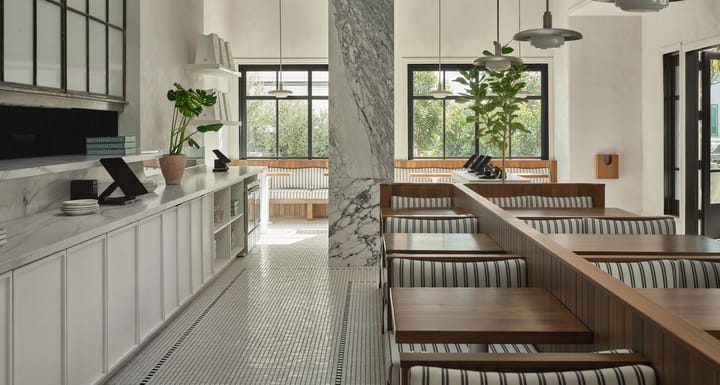
Gwyneth Paltrow's Goop Kitchen launches its first full-service dine-in restaurant, shifting the wellness brand's business model from delivery-only virtual kitchens to a brick-and-mortar dining destination.
The move represents a calculated expansion for Goop, the lifestyle and wellness empire that began as a newsletter in 1997 and has since grown into a $250 million valuation company. Until now, Goop Kitchen operated exclusively as a ghost kitchen concept, fulfilling orders through third-party delivery platforms and pickup services. The transition to a physical restaurant space marks the company's most aggressive retail food venture yet.
Goop's culinary offerings reflect Paltrow's personal wellness philosophy. The menu prioritizes organic, locally sourced ingredients aligned with clean-eating principles that have defined the brand for decades. Dishes emphasize nutrient density, often featuring plant-forward options and proteins sourced from farms that meet Goop's standards for sustainability and humane treatment.
The restaurant opening arrives amid broader industry shifts. Ghost kitchens exploded during the pandemic as restaurants abandoned dining rooms. Many have thrived profitably without expensive real estate overhead. Goop's pivot signals confidence that premium wellness dining can sustain a full-service model with higher labor costs and rent obligations.
This dine-in location also serves as a physical manifestation of Goop's brand. Visitors can experience the aesthetic and values that Paltrow has cultivated online. The restaurant becomes a retail environment where customers encounter the brand's curated lifestyle across multiple sensory dimensions. Similar to how luxury brands use flagship stores as marketing tools, Goop Kitchen functions as an experiential advertisement for the broader ecosystem.
The restaurant industry continues consolidating celebrity-driven concepts. Martha Stewart, Ina Garten, and Wolfgang Puck built restaurant empires decades ago. Today's influencer economy produces a new generation of food-focused entrepreneurs who leverage personal brands directly into dining establishments. Goop Kitchen joins this lineage while maintaining the company's wellness-first positioning.
Operational challenges accompany the expansion. Running a full-service restaurant demands expertise in kitchen management, staff scheduling, inventory logistics, and regulatory compliance that differ fundamentally from ghost kitchen operations. Labor costs in food service continue rising, and competition intensifies in markets where Goop establishes locations.
The dine-in format also exposes the brand to direct customer interaction that delivery buffers. Online ordering creates distance between brand and consumer experience. A physical restaurant invites scrutiny of service quality, ingredient sourcing claims, and pricing strategy. Customer satisfaction becomes immediately visible through public reviews and social media reactions.
Goop's existing customer base likely provides initial momentum. The brand cultivates a devoted audience willing to pay premium prices for products aligned with wellness ideology. Restaurant pricing strategies probably mirror Goop's established approach, positioning meals as investments in health rather than mere sustenance.
The dine-in restaurant represents Goop's confidence in the wellness market's durability and growth potential. As consumer interest in clean eating, functional nutrition, and mindful consumption persists, companies like Goop continue monetizing these values across multiple channels. The restaurant extension demonstrates that Paltrow's wellness brand has matured beyond digital commerce into physical hospitality.