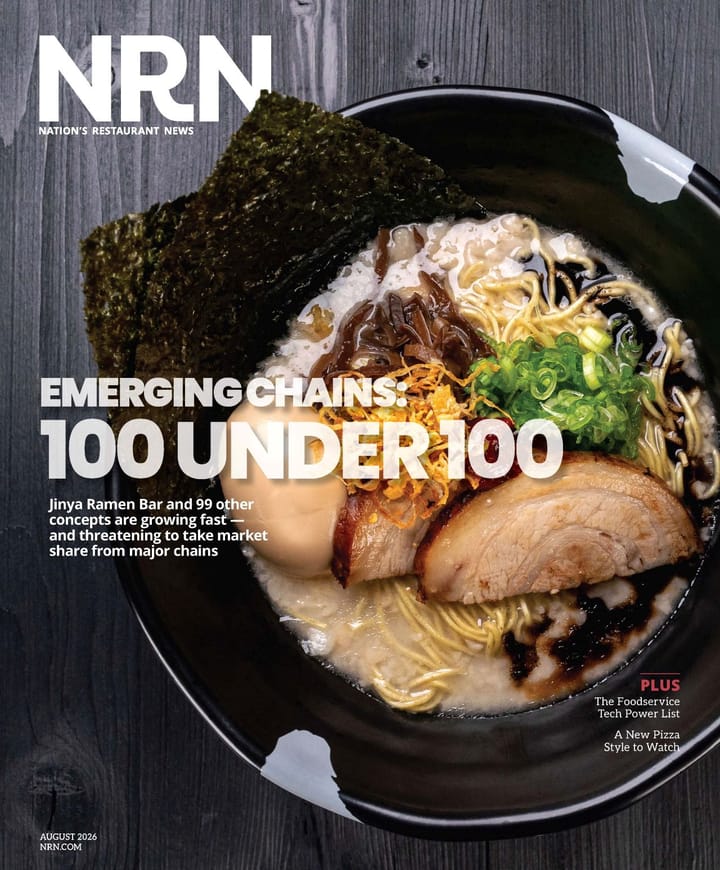
# Rising Challengers: 100 Emerging Restaurant Concepts Poised to Disrupt the Market
The restaurant industry's power structure shifts every year, and Nation's Restaurant News has identified a cohort of 100 emerging concepts with fewer than 100 locations that captured meaningful growth over the past twelve months. These nimble operators represent the next wave of market disruption, armed with distinct culinary identities, efficient operational models, and customer loyalty that rivals the established chains.
This segment matters because it reveals where consumer dollars are flowing. While mega-chains dominate headlines and Wall Street portfolios, the real innovation happens at smaller scale. Operators with limited footprints can test bold concepts, iterate quickly, and build authentic brand loyalty without the bureaucratic weight of 1,000-plus unit systems. They move faster. They adapt menus to regional tastes. They hire people who believe in the mission rather than clock punchers.
The defining characteristic of these 100 concepts: they've already moved past the startup survival phase. They operate multiple locations, demonstrating repeatable unit economics and management systems that actually work. Growth in the past year signals something stronger than luck. It signals demand that extends beyond the original market. Investors notice this pattern. Private equity firms track these concepts obsessively, waiting for the moment founders consider selling.
What separates these rising players from the thousands of other struggling independents and small chains? Execution on fundamentals. A clear point of view on food. Pricing discipline. Real estate strategy. Supply chain competence. Staff retention. These concepts prove that diners crave alternatives to the corporate standardization that dominates suburban strips and food courts.
The competitive threat to major chains intensifies because these emerging concepts occupy the middle market. They're not cheap-eats value plays, nor are they fine-dining destinations. They're positioned where mainstream restaurant traffic actually concentrates: neighborhood corridors, mixed-use developments, secondary markets where national giants haven't saturated every corner. A concept with 40 locations in the right markets captures more wallet share than a 400-unit chain spread across oversaturated territory.
Market consolidation typically follows. The emerging brands identified in this cohort will face acquisition offers. Some accept and scale aggressively under new ownership, eventually joining the bloat they once challenged. Others stay private, grow organically, and maintain the operational agility that made them successful. A few fail when founders lose focus or when a new culinary trend renders their concept suddenly dated.
For franchisors, this report serves as a competitive intelligence briefing. For investors and franchisees evaluating where to place capital, these 100 concepts represent opportunities to back winners before the mainstream discovers them. For consumers, it's validation that restaurant choice still exists beyond the familiar logos.
The restaurant industry remains a proving ground where new ideas compete openly against established brands. These 100 emerging concepts demonstrate that growth and innovation don't require a century of history or billions in marketing budgets. They require clarity, consistency, and food worth driving for.