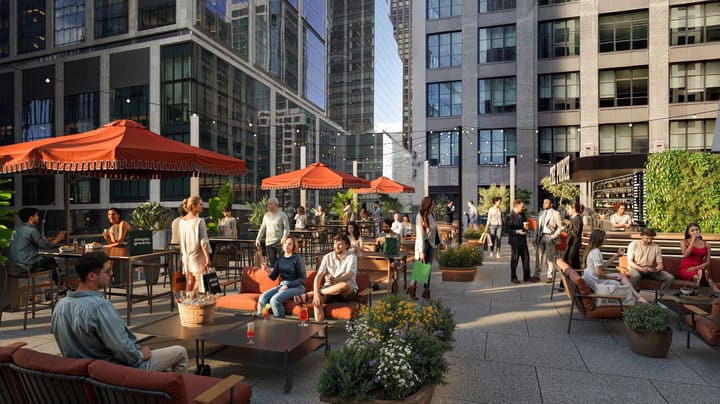
# Market Hall at Manhattan West Opens This Fall With 12 Restaurant Concepts, Full-Service Dining, and Two Bars
Manhattan West's long-awaited food hall launches this fall with an ambitious lineup of 12 restaurant concepts spread across 34,000 square feet of dining and retail space. The development, situated in the heart of Midtown Manhattan's Hudson Yards neighborhood, represents a significant bet on the collective dining model that has reshaped urban food retail over the past decade.
The food hall format, popularized by destinations like Time Out Market and The Pennsy in Philadelphia, clusters independent chefs and small restaurant operators under one roof. This structure allows diners to sample multiple cuisines without committing to a single restaurant. Market Hall at Manhattan West follows this blueprint while adding layers of complexity with its full-service restaurant and dual bar program.
The exact chef roster has not been fully revealed, but the scale of the operation signals premium positioning. At 34,000 square feet, Market Hall ranks among New York's largest food hall developments. For context, Gotham West Market in Hell's Kitchen spans 30,000 square feet and houses nine concepts. Market Hall's additional space suggests deeper vendor benches and more ambitious dining zones.
Full-service restaurant integration distinguishes this hall from typical market formats. Rather than relegating dining to counter service only, the developers have built in a proper restaurant operation. This dual approach captures different occasions. Counter-service concepts attract quick-lunch traffic; the seated restaurant captures dinner guests and those seeking table service. Two bars amplify the destination's cocktail credibility and extend dwell time, converting food shopping into an extended evening experience.
Manhattan West's location near Hudson Yards places the hall in a neighborhood that has attracted major dining investment. The area's residential growth and corporate tenancy have supported recent openings from established operators. Market Hall positions itself as both a destination venue and neighborhood amenity, serving both visitors and locals.
The timing matters. Food halls have faced challenges post-pandemic as remote work reduced office-district foot traffic and as landlords pushed for higher rents. Several halls across the country contracted or closed. A new 34,000-square-foot opening in Manhattan suggests confidence that the format still works in premium locations with sufficient density.
For the chefs and small operators, Market Hall represents a lower-barrier entry into Midtown dining. Traditional full-service restaurant leases in the neighborhood carry rents that price out many independent operators. Food hall stalls reduce overhead, allowing chefs to test concepts, build reputations, and eventually graduate to standalone restaurants. New York has seen this trajectory repeatedly, with operators using hall platforms as launching pads.
The restaurant industry continues watching food halls closely as urban dining evolves. Delivery cannibalized some casual dining traffic. Hybrid models that blend retail shopping, quick service, and seated dining attempt to capture multiple consumer behaviors in one visit. Market Hall at Manhattan West bets that Midtown diners want options, atmosphere, and variety under one address.
The fall opening comes as New York hospitality ramps post-pandemic. Investors sense that premium urban dining still commands premium rents and audience loyalty, provided the concepts deliver quality and the spaces feel essential rather than convenience-driven.