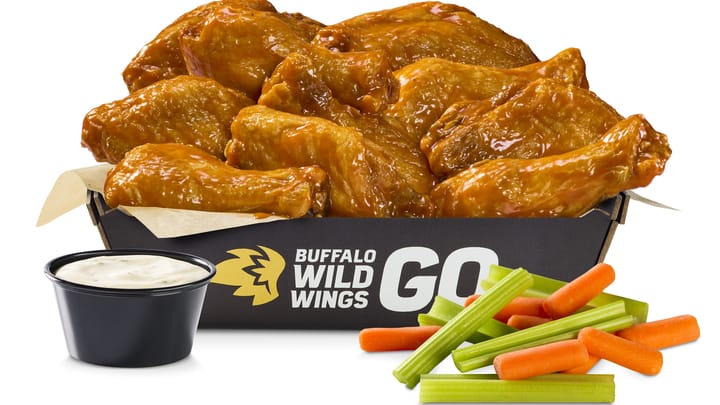
Jimmy John's and Buffalo Wild Wings, both owned by Inspire Brands, are opening their first co-branded location in Florida. The move marks a strategic experiment in restaurant consolidation, combining two fundamentally different dining concepts under one roof.
Inspire Brands acquired Jimmy John's in 2019 for $2.7 billion and owns Buffalo Wild Wings through a separate acquisition. The conglomerate has been exploring ways to maximize real estate efficiency and cross-traffic between its portfolio brands. This Florida location represents the first execution of that vision.
The co-branding strategy reflects a broader industry trend. Restaurant operators face mounting pressure from rising labor costs, real estate expenses, and consumer spending uncertainty. By merging two concepts into a single location, Inspire Brands reduces overhead while capturing different dayparts and occasions. Jimmy John's thrives on quick lunches and grab-and-go orders. Buffalo Wild Wings operates as a casual dining destination for sports viewing, evening meals, and group gatherings. Together, they theoretically serve customers from 10 a.m. closing to late-night consumption.
The concept carries operational complexity. Each brand requires distinct kitchen equipment, staff training protocols, and brand presentation standards. Jimmy John's emphasizes speed and sandwich craftsmanship, with a streamlined menu that enables rapid production. Buffalo Wild Wings operates with a full-service bar, extensive wing sauce selection, and television viewing infrastructure. Reconciling these operational models within shared space demands careful design.
Similar dual-branding efforts have shown mixed results across the industry. Taco Bell and KFC co-locations became ubiquitous throughout the 1990s and 2000s, generating synergy through shared equipment and suppliers. However, some locations suffered from brand dilution and operational friction. Customers sometimes reported confusion about which brand offered which menu items.
Inspire Brands brings deeper resources to this experiment than most competitors. The company operates over 30,000 restaurants globally across Dunkin', Baskin-Robbins, Jimmy John's, and Buffalo Wild Wings. The data infrastructure and supply chain sophistication enable rapid iteration if the Florida location underperforms.
The test location's specific address remains undisclosed in initial announcements, but the choice of Florida matters strategically. The state attracts tourism traffic, suburban growth, and year-round food service demand. A successful pilot here could validate expansion to additional markets where real estate costs justify the capital investment.
Financial performance metrics will determine next steps. Inspire Brands will monitor transaction volume, average check size, inventory turnover, and labor productivity across both concepts. If the location generates revenue exceeding either brand operating separately, expansion becomes inevitable. If cannibalization occurs, the company will likely abandon the concept.
Franchisees represent another consideration. Both Jimmy John's and Buffalo Wild Wings operate through franchise models. Inspire Brands must convince franchise partners that co-branded locations enhance profitability rather than dilute brand identity. Franchise disclosure documents and training programs will require restructuring.
The market timing aligns with post-pandemic operational optimization. Restaurant operators have deployed labor scheduling software, kitchen automation, and delivery logistics improvements across the sector. Adding dual-branding infrastructure onto these systems represents the logical next frontier. Inspire Brands controls sufficient scale to absorb the operational complexity, making this test genuinely meaningful for industry observers.