Charles Dickens's A Christmas Carol describes a complete Victorian Christmas menu across three key scenes. The Cratchit family's humble dinner centers on roast goose, a traditional Christmas centerpiece for families who could not afford turkey, accompanied by mashed potatoes, apple sauce, and gravy. Mrs. Cratchit's Christmas plum pudding, a dense mixture of dried fruit, suet and spices boiled in cloth, arrives blazing with brandy and decorated with holly. Apple sauce balanced the goose's rich, fatty meat, while the pudding was considered Mrs. Cratchit's greatest success since her marriage.
After dinner, the family enjoys apples, oranges, roasted chestnuts placed on the fire, and a warm drink of gin and lemon. Roasted chestnuts were familiar winter treats sold by street vendors in Victorian London, and oranges were especially welcome during winter months when fresh fruit was scarce.
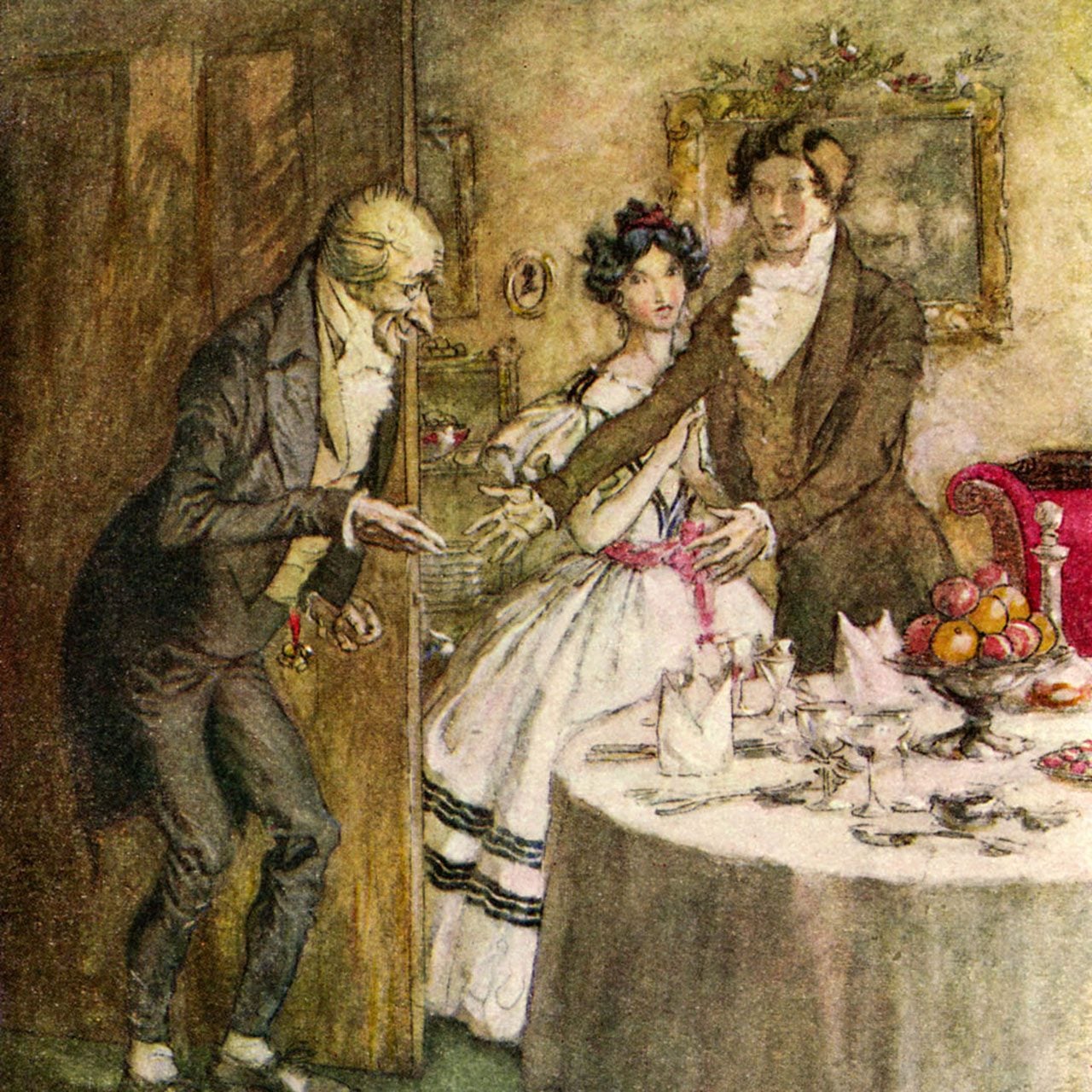
At Mr. Fezziwig's Christmas party, Dickens mentions mince pies, little pastries that had long been associated with English Christmas celebrations. Earlier versions contained meat alongside dried fruit, suet and spices, though sweeter fillings were increasingly common by Dickens's time.
The Ghost of Christmas Present is surrounded by extraordinary foods, including immense twelfth-cakes. These rich cakes with dried fruit and spices were baked with a hidden bean; whoever found it might be crowned king or queen of the festivities. Dickens also details entire barrels of oysters. In Victorian London, oysters were commonly eaten across social classes, sold by street vendors and prepared in pies, stews and other dishes.
When Scrooge redeems himself on Christmas morning, he purchases an enormous turkey for the Cratchits, a magnificent extravagance compared with their modest goose. Roast turkey was becoming fashionable for Christmas dinner among wealthier Victorian households.