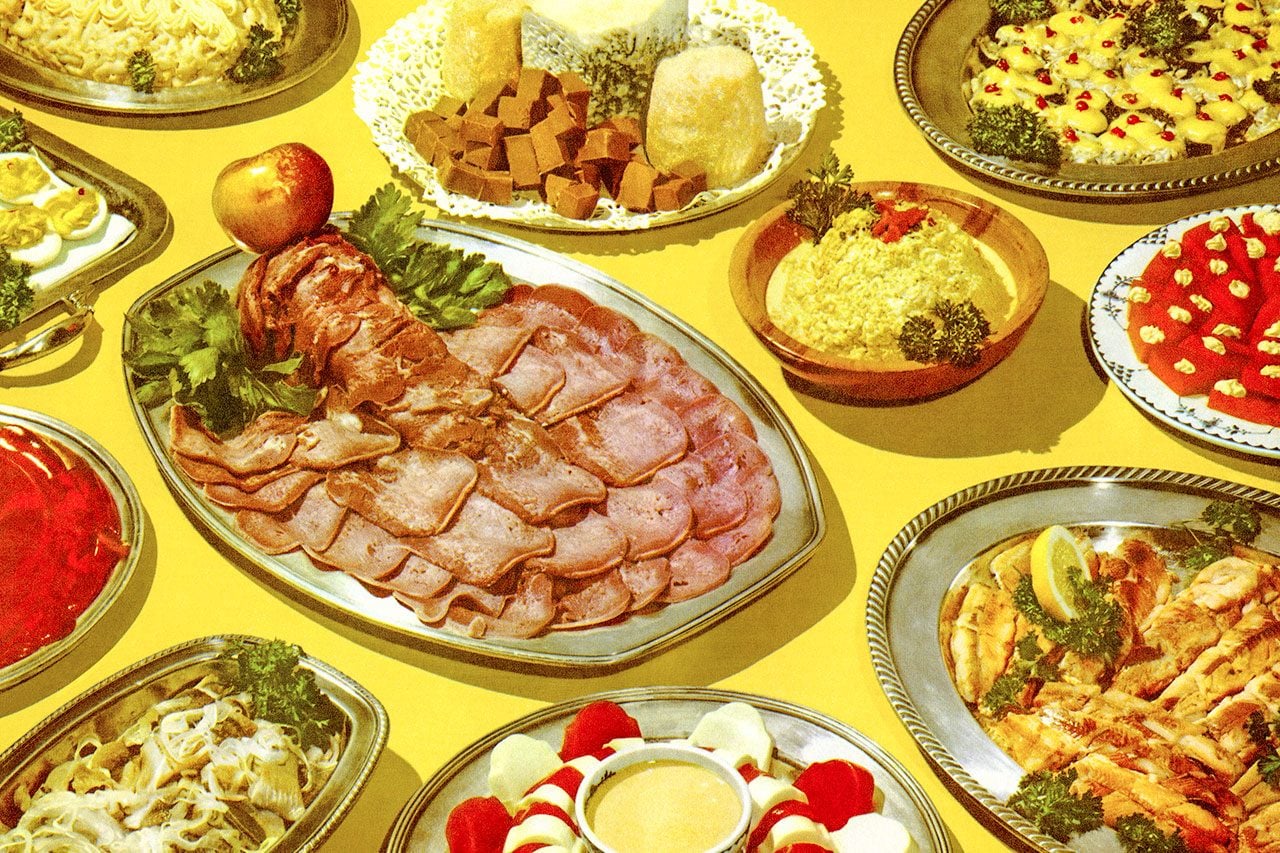
Thanksgiving is famously resistant to change. Suggest removing the mashed potatoes or stuffing, and you'll hear complaints until Easter. Yet looking through old menus, cookbooks and holiday advertisements reveals that the Thanksgiving table has actually transformed dramatically over the decades. Entire categories of dishes have vanished from our tables, and most of us haven't noticed their departure. Some were beloved family favorites that gradually fell out of fashion. Others were products of an era when gelatin was considered an essential ingredient—even in dishes that had absolutely no business holding that much shape.
Take aspic, for instance. It's a French word that sounds sophisticated and mysterious, suggesting something genuinely impressive. In reality, it's meat Jell-O. Savory aspics were perfectly respectable additions to holiday meals well into the 1950s, featuring suspensions of meat, vegetables, seafood and even hard-boiled eggs presented in elaborate molds. Guests could admire every carefully arranged ingredient through a translucent wall of solidified broth. The confidence required to spend hours arranging shrimp and vegetables in a decorative mold, then carry it proudly to the dining room as though everyone had been waiting all year for a slice of cold, wobbly meat, is almost admirable.
Some vintage dishes deserve to return. Waldorf salad, created at New York's Waldorf Hotel in the 1890s as a simple combination of apples, celery and mayonnaise with walnuts, offers crisp contrast to the rich, heavy dishes dominating Thanksgiving dinner. It's refreshing, pleasantly crunchy and especially good alongside roasted turkey. A fresh, crisp side is hardly unwelcome at a table already crowded with casseroles, and it requires very little fuss. Mincemeat pie, popular in the 1890s, similarly deserves consideration. Its rich filling of dried fruits, spices and citrus had a long history in English cooking, and while early versions contained actual meat—often beef or mutton—along with suet, the meat gradually disappeared. A well-made mincemeat pie offers warm flavors of cloves, cinnamon and nutmeg that rival pumpkin pie.
Then there are the recipes that belong nowhere near a modern Thanksgiving table. Cranberry mayonnaise candles represent the absolute nadir of midcentury entertaining ambition. Food companies once promoted these molded holiday creations resembling candles, complete with decorative wicks or flame effects, with complete seriousness. The idea of turning cranberry sauce and mayonnaise into a candle-shaped object, then expecting guests to understand they're supposed to eat it, raises serious questions about the judgment involved.
Frozen jellied turkey vegetable salad from the 1970s manages to combine several questionable ideas into a single dish. Turkey, vegetables and gelatin-based mixture were assembled into a cold, molded preparation that was perhaps more ambitious than necessary. It's difficult to imagine anyone looking at leftover turkey and deciding it really needed to become a frozen, sliceable salad.
We can celebrate Thanksgiving's devotion to tradition while acknowledging that not all old dishes deserve revival. Some belong in history, where they inspire both wonder and gratitude that better judgment eventually prevailed.