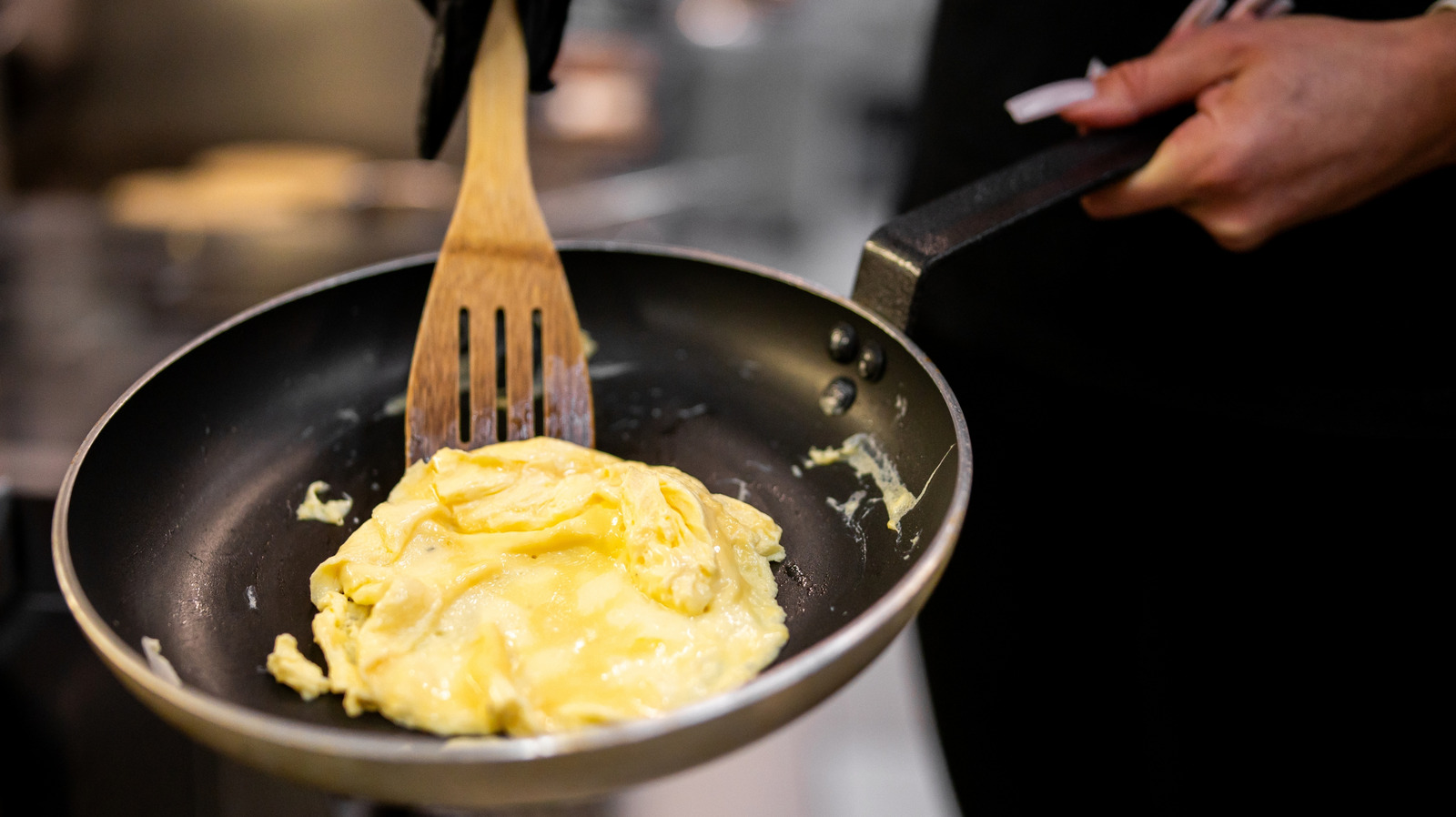
Powdered milk helps scrambled eggs achieve both creaminess and fluffiness, qualities that typically require a trade-off. The powder adds milk solids without the extra water that liquid milk brings, preventing eggs from becoming watery while allowing them to puff up during cooking.
Use roughly a tablespoon of powdered milk per three eggs. Whisk thoroughly to disperse the powder and introduce air into the mixture. The goal is to make the eggs paler and more voluminous, as if you added extra liquid. A mason jar hack of shaking the eggs works well, or use a protein shaker bottle with a metal whisk ball.
Powdered milk comes from skim, whole, or buttermilk with the water removed. Nonfat varieties last longer than full-fat ones. The powder is shelf-stable and cheap, and you can toast it to add nutty savoriness similar to browned butter.
Cook the eggs at moderate heat, fast enough that natural moisture steams and creates fluff, but not so hot that they turn rubbery. Full-fat milk powder contributes to a tender texture and helps produce eggs that are moist but fluffy, creamy but firm.