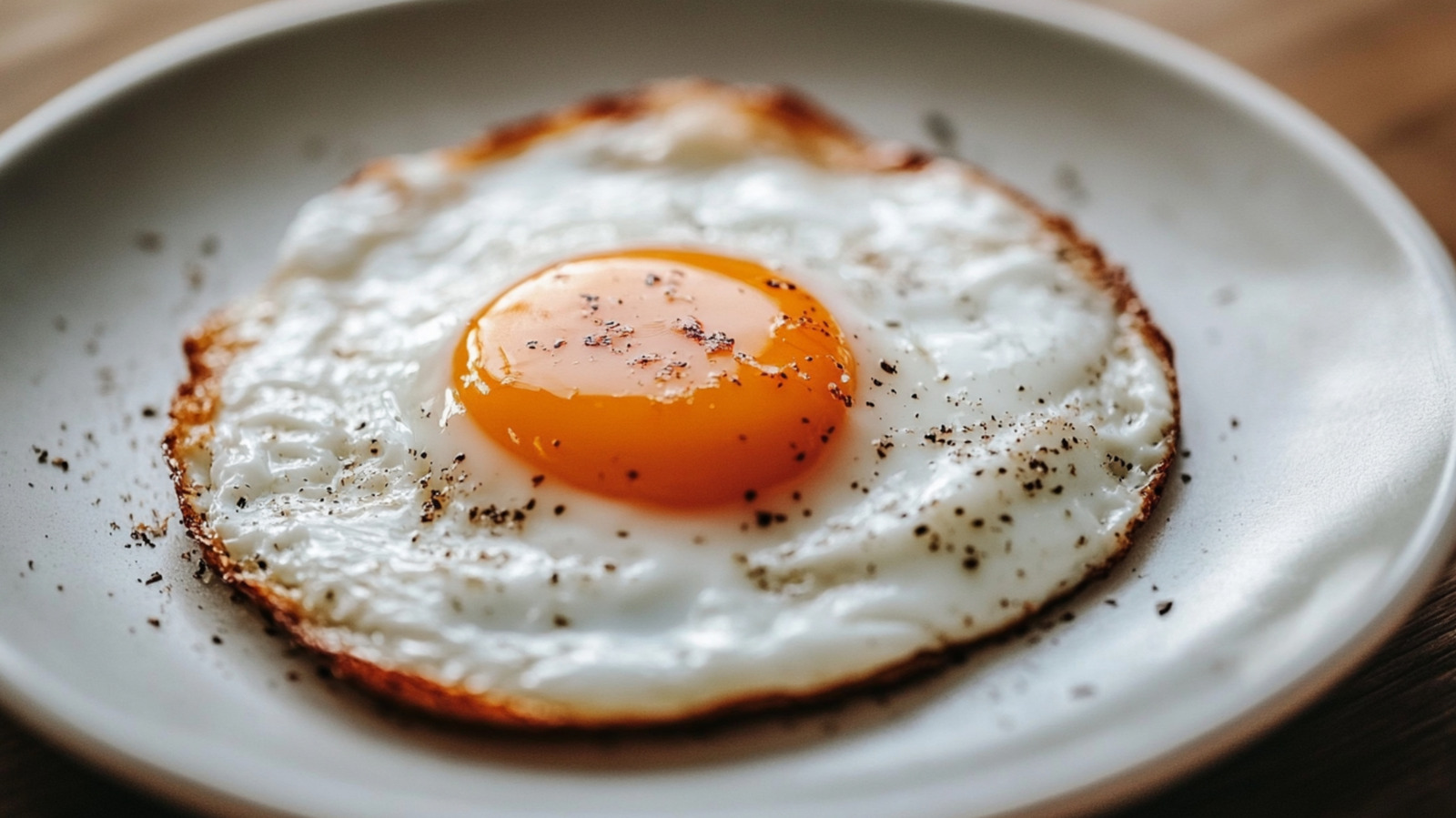
For years, we've been told that fried eggs need hot sauce, vinegar, or nothing at all. But there's a tangy ingredient sitting in nearly every refrigerator that deserves far more credit than it gets: pickle juice. According to a new report, substituting a teaspoon of pickle juice for water while cooking fried eggs doesn't just season them—it fundamentally transforms them into something complex, creamy, and restaurant-quality.
The science here is compelling. Pickles are chemically complex, laden with both vinegar and salt, making the leftover brine an all-in-one seasoning powerhouse. When added to fried eggs, it works similarly to vinegar for poached eggs, keeping whites firmly set and preventing them from feathering into burnt bits. But pickle juice goes further: it imparts not just acidity and salt, but any herbs and aromatics the brine absorbed during its time in the jar. You're essentially getting a complete flavor profile in a single teaspoon, added at the perfect moment when your eggs have almost finished cooking.
The real genius of this technique is that it creates something tangy but creamy, rich but light—a balance that's surprisingly hard to achieve in breakfast cooking. Since you're adding the brine once the eggs have nearly finished, you sacrifice nothing of the butter or cooking fats that make fried eggs delicious in the first place. You're simply amplifying what's already there while introducing the acid that makes food sing.
Beyond the humble fried egg itself, this approach solves a real problem in breakfast cooking. Heavy, comforting dishes like avocado toast, steak and eggs, and grits often need acid to feel balanced and complete. A pickle juice fried egg provides exactly that—the acid from the brine cuts through richness while the creamy yolk adds texture without introducing excess moisture. This matters more than it might seem. Hash browns and breakfast potatoes need dryness to crisp properly, yet they need acid to taste good. Layering a pickle juice fried egg on top delivers creaminess and brightness without compromising the crispy exterior.
The beauty of this technique is its simplicity and its resourcefulness. We're talking about using what would otherwise be discarded, requiring no special ingredients or skills beyond what you already use to make fried eggs. If pickle juice can elevate breakfast this dramatically, perhaps it's time we stopped treating it as waste and started treating it as the versatile seasoning it actually is. Your breakfast—and your leftover brine—deserve better.