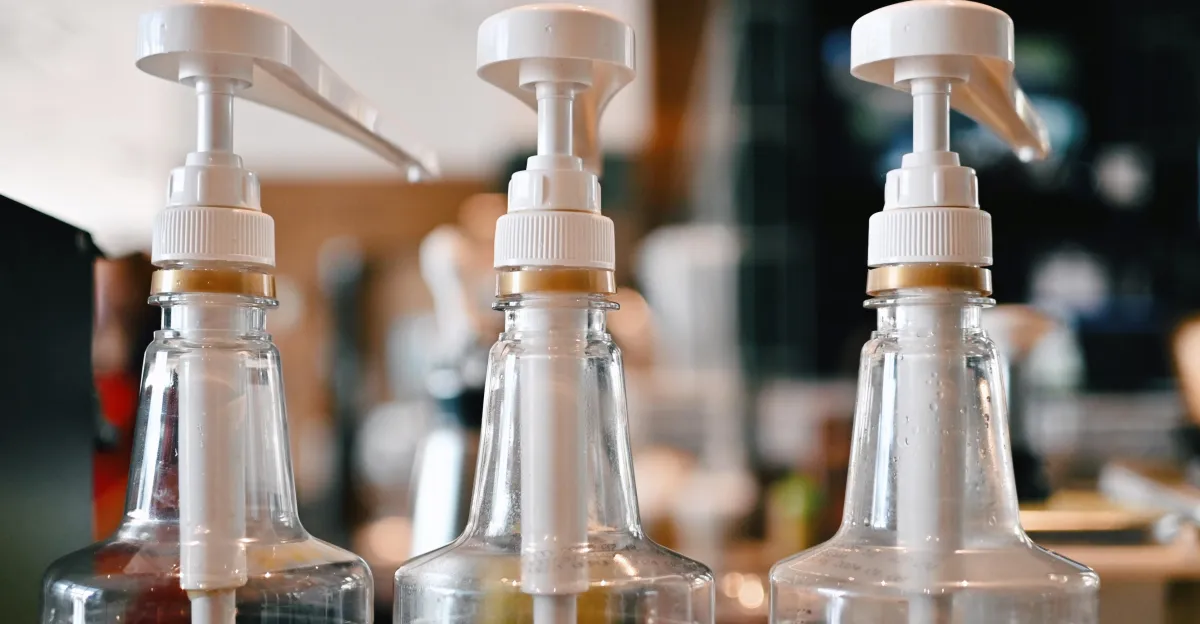
A social media backlash against premade syrups in coffee shops has created a business opportunity for small cafes willing to make their own.
Videos and posts on TikTok and Twitter criticize coffee shops for stocking Torani and Monin syrups, with users treating the bottles as a sign of low quality and corporate shortcuts. The complaint extends beyond Torani to all mass-market syrups, which consumers say taste artificial.
Coffee shop owners have responded by building house-made syrups into their core offerings. At Room Service in Ventura, California, Dennis and Carrie Medina initially planned a purist menu of pour-over coffee. Instead, customers immediately requested flavored drinks. Now the shop makes 10 to 12 different syrups in-house at any given time, including a pumpkin spice latte that starts with roasted kabocha squash, blended with cloves and cinnamon, then cooked into syrup over two days. The Medinas hired a full-time prep person dedicated to in-house creations.
Michael Smith, who opened Trust Coffee Co. in Bay Village, Ohio in 2025, learned the same lesson. He wanted a "pour-over, third-wave" shop but customers demanded seasonal syrups in flavors like maple rosemary, caramelized banana, and strawberry rhubarb. When Trust posts a new syrup on social media, the line stays out the door for a week.
Sabrina Kaylor at Bizarre Coffee in Canton, Georgia shifted from bottled syrups to house-made versions as customer expectations changed. She now makes house-made syrups for 90 percent of drinks, though her best-selling drink still uses bottled syrup. Kaylor notes that much of the house-made conversation is marketing, and the anti-Torani backlash can be discouraging for small business owners trying to operate sustainably.
The trend reflects broader consumer skepticism toward corporations and private equity in food and beverage, with house-made syrups now symbolizing the opposite of chain coffee shops.