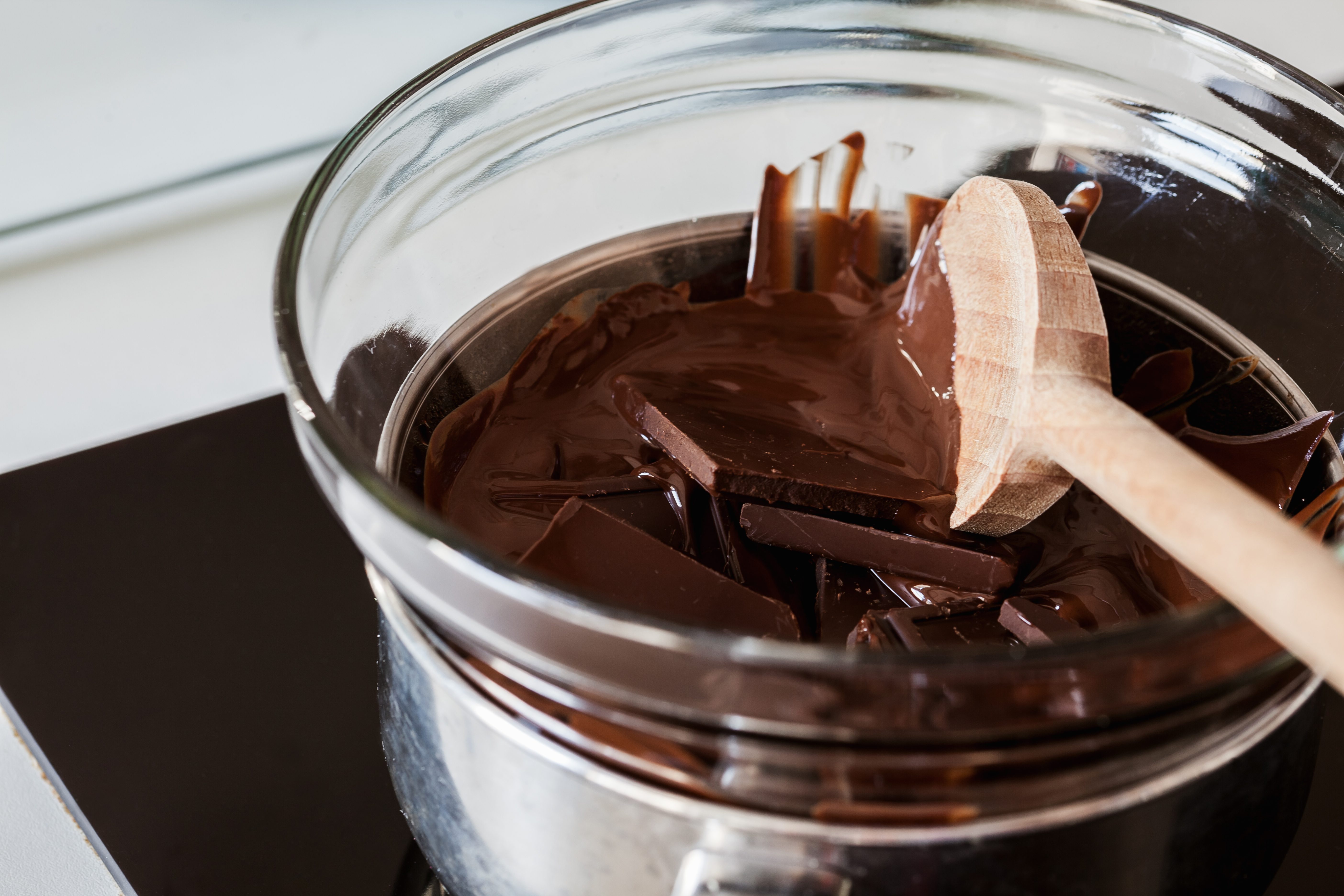
Matt Adlard, a best-selling author and UK baking personality, explains the seeding method for tempering chocolate at home. The technique involves melting roughly chopped chocolate, then adding finely chopped pieces to cool it, followed by reheating to precise temperatures before pouring into moulds.
Tempering requires couverture chocolate, which has high cocoa butter content. This fat crystallises into type V crystals when temperatures are followed exactly, creating the glossy finish and snap associated with tempered chocolate. Untempered chocolate remains dull and soft.
The seeding method works at these temperatures: melt all chocolate to 45-50C, cool dark chocolate to 28-29C by adding finely chopped pieces, milk to 27-28C, and white to 26-27C. Then reheat dark to 31-32C, milk to 29-30C, and white to 28-29C before use.
Adlard notes that overheating chocolate above the recommended range causes the type V crystals to melt, resulting in dull, soft, streaky results. A kitchen thermometer is essential. Chocolate chips are unsuitable because stabilisers added to help them retain shape prevent even melting.
Tempered chocolate works for moulded shapes like Easter eggs and confectionery such as truffles. It produces a satisfying snap when broken and holds a glossy appearance, unlike untempered chocolate.