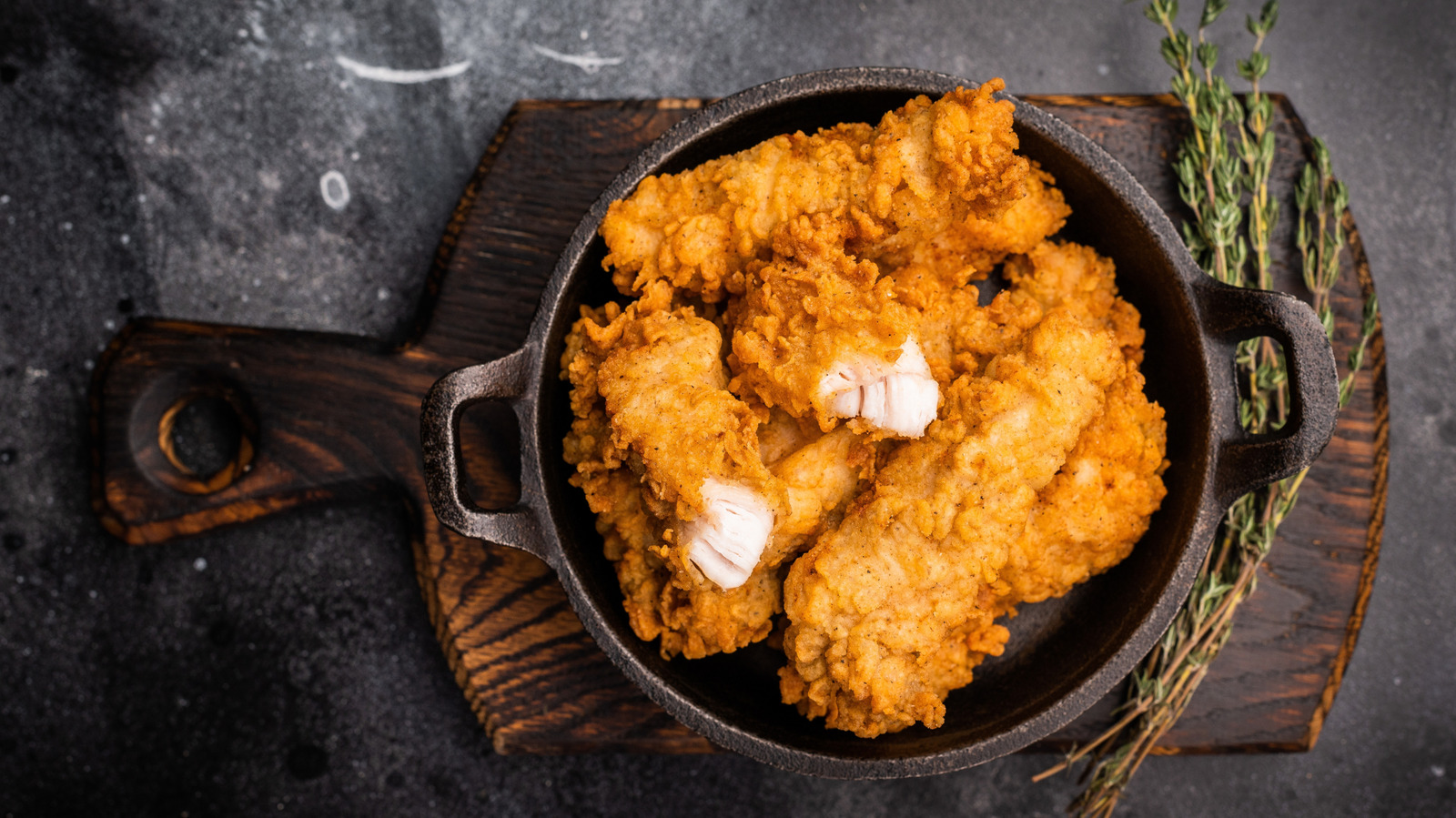
Todd Johnson, proprietor of Strips Chicken & Brewing, breaks down the chemistry of two competing marinades for fried chicken. Buttermilk wins as the better all-around choice, Johnson told Food Republic. "It's gently acidic, so it softens the surface of the chicken without turning it mushy. It's also thick enough to leave a tacky layer that flour clings to. That's the foundation of a craggy, crunchy crust."
Buttermilk's combination of subtle acid, sugars, and milk solids delivers well-rounded, heartier flavor. Its lack of potency compared to pickle brine also allows it to absorb other seasonings well. Fat-free buttermilk adheres better to breading than pickle juice because of its thicker consistency.
Johnson recommended maintaining an oil temperature of 350 degrees Fahrenheit to toast rather than burn the milk solids. Higher temperatures risk over-browning and fouling the flavor.
Pickle juice has advantages for quick marinades. Johnson noted it "seasons and moistens the meat quickly" and requires "a couple of hours instead of overnight." Its high salt content and dissolved sodium loosen muscle fibers to retain moisture better. The brine delivers the "sandwich shop flavor" some prefer.
The downsides to pickle juice are significant. Its high acidity narrows the window between tender and mushy chicken, making it risky for beginners. Inconsistency across brands creates guesswork. The potent tang leaves little room for subtle seasonings. Excess surface moisture must be carefully patted dry to prevent steam barriers that damage the breading.