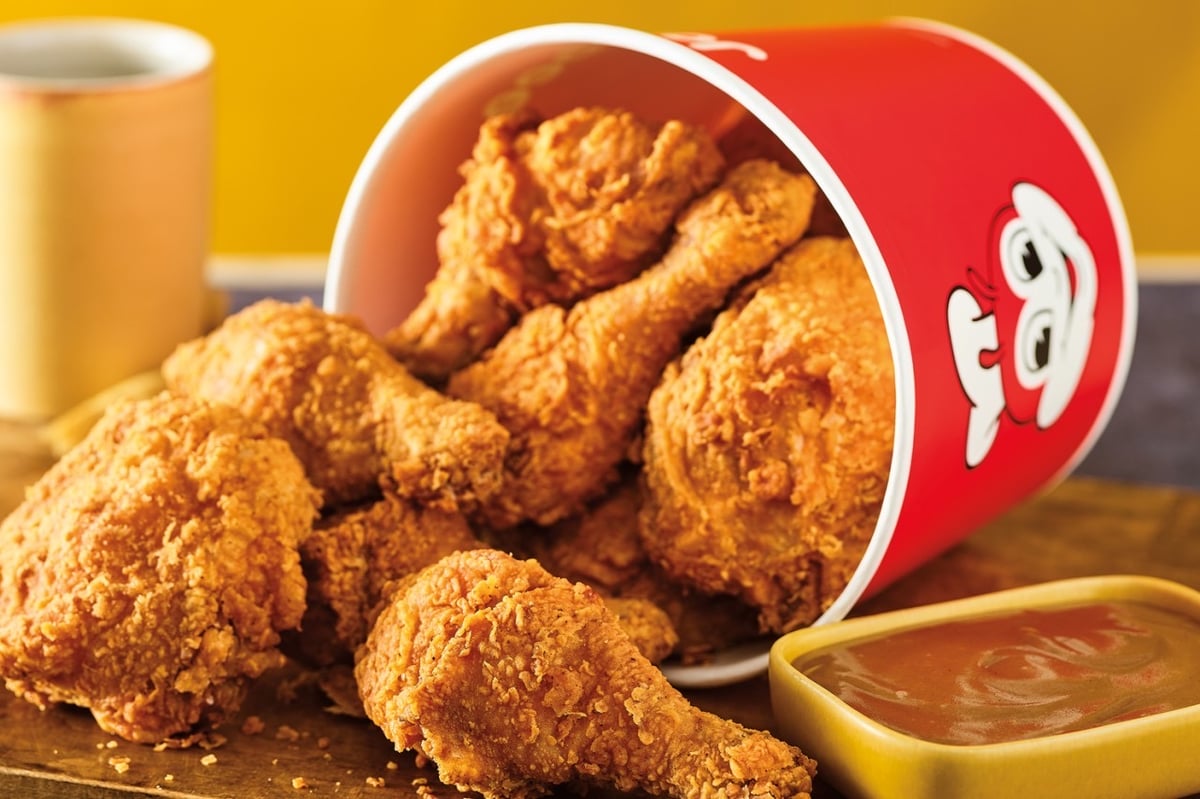
Jollibee Foods Corporation is abandoning the copycat playbook that traps many international quick-service chains in America. Instead of mirroring McDonald's or Wendy's formats, the Philippine chicken specialist leans into what makes it unmistakably Filipino: fried chicken with sweet-savory sauce, spaghetti served with a distinctly Asian twist, and hospitality rooted in the concept of "joy."
The strategy delivers results. Jollibee posted a 17% year-over-year sales increase in 2025 across its U.S. operations, marking acceleration for a brand that has methodically expanded from 60 locations in 2019 to over 400 domestic restaurants today. That growth trajectory contradicts conventional wisdom about Asian QSR concepts in America, which typically struggle against entrenched competitors offering cheaper commodity chicken.
Jollibee succeeds because it refuses to compete on those terms. The menu reads foreign by design. Crispy fried chicken arrives atop a bed of steamed rice with savory gravy and a drizzle of sweet jelly that American fast-food culture has no framework for. Jollibee's spaghetti lacks the red sauce familiarity of Italian-American chains. It comes sweetened with banana ketchup, a Filipino staple that tastes closer to fruit concentrate than tomato. These choices alienate nobody. They attract customers specifically seeking authentic Filipino flavors absent from mainstream QSR menus.
The "joyful hospitality" positioning extends beyond menu. Jollibee trains crew members to engage customers with warmth rather than transactional efficiency. This approach mirrors the brand's origin in Manila, where founder Tony Tan Caktiong built the chain on service that felt personal rather than corporate. American franchisees carry that DNA forward. Marketing campaigns emphasize community, family gathering, and celebration rather than speed or value rankings.
Local marketing proves crucial. Rather than broadcast national advertising, Jollibee targets neighborhoods with Filipino populations and first-generation Asian Americans actively seeking cultural food. Social media strategy emphasizes user-generated content from customers sharing Jollibee meals at celebrations. The brand avoids competing directly on the platforms where McDonald's dominates middle-America consciousness.
This differentiation strategy works because Jollibee occupies white space in the American quick-service landscape. Chick-fil-A owns the premium chicken narrative. Panda Express controls casual Asian expectations. Jollibee owns something nobody else offers: an authentic, joyful Filipino experience at quick-service speed and pricing.
The 2025 sales surge signals investor confidence in the model. International QSR expansion typically stumbles when brands dilute identity to match local expectations. Jollibee does the opposite. It doubles down on Filipino DNA and attracts customers precisely because doing so requires no compromise. That conviction has positioned the chain for sustained growth in a market cluttered with undifferentiated chicken and commodity fast food.