# How to Pick the Freshest Mushrooms at the Store
Mushrooms deteriorate faster than most produce. A package that looks pristine on Monday turns slimy and dark by Wednesday. Learning to spot quality fungi at purchase saves money, reduces waste, and ensures better flavor and texture in your cooking.
Fresh mushrooms have firm flesh that resists gentle pressure. When you squeeze a mushroom slightly between thumb and forefinger, it should feel solid, not mushy. Avoid any specimens that yield easily to light pressure, as this signals decomposition already underway.
Look at the cap surface. Fresh mushrooms display a dry, unblemished exterior. Caps should appear slightly velvety, not wet or slick. Any visible moisture suggests either excess handling or the beginning of mold growth. The underside gills, visible when you flip the mushroom, should appear clean and tightly packed, not darkened or slimy.
Color matters by variety. White button mushrooms should be cream or light tan, not brown or graying. Cremini mushrooms display deeper brown tones, but avoid those that appear blackened or have dark patches. Portobello mushrooms, the largest and oldest in the Agaricus family, should have deep brown caps without soft spots.
Smell provides another test. Fresh mushrooms have an earthy, mild aroma. Any sour or ammonia-like smell indicates spoilage. If the package smells unpleasant, do not buy it, regardless of appearance.
Check the package underside. Excess liquid pooling in the bottom signals that mushrooms are breaking down and releasing moisture. This accelerates decay in remaining mushrooms. A completely dry package indicates fresher contents.
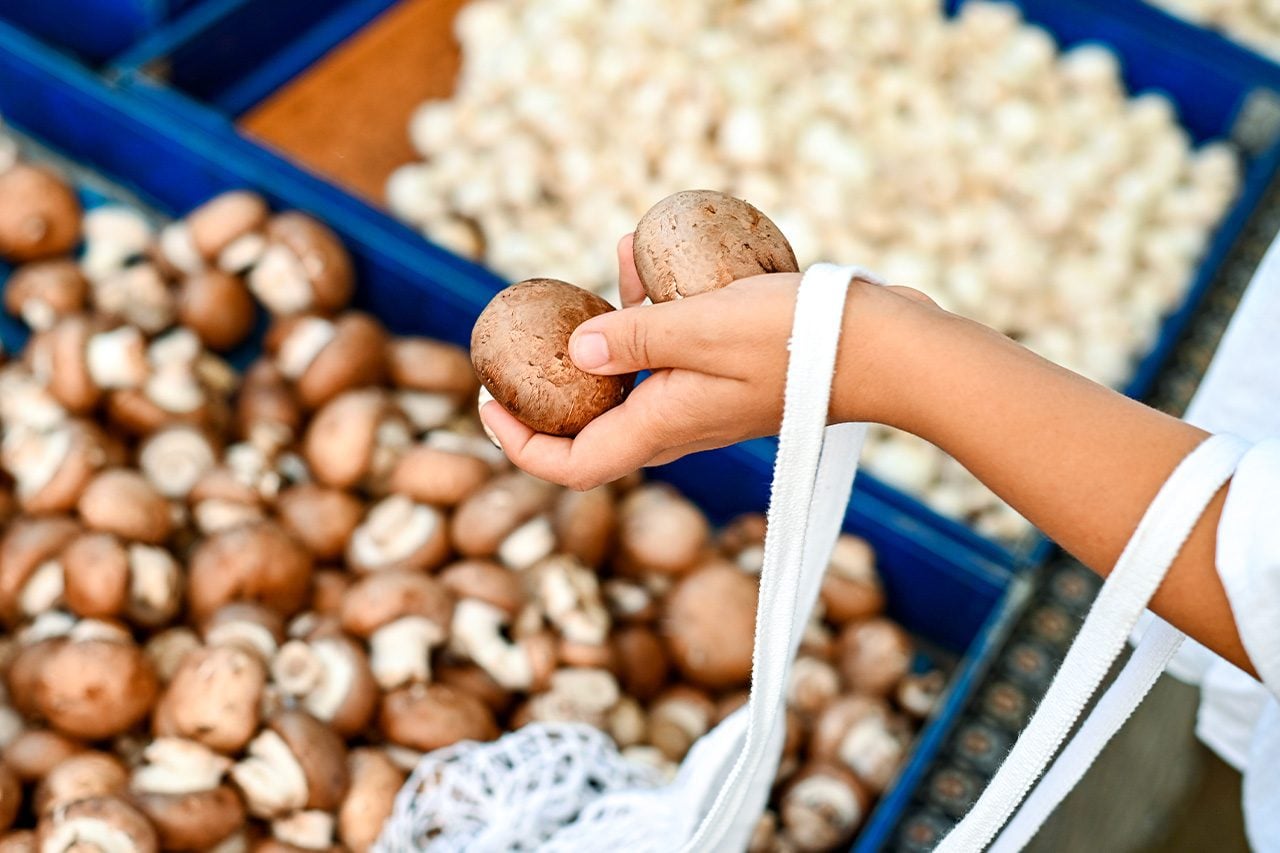
Buy loose mushrooms when possible. You control which ones enter your bag and avoid cross-contamination from damaged specimens in prepackaged containers. Select only mushrooms that meet all criteria: firmness, color clarity, dry texture, and good smell.
Storage extends freshness once home. Keep mushrooms in a paper bag, not plastic. Paper allows air circulation and prevents moisture buildup that accelerates deterioration. Store them in the refrigerator's main shelf rather than the crisper drawer, where excessive humidity hastens decay. Most varieties stay fresh for five to seven days with proper storage.
Smaller mushrooms generally last longer than large ones. Young button mushrooms keep better than mature portobellos because their cellular structure remains denser. When choosing between sizes, younger fungi offer better shelf life without sacrificing flavor when cooked properly.
Frozen and dried mushrooms provide alternatives if fresh options disappoint. Frozen mushrooms work well in soups, stews, and sauces, though they lose firmness and work poorly for grilling or sauteing whole. Dried mushrooms concentrate flavor dramatically and reconstitute with hot water for use in risottos, broths, and braised dishes.
Shopping strategically for fresh mushrooms reduces waste and improves meal quality. These simple checks take seconds but deliver noticeably better results in the kitchen.