# The Case for Luxury Lasagna: When Three Cheeses and Five Proteins Stack Into Culinary Excess
Lasagna occupies a peculiar space in American home cooking. It lands somewhere between weeknight comfort food and showstopping dinner party centerpiece, depending entirely on who assembles it. Most versions rely on the trinity of ricotta, mozzarella, and parmesan layered with ground beef and tomato sauce. The formula works because it has worked for decades.
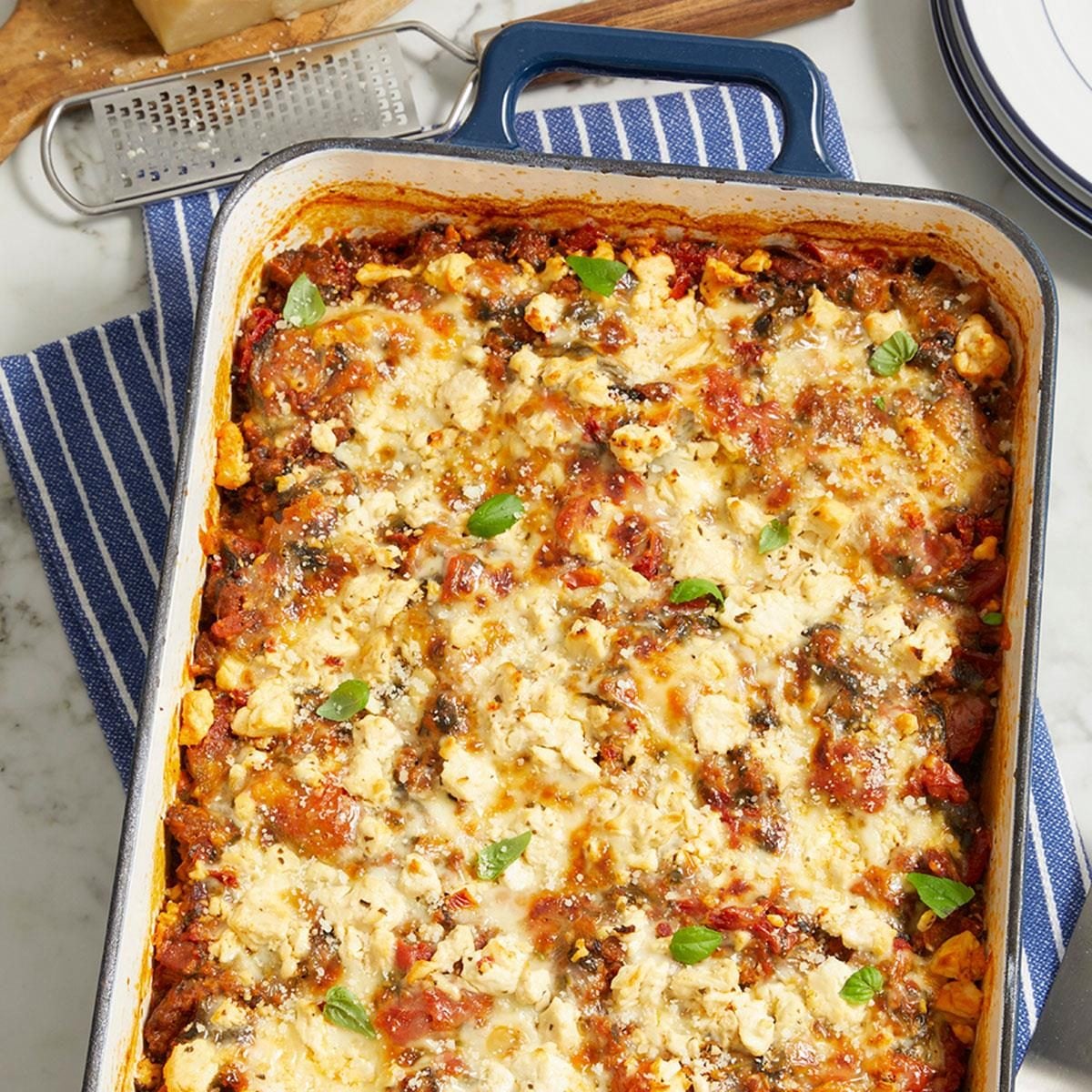
Taste of Home's "Million Dollar Lasagna" abandons restraint. This version doubles down on protein strategy and cheese complexity, adding pork and bacon alongside beef, then fortifying the cheese layer with a third variety beyond the standard duo. Vegetables join the party too, not as afterthoughts but as a deliberate medley woven through the sauce.
The name invokes excess, but the concept reflects real shifts in home cooking culture. Instagram and food television have normalized the idea of "elevated comfort food." Home cooks now treat lasagna as a vehicle for experimentation rather than a formula to follow. Adding bacon provides fat and smoke. Pork introduces sweetness and textural variance against beef's mineral density. A third cheese, likely a combination such as fontina or provolone with the standard ricotta and mozzarella, creates complexity that single-cheese approaches cannot achieve.
The vegetable medley matters more than the name suggests. Beyond moisture management, vegetables like mushrooms, zucchini, and spinach add umami depth that transforms the dish from protein-dominant to genuinely balanced. The interplay between acid from tomato, richness from three cheeses, salt from bacon and cured meats, and umami from vegetables creates a more sophisticated flavor profile than basic versions offer.
This approach speaks to broader trends in home entertaining. Americans increasingly host casual dinner parties centered on one impressive dish rather than multiple courses. A lasagna that took genuine effort to construct signals investment in guests. It also photographs well, fitting naturally into the documentation rituals that accompany modern entertaining.
The execution challenges are real. Layering five proteins requires discipline to avoid a greasy, undifferentiated mass. The three-cheese approach demands balance. Too much hard cheese becomes grainy. Too much ricotta yields mushiness. The vegetable medley must not add so much moisture that the lasagna separates during cooking.
Taste of Home's formula represents a calculated middle ground. It acknowledges that luxury versions do not need to become restaurant projects. Home cooks can achieve restaurant-level results through ingredient selection and thoughtful layering rather than exotic techniques or hard-to-find components. Bacon, ground pork, and an additional cheese are all supermarket staples.
The "million dollar" designation works as marketing, but it also reflects genuine value proposition. This lasagna demands more planning and money than basic versions. It justifies that investment through amplified flavor and the social currency of impressive home cooking. For cooks seeking to move beyond routine weeknight iterations, the luxury approach offers a clear path forward without requiring specialized skills or equipment.