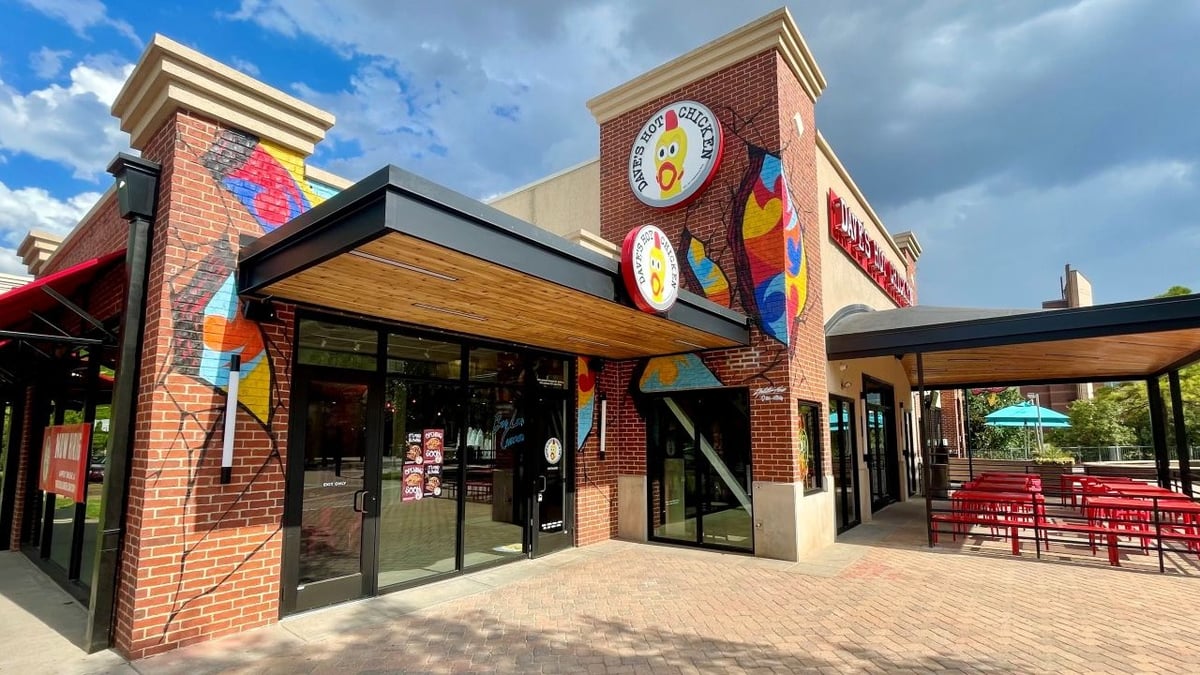
A franchisee operating seven Dave's Hot Chicken locations has filed Chapter 11 bankruptcy, claiming that a major lender sabotaged a multi-million-dollar acquisition deal through alleged interference and overreach.
The franchisee disputes $8.8 million in debt owed to Bank Midwest, according to filings reviewed by Nation's Restaurant News. The operator asserts that the bank's actions prevented completion of a $30 million sale that would have resolved the debt and kept the units operational. The bankruptcy filing represents a significant setback for Dave's Hot Chicken's franchise system, which has expanded rapidly since the brand's 2017 launch.
Dave's Hot Chicken, founded by Stu Rick and Sam Taber, grew from a single Los Angeles ghost kitchen to a national chain with hundreds of locations. The brand serves Nashville-style hot chicken sandwiches in a casual, minimalist format that attracted franchisees eager to enter the competitive fast-casual segment. The franchise model proved attractive during the post-pandemic dining boom, but franchisees faced mounting pressures from labor costs, ingredient inflation, and rent increases that squeezed margins across quick-service restaurants.
The dispute between Bank Midwest and the franchisee hinges on the bank's role in blocking the acquisition. Lenders hold significant power over franchise operators, especially those with substantial debt loads. Banks can restrict asset sales, demand additional capital, or accelerate repayment schedules if they view a buyer's creditworthiness as questionable. In this case, the franchisee alleges that Bank Midwest exercised control beyond reasonable lending practices, actively interfering with negotiations rather than simply evaluating the proposed buyer's ability to assume the debt.
The $30 million sale opportunity suggests a buyer had serious interest in scaling within the Dave's Hot Chicken system. Such transactions typically represent exits for franchisees facing operational challenges, allowing them to recover capital and exit before deeper losses occur. The loss of this opportunity means the seven locations now face an uncertain future. Chapter 11 bankruptcy allows the franchisee to reorganize operations under court protection while negotiating with creditors, including Bank Midwest.
This case exposes vulnerabilities in franchise financing structures. Many franchisees borrow heavily to fund initial buildouts and working capital, creating debt service obligations that can become unsustainable if unit-level economics deteriorate. When lenders retain control over major transactions without clear governance standards, disputes emerge. The franchisee's allegations suggest that Bank Midwest treated the operator as a defaulting borrower rather than a partner seeking to resolve obligations through a legitimate sale.
For Dave's Hot Chicken corporate, the bankruptcy filing raises questions about system health. While corporate franchisors typically remain insulated from franchisee debt problems, reputational damage occurs when multiple franchisees struggle. Potential investors and new franchisees scrutinize failure rates within a system. A high-profile Chapter 11 filing signals operational or unit-level challenges that may discourage expansion capital.
The bankruptcy court will determine whether the franchisee's claims against Bank Midwest have merit and whether the seven units can be restructured profitably or sold. The outcome will test how aggressively lenders can intercede in franchise transactions and what remedies exist when that interference harms borrowers' ability to recover losses.