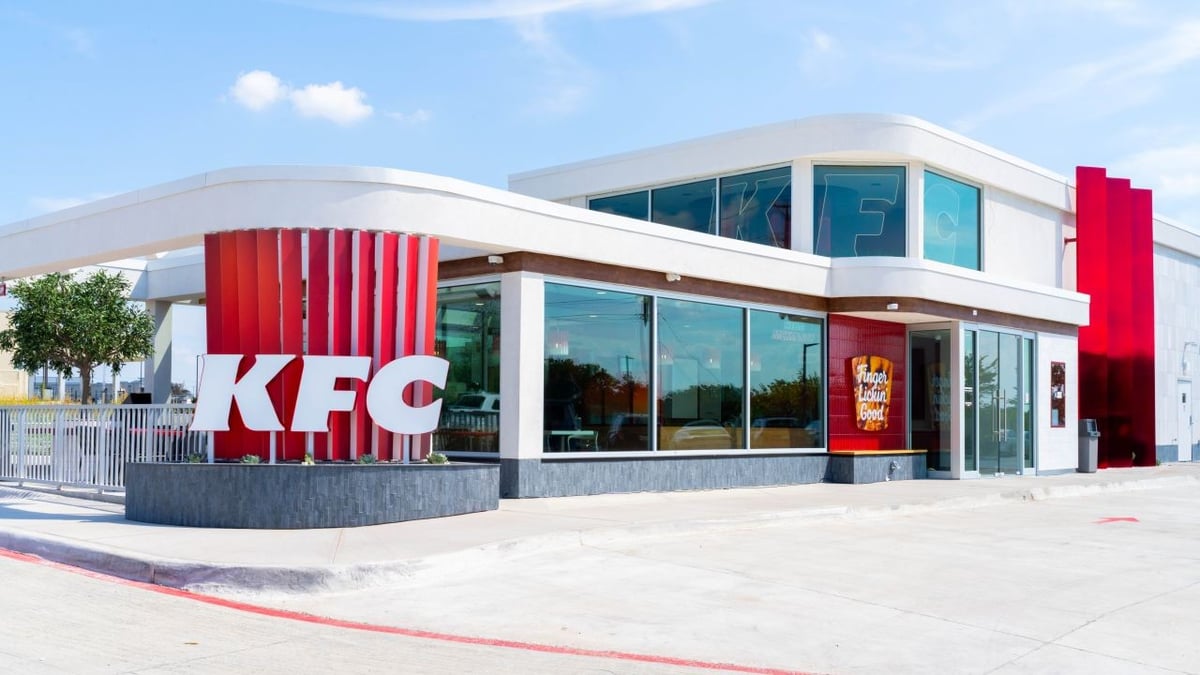
KFC's latest bet on American dominance centers on a single 3,400-square-foot restaurant in McKinney, Texas. The chain calls it "Open House," and it functions less like a typical fried chicken outlet and more like a laboratory for reviving a brand that has lost ground to Popeyes, Chick-fil-A, and regional competitors over the past decade.
The prototype tests three strategic pillars. First, breakfast service expands the daypart window, tapping morning occasions KFC historically ceded to chains like McDonald's and Taco Bell. Second, extended operating hours and menu variety stretch lunch and dinner service across more customer occasions. Third, and most telling, the location obsesses over "AUV-maxxing," jargon for maximizing average unit volume. This means wringing every revenue dollar from the same four walls through operational efficiency, labor optimization, and traffic density.
This prototype launch reflects KFC's acknowledgment that its 4,000-plus U.S. locations have stalled. The chain commands less cultural currency than Popeyes, which transformed itself through aggressive social media campaigns and limited-time offerings. Chick-fil-A outpaces KFC in traffic and per-unit volume despite being closed on Sundays. Regional chains like Wingstop and Korean fried chicken concepts have nibbled away at KFC's market share.
Breakfast represents a logical entry point. KFC experimented with morning menus before, including a failed push into breakfast sandwiches around 2010. The McKinney location suggests a more integrated approach. Early daypart customers often return later, increasing daily traffic frequency. Breakfast also justifies higher labor costs during slow early-morning hours by building immediate revenue.
The AUV-maximization strategy signals a departure from KFC's store count obsession. Rather than chase unit growth, the chain appears focused on extracting more profit per location. This mirrors Chipotle's playbook after its food safety crisis. Fewer, harder-working restaurants outperform sprawling networks with weak unit economics.
The learning lab format matters too. Testing in one location before national rollout saves KFC from expensive mistakes. Mistakes happened before. Recall KFC's push into pizza, pasta, and other category diversions that diluted brand identity. Testing breakfast, dayparts, and operational systems in McKinney before scaling lets the chain measure customer response, train staff methodologies, and optimize supply chains without betting the enterprise.
KFC's parent company, Restaurant Brands International, also owns Burger King and Tim Hortons. That portfolio suggests potential synergies. Tim Hortons, a breakfast and coffee leader in Canada, could inform breakfast strategies. Burger King's day-parting expertise could transfer. Cross-company learning accelerates KFC's turnaround timeline.
The broader fast-casual and quick-service market continues fragmenting. Consumers now expect speed, customization, transparency, and mobile ordering. KFC's traditional model, built on drive-through convenience and value pricing, no longer guarantees success. Open House tests whether the chain can adapt without abandoning Colonel Sanders' core identity.
Success at the McKinney prototype will determine KFC's next move. A successful test justifies investment in renovation and retraining across hundreds of locations. Failure means back to the drawing board. Given the urgency of KFC's competitive position, the chain cannot afford prolonged testing phases. Expect rapid expansion decisions within six to nine months, either validating the Open House model or forcing strategic recalibration.