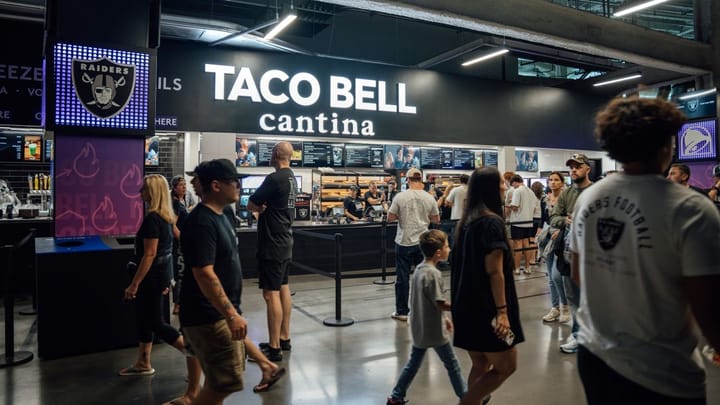
# Taco Bell Cantina Arrives at Allegiant Stadium, Signaling Shift in Stadium Food Strategy
Taco Bell Cantina has opened its inaugural stadium location inside Allegiant Stadium in Las Vegas, marking a strategic push by Diversified Restaurant Group to reshape how venues feed their crowds. The move reflects a broader industry trend of replacing generic concession stands with branded, full-service restaurant concepts that appeal to modern sports and entertainment audiences.
Allegiant Stadium, home to the Las Vegas Raiders and Las Vegas Aces, seats over 61,000 people and draws millions of visitors annually for football, soccer, concerts, and other events. Rather than relying on traditional stadium fare, the venue now offers Taco Bell Cantina's full menu alongside alcohol service. This format moves beyond the quick-service model typical of most Taco Bell locations, emphasizing a more complete dining and drinking experience within the stadium environment.
The Cantina concept, which Taco Bell introduced to compete with elevated fast-casual chains, includes premium menu items, a full bar, and table service in select standalone locations. Bringing this iteration into a stadium environment represents a significant operational leap. The company must manage the speed and efficiency required for high-volume event crowds while maintaining the quality standards that distinguish Cantina from standard Taco Bell outlets.
Diversified Restaurant Group, which operates numerous branded food venues across North American stadiums and arenas, engineered this partnership. The company has built its business model around replacing commodity concessions with recognizable restaurant brands that command higher price points and stronger customer loyalty. Stadium-goers increasingly expect dining options comparable to what they find on city streets, not just nachos and hot dogs.
Las Vegas venues have led this transformation. Allegiant Stadium already hosts Eataly, the Italian marketplace concept, alongside other premium dining options. Adding Taco Bell Cantina positions the stadium as a dining destination, not merely a place to catch a game. Higher-margin food sales also improve stadium economics, benefiting both the venue and its operator.
The timing matters. Post-pandemic, stadiums compete harder for attendance and per-capita spending. Food and beverage revenue often exceeds ticket sales at major venues. A Taco Bell Cantina location generates multiple revenue streams through food, alcohol, and merchandise, with perceived value that justifies premium pricing. A taco that costs five dollars on the street might command eight or nine dollars inside the stadium.
This first stadium installation tests operational scalability. If Allegiant Stadium's location succeeds, expect rapid expansion. Other NFL stadiums, NBA arenas, and concert venues will evaluate similar partnerships. Taco Bell's brand recognition, younger demographic appeal, and alcohol-friendly positioning make Cantina particularly attractive to venues targeting younger, more affluent audiences.
The move also reflects changing consumer preferences. Gen Z and younger millennials demand authentic, contemporary food experiences everywhere they go, including sports venues. A familiar, moderately upscale brand like Taco Bell Cantina delivers that expectation better than anonymous stadium food operations.
Diversified Restaurant Group's strategy positions venue operators as lifestyle destinations rather than captive audiences. As this model spreads, stadium food will look increasingly like downtown restaurant scenes, with competing brands and transparent pricing replacing monopolistic concession contracts.