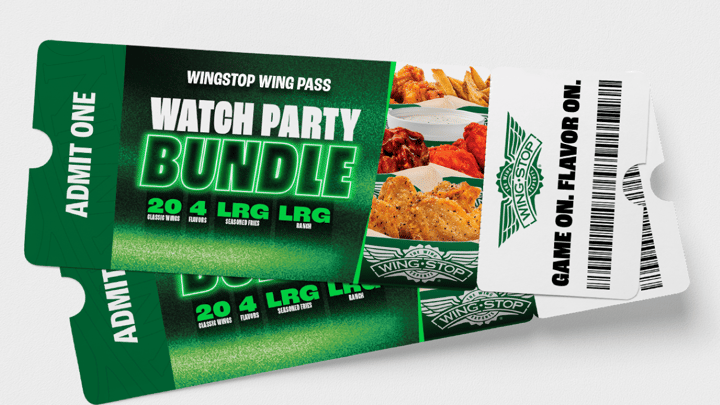
Wingstop accelerates its loyalty push with a new Wing Pass program that bundles weekly NFL viewing with discounted wing purchases across the entire professional football season. The chain offers 18 Watch Party Bundles, one for each week of the regular season, positioning itself as a destination for game-day gatherings.
This move reflects how casual dining chains compete for customer frequency during high-traffic events. Sports calendars drive traffic to restaurants, and Wingstop recognizes that fans gathering to watch games need food. By tying promotional bundles to specific weeks, the chain creates recurring reasons to visit rather than a single one-off discount.
The Watch Party Bundle strategy addresses two business challenges simultaneously. First, it locks in customer visits across a four-month window. Second, it trains consumers to think of Wingstop as their game-day wing supplier. The program operates like a mini-loyalty ladder, rewarding commitment with value that accumulates across the season.
Wing consumption peaks during football season. The National Chicken Council reports wing demand spikes during the NFL playoffs and Super Bowl, when prices and order volumes both climb. Wingstop's program capitalizes on this predictable seasonal behavior by frontloading the value proposition. Customers who buy into the Wing Pass commit mentally to returning multiple times, increasing basket size and visit frequency.
This tactic distinguishes Wingstop from competitors like Buffalo Wild Wings, which emphasizes its bar atmosphere and full menu, and Domino's Pizza and Papa John's, which offer seasonal promotions but center on delivery convenience. Wingstop positions itself as an experience destination tied to a specific cultural moment: game day with friends. The bundle structure makes this promise tangible.
Loyalty programs in quick-service and casual dining typically track points across transactions. Wingstop's approach instead ties discounts to the calendar and sports schedule, creating urgency. A customer who misses week three still has 15 remaining opportunities to redeem their pass, but they see value expiring. This psychological mechanism drives frequency.
The program's success depends on execution. Bundle pricing must feel genuinely discounted compared to à la carte wing purchases, otherwise customers perceive it as standard promotional theater. Wingstop must also ensure restaurants stock adequate product throughout the season. Wing supply contracts with poultry producers run months in advance, and shortages during peak weeks damage loyalty programs faster than they build them.
Restaurant groups increasingly lean on sports partnerships to anchor loyalty initiatives. Applebee's, Chili's, and Hooters all emphasize their sports-bar positioning during football season. Wingstop's Wing Pass program differentiates by making the sports schedule itself the loyalty mechanism, not just the atmosphere. This transforms the NFL season into a Wingstop promotional calendar.
The initiative also signals confidence in Wingstop's unit economics. The chain commits discounted wing capacity across 18 weeks, betting that bundled volume outweighs lower per-item margins. If successful, this model expands beyond football. March Madness brackets, playoff hockey, and college football seasons offer similar opportunities for calendar-based bundle programs.
For consumers, the Wing Pass program simplifies game-day decision-making. Instead of evaluating options when hunger strikes, the pass removes friction. Restaurants that reduce cognitive load in order moments win repeat traffic.